
Eastern white pine (Pinus strobus)
A tall North American pine known for soft five-needle bundles, pale workable wood, and historical importance as timber and ship masts; native to eastern North America and a key ecological and cultural species.
Overview
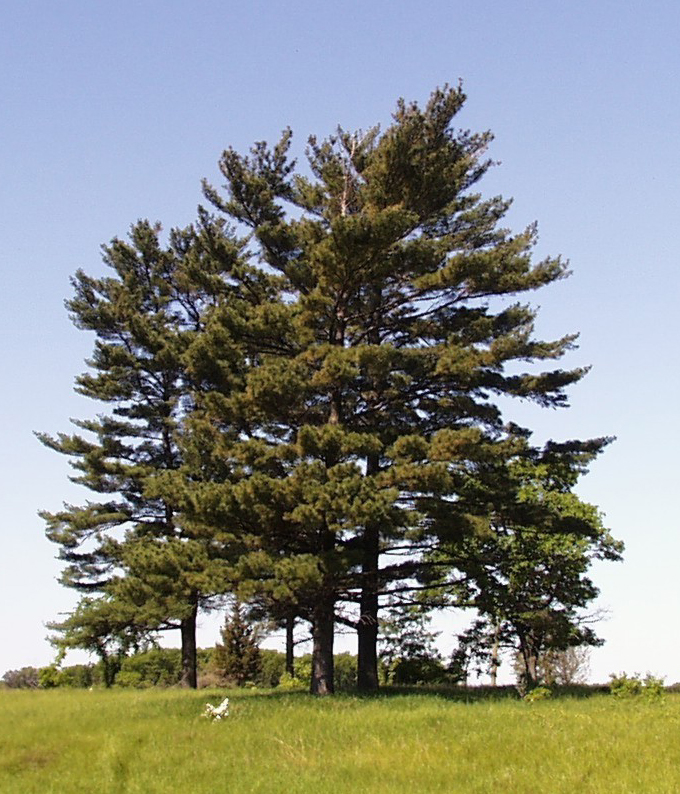
The eastern white pine (Pinus strobus) is a long-lived conifer native to eastern North America. It is one of the region's tallest native trees and has been highly valued for its timber, ornamental use, and ecological role. Common English names include white pine and, historically in Britain, Weymouth pine.
Image gallery
10 Images


Identification and characteristics
This pine is recognizable by its soft, flexible needles grouped in bundles of five (a distinguishing feature of the white pine group). The needles are bluish-green and spring from long shoots. Cones are elongated and slender, containing winged seeds. Bark on mature trees becomes furrowed and gray-brown, while young trees have smoother bark. Wood is pale, light, straight-grained and relatively soft compared with many other pines.
Distribution and habitat
Eastern white pine ranges across eastern North America, from the Atlantic provinces and New England, westward into the Great Lakes region, and south along the Appalachian Mountains. It grows in a variety of soils but favors cool, moist sites with good drainage; it is commonly found in mixed forests and on upland slopes as well as in sandy soils near the coast.
Uses and cultural importance
- Timber and millwork: prized for long, straight boards used in construction, furniture and moldings.
- Historical maritime use: tall, straight trunks were sought for ship masts and spars.
- Ornamental planting: frequently used in parks and large landscapes for its graceful form and rapid growth.
- Wildlife: provides seeds and shelter for birds and mammals; stands support diverse forest communities.
Pests, diseases and management
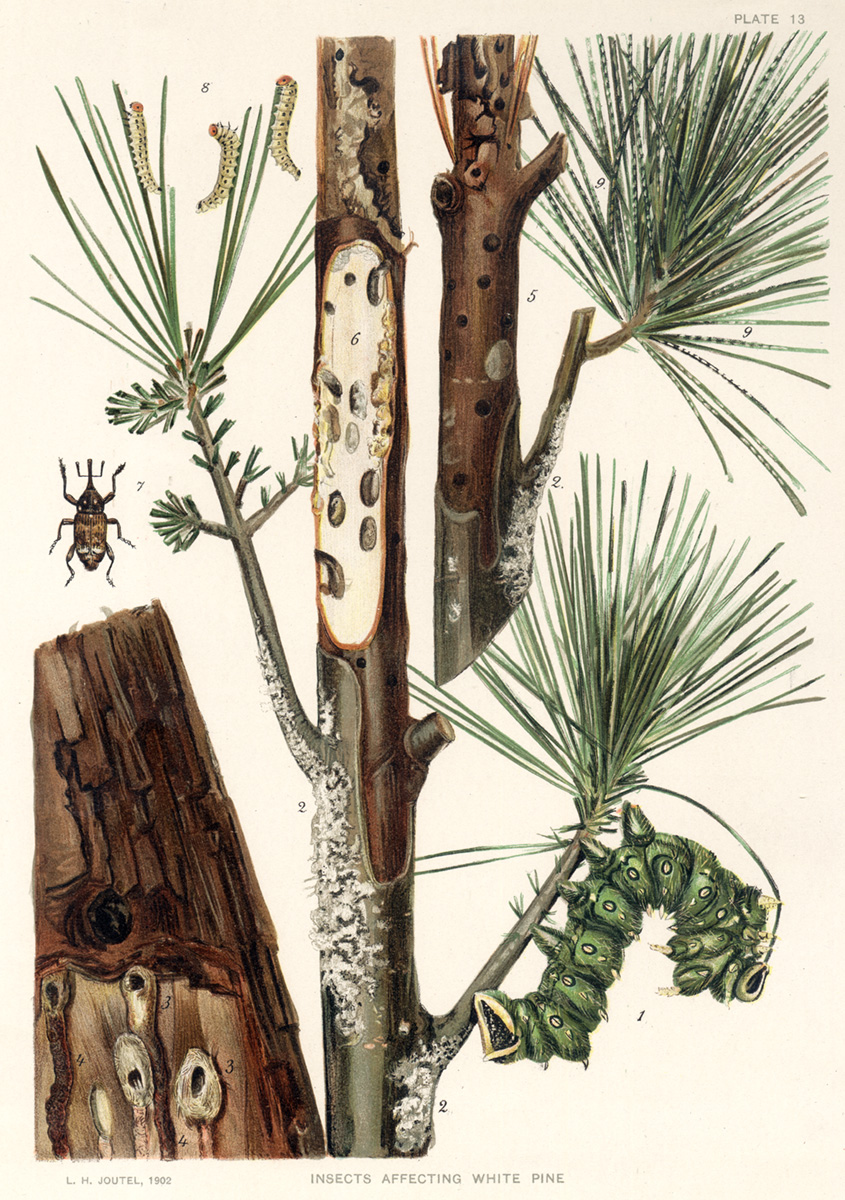
Major threats include introduced white pine blister rust and insect pests such as the white pine weevil. Deer browsing and large-scale logging have also reduced old-growth populations. Modern management emphasizes mixed-species stands, disease-resistant varieties in planting programs, and protection of remnant old trees.
History and notable facts
Eastern white pine has long been important to Indigenous peoples and to European settlers. Its height and straight bole made it a preferred timber for building and shipbuilding. Today it remains a symbol of northern forests and is the state tree of Maine and Michigan. As a five-needled white pine, it is part of a group of soft pines distinguished by needle bundles and winged seeds.
Related articles
Author
AlegsaOnline.com Eastern white pine (Pinus strobus) Leandro Alegsa
URL: https://en.alegsaonline.com/art/29784