
Dorothea Tanning: American Surrealist Painter, Sculptor, and Writer
Overview of Dorothea Tanning (1910–2012), her life, artistic development, major themes and works, involvement in theater and ballet design, writings, and lasting influence.
Dorothea Tanning (August 25, 1910 – January 31, 2012) was an American artist whose career spanned painting, sculpture, printmaking, set and costume design, and writing. Associated with surrealism in her early work, she evolved through figurative and abstract phases and produced a body of images known for dreamlike transformation, uncanny domestic interiors, and psychological intensity. Her long life and wide-ranging practice made her an influential figure in twentieth-century art.
Image gallery
7 Images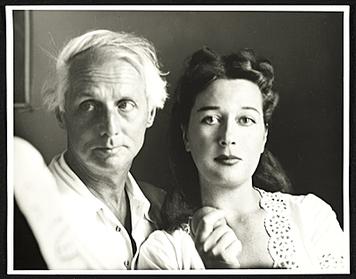


Life and career
Tanning was born in Galesburg, Illinois and came to attention in the late 1930s for paintings that combined precise technique with uncanny subject matter. Contemporary accounts and archival notices mark her birth and her death; see a sample birth record and a later death notice. During her career she worked in New York and Europe, intersecting with artists, writers and theater practitioners of her time.
Artistic themes and media
Tanning's work moved among several media and concerns. Key themes include the unstable boundaries between interior and exterior worlds, metamorphosis of figures and objects, and erotic or psychological tensions. She expressed these themes through various forms:
- Painting — detailed, often surreal tableaux and later abstractions (painting).
- Set and costume design — collaborations for dance and theater brought her interest in movement and staging to visible form (ballet, costumes).
- Writing and poetry — she published memoirs and poems that reflect on art and imagination (poetry).
Her most discussed paintings appeared during the period when surrealism was broadly influential; critics often single out works from the 1930s, the 1940s and the 1950s for their striking imagery and technical skill.
Tanning also produced sculpture and experimental objects in later decades, expanding her concerns into three dimensions and collage-like combinations of materials.
Writing, collaborations and legacy
In addition to visual art, she wrote a memoir, Between Lives: An Artist and Her World, and published poetry and essays that illuminate her creative process. She was married to the artist Max Ernst, a relationship that brought further cross-currents between her work and European surrealism. Over the years Tanning's art has been exhibited in major museums and continues to be studied for its distinctive melding of personal narrative and dream logic. For further details on aspects of her life and work consult archival sources and exhibition records linked below.
Selected references and archival materials include birthplace and local records (birth, Galesburg), notices of her passing (death), and thematic resources on her painting, theater work and writing (painting, ballet, costumes, poetry, 1930s, 1940s, 1950s). Additional biographical context is available through dedicated archival collections and museum catalogs (local records).
Related articles
Author
AlegsaOnline.com Dorothea Tanning: American Surrealist Painter, Sculptor, and Writer Leandro Alegsa
URL: https://en.alegsaonline.com/art/28585