
Diwan (poetry)
A diwan is a traditional collected volume of poems—especially in Arabic, Persian, Ottoman Turkish and Urdu—typically gathering a single poet’s lyric work and following classical forms and ordering conventions.
Overview
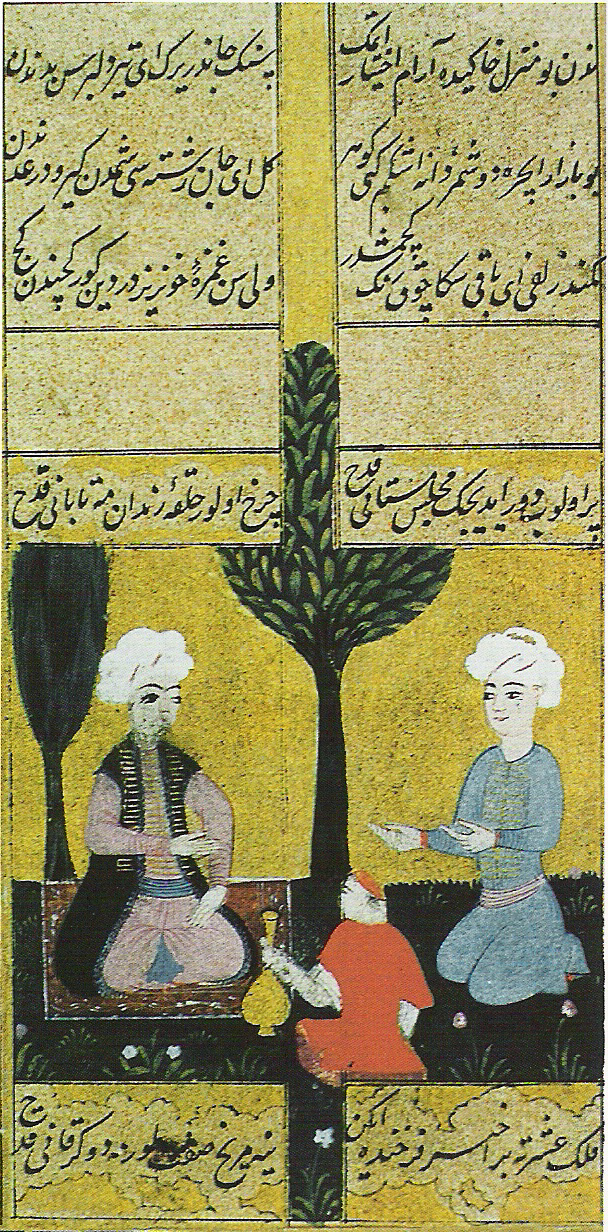
A diwan (also spelled divan) is a traditional collection of a poet’s shorter verse, assembled as a single volume. The term comes from a word for a register or office book and was adopted in literary contexts to mean the repository of a poet’s lyrical output. Diwans are central to the literary cultures of Arabic, Persian, Ottoman Turkish and Urdu, where they preserve forms, language, and the poet’s signature voice.
Image gallery
3 Images

Characteristics and form
Diwans usually gather short forms such as ghazals, qasidas, rubaʿis and occasionally other lyric pieces, while long narrative poems (masnavis) were often published separately. Classical conventions shaped their structure: many poems follow prescribed meters (for example, the Persian and Ottoman aruz system) and rhyme schemes. A common feature is the poet’s takhallus or pen-name, which often appears in the closing couplet of ghazals or qasidas.
Organization and compilation
Compilers have arranged diwans in several ways: alphabetically by final rhyme, grouped by meter, or ordered thematically. Some collections were compiled by the poet in life; others were assembled by disciples, patrons or later editors who selected, arranged and sometimes annotated the material. In courtly contexts a diwan could also function as proof of a poet’s standing and a tool for gaining patronage.
History and notable examples
The diwan tradition flourished from medieval times onward across the Islamic world. Well-known examples include the collections of classical poets such as Hafez, Rumi (his lyrical Diwan-e Shams is a landmark in Persian mystical poetry) and later South Asian poets like Ghalib and Mir. Ottoman divan poetry developed its own courtly idiom, blending Persian and Arabic influences into a highly polished literary Turkish.
Uses and significance
Diwans serve literary, social and musical roles: they preserve a poet’s oeuvre for study and performance, provide material for musical settings of ghazals and recitation, and anchor literary reputations across generations. Scholars use diwans to trace linguistic change, poetic technique and the cultural networks of patrons and audiences.
Distinctions and related terms
- Diwan vs anthology: a diwan usually centers on one poet, while anthologies collect many authors.
- Diwan vs masnavi: long narrative poems were often issued apart from a diwan.
- Administrative meaning: divan can also refer to a governmental office or register, a distinct but historically related sense of the word.
Related articles
Author
AlegsaOnline.com Diwan (poetry) Leandro Alegsa
URL: https://en.alegsaonline.com/art/28003