
Divergent (novel)
Divergent is Veronica Roth's 2011 young‑adult dystopian debut, the first book of a trilogy about a factionalized society and a young woman whose identity crosses its rigid boundaries.
Overview
Divergent is the 2011 debut novel by Veronica Roth. Written while she was a student and completed shortly after, it launched a best‑selling young‑adult trilogy that continues in Insurgent and Allegiant. The novel achieved wide commercial success, attracted a large readership among teens and young adults, and became part of a broader wave of dystopian fiction in the early 2010s. For publication details and official editions, see the publisher page.
Image gallery
6 Images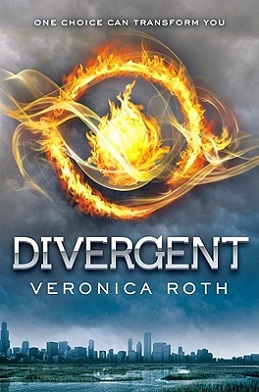


Setting and social structure
The story takes place in a future, post‑conflict urban region where society is organized into five factions, each dedicated to a single civic virtue. Children are raised within their family's faction but, at sixteen, undergo an aptitude test and then select the faction in which they will live and train as adults. The factions are commonly described as:
- Abnegation — valuing selflessness and service;
- Amity — valuing harmony and cooperation;
- Candor — valuing honesty and frankness;
- Dauntless — valuing courage and daring;
- Erudite — valuing knowledge and intelligence.
This system is intended to preserve social order by encouraging citizens to cultivate one defining quality, but it also reduces individuals to simplified roles and creates pressure to conform.
Plot premise
The novel follows Beatrice Prior, who adopts the name Tris, as she chooses a new faction and begins a demanding initiation process. Tris is identified as "Divergent," meaning her aptitudes and inclinations span more than one faction. Within the world of the novel, being Divergent is both a personal identity and a political danger, because the factional system depends on predictability. Much of the early narrative covers Tris's aptitude test, her decision to leave her birth faction, and the physical and psychological trials of initiation into Dauntless. Alongside training and friendship, the plot develops elements of political intrigue and an emerging conspiracy that threatens the balance between factions.
Major characters
Key figures include Tris Prior, the first‑person narrator whose interior perspective shapes the story; Tobias Eaton (commonly called Four), a Dauntless transfer who becomes Tris's mentor and ally; members of Tris's initiation group; and representatives of other factions whose choices and ambitions drive the political conflict. Character relationships combine coming‑of‑age dynamics, loyalty tests, and romantic tension.
Themes and narrative style
Divergent addresses themes typical of YA dystopia: identity and self‑definition, the costs of conformity, the ethics of social engineering, and the tension between individual freedom and stability. Roth's choice of a close first‑person narrator gives the book an intimate tone and emphasizes Tris's internal doubts, fears, and moral choices. The narrative is paced with action sequences and training challenges, balanced with scenes of personal growth and reflection.
Reception and influence
The novel received popular acclaim from many readers and became a commercial bestseller, appearing on national bestseller lists and building a devoted fan base. Critical response was mixed to positive: reviewers often praised Roth's energetic plotting and the immediacy of Tris's voice, while some critics noted conventional elements or uneven worldbuilding. Divergent contributed to discussions about the popularity of dystopian settings in young‑adult literature and the ways speculative worlds explore real‑world anxieties about governance, identity, and social division. For context on the genre and its trends, see a general genre overview.
Adaptations and related media
Divergent was adapted as a feature film in 2014. The screen version brought the story to a wider audience and led to further film adaptations of the sequels, along with licensed tie‑in merchandise. Film adaptations altered and condensed elements of the book as part of translating an internal, first‑person narrative into a visual medium; for details about the cinematic adaptation and production, consult the film adaptation page. For information about the author and her other works, see the author's site.
Editions, translations and legacy
Since its first release, Divergent has been issued in multiple paperback and digital editions and translated into many languages, reaching an international readership. The novel's place in YA publishing is often discussed in relation to similar series of its time; it is also used in informal classroom discussions and reading groups to consider questions about moral choice, governance, and the formation of identity. While individual responses to the book vary, its impact on popular culture and on the careers of its creators is widely acknowledged.
Further reading
Readers seeking more context can consult publisher materials, author interviews, and scholarly commentary on young‑adult dystopia and adaptation studies. Official resources and updates about editions and adaptations remain available through the publisher and author links above.
Related articles
Author
AlegsaOnline.com Divergent (novel) Leandro Alegsa
URL: https://en.alegsaonline.com/art/27797
Sources
- nytimes.com : "Young Adult Books - Divergent - By Veronica Roth"
- worldcat.org : 0362-4331
- nytimes.com : "Best Sellers - The New York Times"