
Distinguished Flying Cross (United Kingdom)
A British military decoration awarded for valour, courage or devotion to duty in aerial operations; instituted in 1918 and awarded to Royal Air Force and other services and Commonwealth personnel.
Overview
The Distinguished Flying Cross (DFC) is a United Kingdom military decoration awarded for exemplary gallantry, courage or devotion to duty while flying in active operations against the enemy. It was instituted in 1918 and has been most closely associated with the Royal Air Force, though personnel from other services who undertake flying duties have also been eligible. The decoration entitles recipients to use the post-nominal letters "DFC" and may be awarded to the same individual more than once, with subsequent awards denoted by a bar.
Image gallery
2 Images
Design and insignia
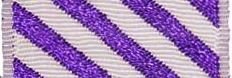
The medal is a cross-shaped badge suspended from a ribbon, and its ribbon incorporates pale and darker bands traditionally associated with aerial awards. The basic form and ribbon have remained recognisable through most of the award's history, although small details and manufacturing marks vary between issues. When a medal is awarded more than once a clasp or bar is added to the ribbon to indicate an additional award; recipients may also wear a rosette on the ribbon in undress uniform to show an extra award.
Criteria and process
The DFC is awarded for "an act or acts of valour, courage or devotion to duty whilst flying in active operations against the enemy". Recommendations normally originate with a service chain of command and are reviewed before confirmation by the Crown. Citations recording the reason for the award are commonly published in official notices such as the London Gazette. Historically the DFC recognised either a single act of bravery during aerial operations or sustained performance over many sorties.
History and Commonwealth use
Instituted during the First World War, the DFC became one of the principal British awards for aircrew during both world wars. It was originally intended for commissioned officers and warrant officers; other ranks were formerly eligible for the Distinguished Flying Medal (DFM). Reforms to the British honours system in the late 20th century removed many rank distinctions, and the circumstances under which aircrew of any rank might receive the DFC were adjusted accordingly. Many Commonwealth countries recommended and received the DFC for their personnel in the 20th century, although several later established their own national honours systems and ceased recommending British decorations.
Notable distinctions and related awards
- The DFC specifically recognises operational flying against the enemy; awards for non-operational flying (for example, for test flying or instructional duties) are covered by different decorations such as the Air Force Cross.
- Additional awards are shown by bars; the recipient's citation typically explains whether the award was for a single act or for cumulative service.
- Similarity to other Commonwealth and NATO awards means that equivalent recognitions exist in other countries, but the DFC retains distinct historic standing in the British honours system.
The Distinguished Flying Cross remains an important symbol of aerial bravery and professional skill. For further reading about the medal's place in the wider system of British military honours and its evolution since 1918, consult specialist works and official records that describe individual citations and the administrative history of awards.
Commonwealth recipients and practices provide useful comparative context for how the DFC was used outside the United Kingdom.
Questions and answers
Q: What is the Distinguished Flying Cross (DFC)?
A: The Distinguished Flying Cross (DFC) is a third-level military medal given to members of the United Kingdom's Royal Air Force and other services.
Q: Who is eligible to receive the Distinguished Flying Cross (DFC)?
A: Members of the United Kingdom's Royal Air Force and other services, as well as members of other Commonwealth countries, are eligible to receive the Distinguished Flying Cross (DFC).
Q: What is the criteria for receiving the Distinguished Flying Cross (DFC)?
A: The Distinguished Flying Cross (DFC) is awarded for "an act or acts of valour, courage or devotion to duty whilst flying in active operations against the enemy".
Q: Is the Distinguished Flying Cross (DFC) a widely known military medal?
A: Yes, the Distinguished Flying Cross (DFC) is a widely known military medal.
Q: How is the Distinguished Flying Cross (DFC) different from other military medals?
A: The Distinguished Flying Cross (DFC) is a third-level military medal and is awarded specifically for acts of valour, courage, or devotion to duty while flying in active operations against the enemy.
Q: Can civilians receive the Distinguished Flying Cross (DFC)?
A: No, the Distinguished Flying Cross (DFC) is only awarded to members of the military.
Q: Are there any restrictions on who can receive the Distinguished Flying Cross (DFC) within the military?
A: There are no specific restrictions on who can receive the Distinguished Flying Cross (DFC) within the military, as long as they meet the criteria for "an act or acts of valour, courage or devotion to duty whilst flying in active operations against the enemy".
Related articles
Author
AlegsaOnline.com Distinguished Flying Cross (United Kingdom) Leandro Alegsa
URL: https://en.alegsaonline.com/art/27737
Sources
- gov.uk : "Medals: campaigns, descriptions and eligibility"
- books.google.co.uk : Medal Yearbook 2013
- gov.uk : "JSP 761: Honours and Awards in the Armed Forces"
- static.awm.gov.au : "Recommendation: Distinguished Flying Cross"
- dailymail.co.uk : "The brown-eyed, blonde RAF hero who is proud to wear her uniform"