
Dutch Cross of Resistance (Verzetskruis 1940–1945)
A high Dutch decoration awarded to members of the resistance for bravery against the Nazi occupation during World War II; established after the war to honor civilian courage.
Overview
The Verzetskruis 1940–1945, commonly called the Dutch Cross of Resistance, is one of the Netherlands' highest decorations for bravery. It was created to recognize extraordinary acts by civilians who opposed the German occupation of the Netherlands during the Second World War. Recipients are primarily members of the wartime resistance movement whose conduct went beyond ordinary risk to save lives, disrupt occupation authorities, or organize clandestine efforts.
Image gallery
1 Image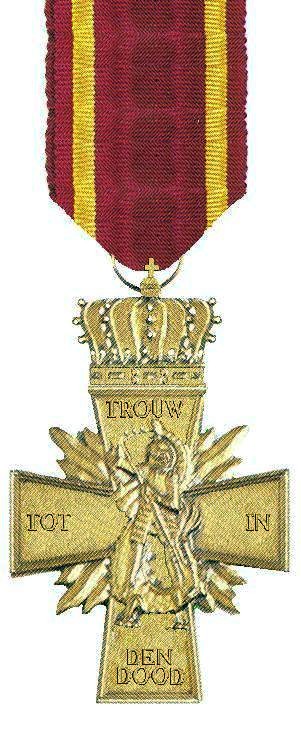
Criteria and form
The award was intended for non-uniformed individuals whose actions demonstrated conspicuous courage, leadership, or sustained sacrifice in resisting the occupiers. It occupies a prominent place in the Dutch honours system and is often described as the second-highest military decoration awarded by the Dutch state. The cross was granted on the basis of documented acts and witness testimony, and in many cases it was awarded posthumously to those who died because of their resistance activities.
History and context
Instituted in the aftermath of World War II, the cross acknowledged the varied and often improvised forms of civilian opposition that emerged under occupation. The award speaks to the complex history of the Dutch resistance, which included organized sabotage groups, clandestine intelligence networks, people who sheltered persecuted individuals, and networks that produced illegal newspapers. All of these activities took place under the conditions of the Nazi occupation, when discovery could mean imprisonment, deportation, or execution.
Typical acts recognized
- Harbouring and concealing Jews or other targeted groups at great personal risk
- Organizing and carrying out sabotage against transportation or military installations
- Gathering and transmitting intelligence to Allied forces or underground organizations
- Producing and distributing underground newspapers and counter-propaganda
- Leading or coordinating clandestine escape and evasion routes
Legacy and significance
The Verzetskruis is remembered as a symbol of civilian courage and moral resistance against oppression. Its recipients represent varied backgrounds—students, clergy, laborers, professionals and others—illustrating that resistance cut across social lines. The decoration played a role in postwar remembrance and helped the Netherlands officially honor those whose defiance contributed to national survival and liberation.
Distinctions and notable points
Although primarily a decoration for civilians, the cross is treated with the respect accorded to military honours and is listed among the nation's highest awards. Because many acts of resistance were clandestine and undocumented, the process of awarding the cross could be complex and sometimes controversial; nevertheless, it remains a central element of Dutch commemoration of the Second World War and an enduring recognition of individual sacrifice.
Questions and answers
Q: What is the Dutch Cross of Resistance?
A: The Dutch Cross of Resistance is the second highest military medal in the Netherlands given for bravery.
Q: Who was eligible to receive the Dutch Cross of Resistance?
A: Members of the Dutch resistance, who were civilians fighting the Nazi occupation of their country during the Second World War, were eligible to receive the medal.
Q: What was the purpose of the Dutch Cross of Resistance?
A: The purpose of the Dutch Cross of Resistance was to recognize and honor the bravery of members of the Dutch resistance who fought against Nazi occupation during World War II.
Q: How does the Dutch Cross of Resistance differ from other military medals in the Netherlands?
A: The Dutch Cross of Resistance is the second highest military medal in the Netherlands and is specifically awarded to members of the Dutch resistance, whereas other military medals may have broader eligibility criteria.
Q: What kind of resistance did members of the Dutch resistance engage in?
A: Members of the Dutch resistance engaged in various forms of resistance, including sabotage, intelligence gathering, and helping individuals evade capture by the Nazis.
Q: What inspired members of the Dutch resistance to fight against the Nazi occupation?
A: Members of the Dutch resistance were inspired by a desire for freedom and a commitment to resist the oppressive forces of the Nazis during the Second World War.
Q: What is the significance of the Dutch Cross of Resistance today?
A: The Dutch Cross of Resistance serves as a reminder of the bravery and sacrifice of members of the Dutch resistance during World War II and continues to be a symbol of the Dutch people's resistance against tyranny and oppression.
Related articles
Author
AlegsaOnline.com Dutch Cross of Resistance (Verzetskruis 1940–1945) Leandro Alegsa
URL: https://en.alegsaonline.com/art/29346