
Distinguished Service Cross (United States)
The Distinguished Service Cross is the U.S. Army’s second-highest military decoration for extraordinary heroism in combat, awarded for acts of gallantry and risk of life that fall short of the Medal of Honor.
Overview
The Distinguished Service Cross (DSC) is the United States Army's second-highest military decoration. It recognizes extraordinary heroism in action against an armed enemy and is reserved for deeds that exceed the requirements of other combat decorations but do not meet the threshold for the Medal of Honor. The award may be presented posthumously and may be conferred on soldiers of any rank for a single act or series of actions in the face of the enemy.
Image gallery
4 Images


Eligibility and criteria
Eligibility generally extends to members of the United States Army, and historically recipients have included both officers and enlisted personnel. In some circumstances allied servicemembers serving with Army units have also been recipients. The decoration is awarded for extraordinary heroism involving risk of life in actual combat, with the act clearly above that required for other decorations but not sufficient for the Medal of Honor. Recommendations originate in the chain of command and are reviewed through established military boards and approving authorities in accordance with departmental regulations (award regulations).
Appearance and devices
The medal is cast in the form of a cross and is suspended from a distinctive ribbon; design elements symbolize bravery and service. When a servicemember receives the award more than once, additional awards are indicated by authorized devices worn on the ribbon. In the Army these devices follow the branch's uniform regulations and emblem conventions.
History and development
The Distinguished Service Cross was introduced when the Army established a tiered system of combat awards to recognize different levels of battlefield valor. Since its creation the DSC has been awarded in major conflicts and a variety of smaller engagements. Over time, administrative processes and review procedures have been refined to ensure consistent application of the award criteria and to allow for reconsideration or upgrade when new evidence emerges.
Significance and record keeping
The DSC is an important symbol of battlefield gallantry (gallantry) within the Army. Each award is accompanied by a citation that documents the actions that justified the decoration; these citations form part of the official military record and are used in historical accounts and unit histories. The award serves both to honor individual sacrifice and to provide an official account of extraordinary acts performed under hazardous conditions.
Comparisons with other service crosses
The Army's Distinguished Service Cross is part of a family of branch-level service crosses. The Department of the Navy issues the Navy Cross for the Navy and the Marine Corps; the Air Force issues the Air Force Cross; and the Coast Guard has an equivalent award. These awards are considered equivalent in status within their respective services and occupy a similar place in each branch's order of precedence.
Administration and review
Recommendations for the Distinguished Service Cross are typically submitted through the chain of command with supporting evidence, witness statements, and an official citation. Military review boards and the appropriate service secretary or designated authority examine nominations. In certain cases, past awards have been reviewed and upgraded after additional documentation or investigations, demonstrating the system's capacity for reassessment.
Legacy and public recognition
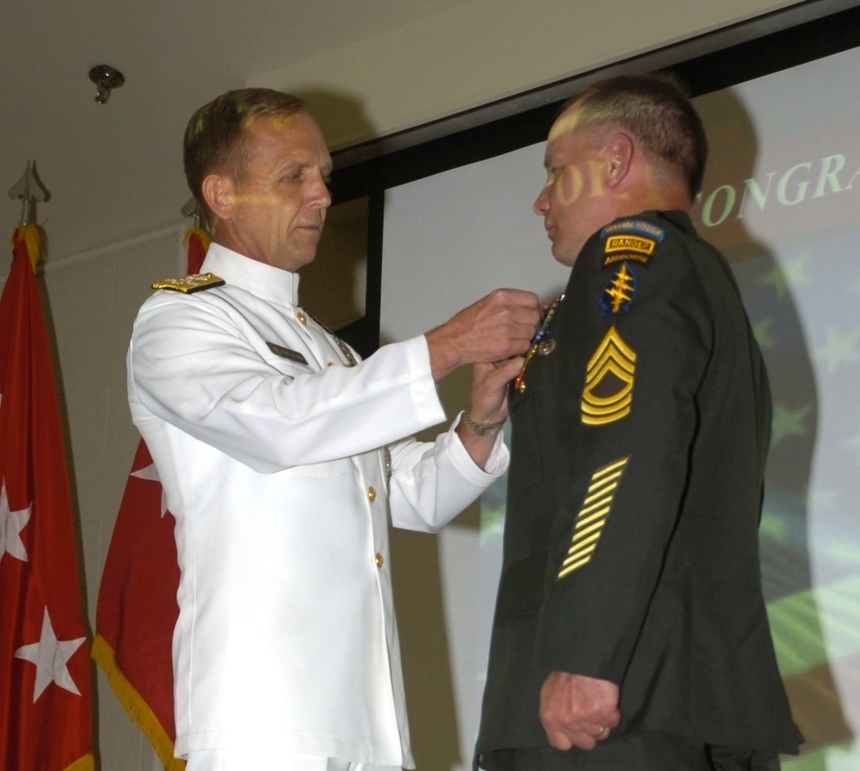
Recipients of the Distinguished Service Cross are recognized in military ceremonies and are often cited in public histories and commemorations of conflicts. The award remains a visible and respected recognition of combat heroism and continues to be conferred when servicemembers perform acts of conspicuous gallantry and risk their lives while engaged with an armed enemy.
Questions and answers
Q: What is the Distinguished Service Cross?
A: The Distinguished Service Cross is the second highest military award that can be given to a member of the United States Army.
Q: What actions merit the Distinguished Service Cross?
A: Actions that merit the Distinguished Service Cross must be above those required for all other U.S. combat decorations and involve extreme gallantry and risk of life in actual combat with an armed enemy force.
Q: What is the difference between the Distinguished Service Cross and the Medal of Honor?
A: The Distinguished Service Cross is awarded for actions that are not high enough for the Medal of Honor but still above those required for all other U.S. combat decorations.
Q: What other military branches have equivalent awards to the Distinguished Service Cross?
A: The Navy and Marine Corps have the same award, called the Navy Cross, the Air Force has the Air Force Cross, and the Coast Guard has the Coast Guard Cross. All are equivalent (equal) awards.
Q: Is the Distinguished Service Cross only awarded to members of the United States Army?
A: Yes, the Distinguished Service Cross is only awarded to members of the United States Army.
Q: What kind of activities could warrant the award of the Distinguished Service Cross?
A: Activities that involve extreme bravery and risk of life in the face of an armed enemy force, but do not meet the requirements for the Medal of Honor, could warrant the award of the Distinguished Service Cross.
Q: Why is the Distinguished Service Cross considered one of the highest military awards?
A: The Distinguished Service Cross is considered one of the highest military awards because it is only awarded for extreme gallantry and risk of life in actual combat with an armed enemy force at a level above all other U.S. combat decorations, except the Medal of Honor.
Related articles
Author
AlegsaOnline.com Distinguished Service Cross (United States) Leandro Alegsa
URL: https://en.alegsaonline.com/art/27738
Sources
- edocket.access.gpo.gov : 578.10 Distinguished Service Cross