
Denarius (Roman silver coin)
A principal silver coin of Rome from the late Republic through the early Empire; widely used, gradually debased, and influential on later European and Islamic currencies.
The denarius was the principal silver coin of the Roman monetary system for several centuries. First issued in the late 3rd century BC, it became the backbone of everyday commerce, military pay and state accounting across the Roman Republic and later the Roman Empire. As a struck silver coin it carried portraits, symbols and messages intended to circulate the authority of the issuing state.
Image gallery
7 Images



Characteristics
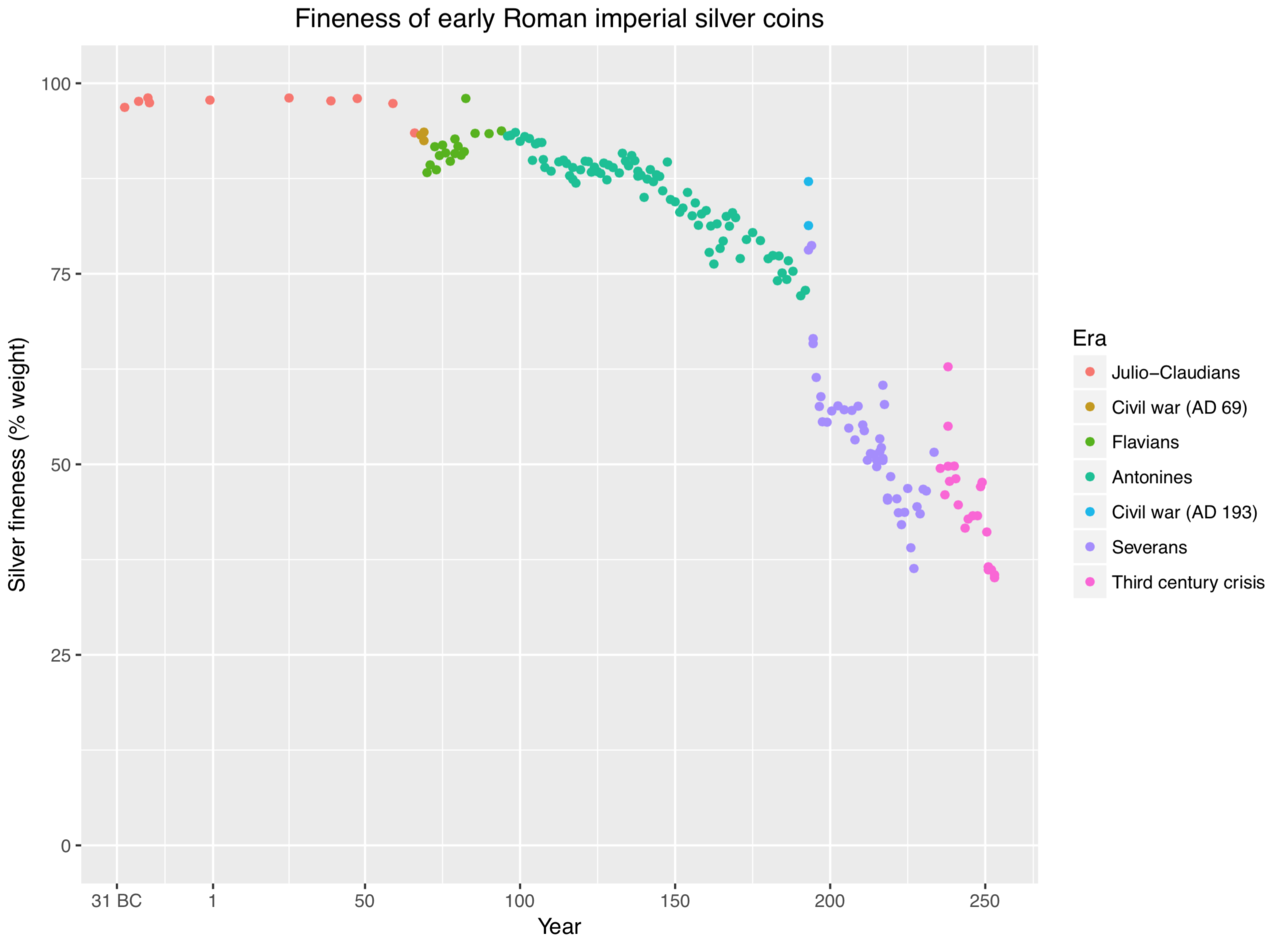
- The denarius began as a small silver piece, typically weighing around 4.5 grams at introduction; its weight and fineness declined over time due to fiscal pressures and repeated debasements. Weight and silver content were central to its value.
- Coins were produced by striking metal blanks between engraved dies; obverses often bore a head or portrait while reverses illustrated deities, personifications, military trophies or political themes.
- As an object and unit of account the coin shaped prices, wages, and contracts across Ancient Rome and beyond.
Introduced during the Roman Republic in response to wartime needs and expanding trade, the denarius supplanted earlier bronze and silver denominations. It remained the basic silver denomination for centuries, with design and legends changing to reflect magistrates or emperors who authorized issue. During the Empire the obverse commonly displayed the reigning emperor’s portrait as a medium of state imagery and legitimacy.
History and decline
First minted in 211 BC, the denarius circulated widely through Republican and Imperial periods. Over time, successive governments reduced its silver content to stretch limited bullion supplies; this process accelerated in the 3rd century AD when inflation, military expense and political instability prompted heavier debasement. The denarius was progressively displaced in daily use by other denominations and ultimately ceased to function as a stable silver coin by the later 3rd century (often cited around the mid-to-late 200s AD). Historical contexts of the Roman Republic and the Roman Empire help explain these shifts.
Uses, denominations and legacy
- The denarius served for trade, payment of soldiers and taxation, and was often standard in contracts and savings.
- Related denominations—larger and smaller silver and bronze coins—coexisted with the denarius, and new coins later replaced its role in commerce.
- Its name survived in later currencies and words (for example, medieval deniers and modern dinars and the French denier), showing a long linguistic and monetary influence.
Today the denarius is a focus of numismatic study: collectors and historians examine die links, hoards and iconography to trace chronology, provincial issues and economic trends. For further introductions to coin production, chronology and collecting, see general entries on silver coin technology, ancient minting practices, and specialized histories of Roman coinage like those referenced in academic and museum resources. Many museum catalogues and online databases provide images and descriptions to aid identification and research. Silver coin studies remain essential for understanding ancient economies and statecraft.
Although no longer struck as a standard silver currency, the denarius left an enduring imprint on monetary systems and remains one of the best-documented coins of the ancient world for students of history and economics.
Related articles
Author
AlegsaOnline.com Denarius (Roman silver coin) Leandro Alegsa
URL: https://en.alegsaonline.com/art/26541