
Dauphin County, Pennsylvania
Central Pennsylvania county that contains the state capital Harrisburg; established in 1785, notable for government, manufacturing, tourism (Hershey), and the Susquehanna River corridor.
Overview
Dauphin County lies in the south-central part of the U.S. state of Pennsylvania. It contains the commonwealth's capital city, Harrisburg, which serves as the county seat. The county was created on March 4, 1785, and as of the 2010 census had a population of about 268,100. Dauphin County combines an urban center, suburban townships, and rural areas along the Susquehanna River corridor.
Image gallery
3 Images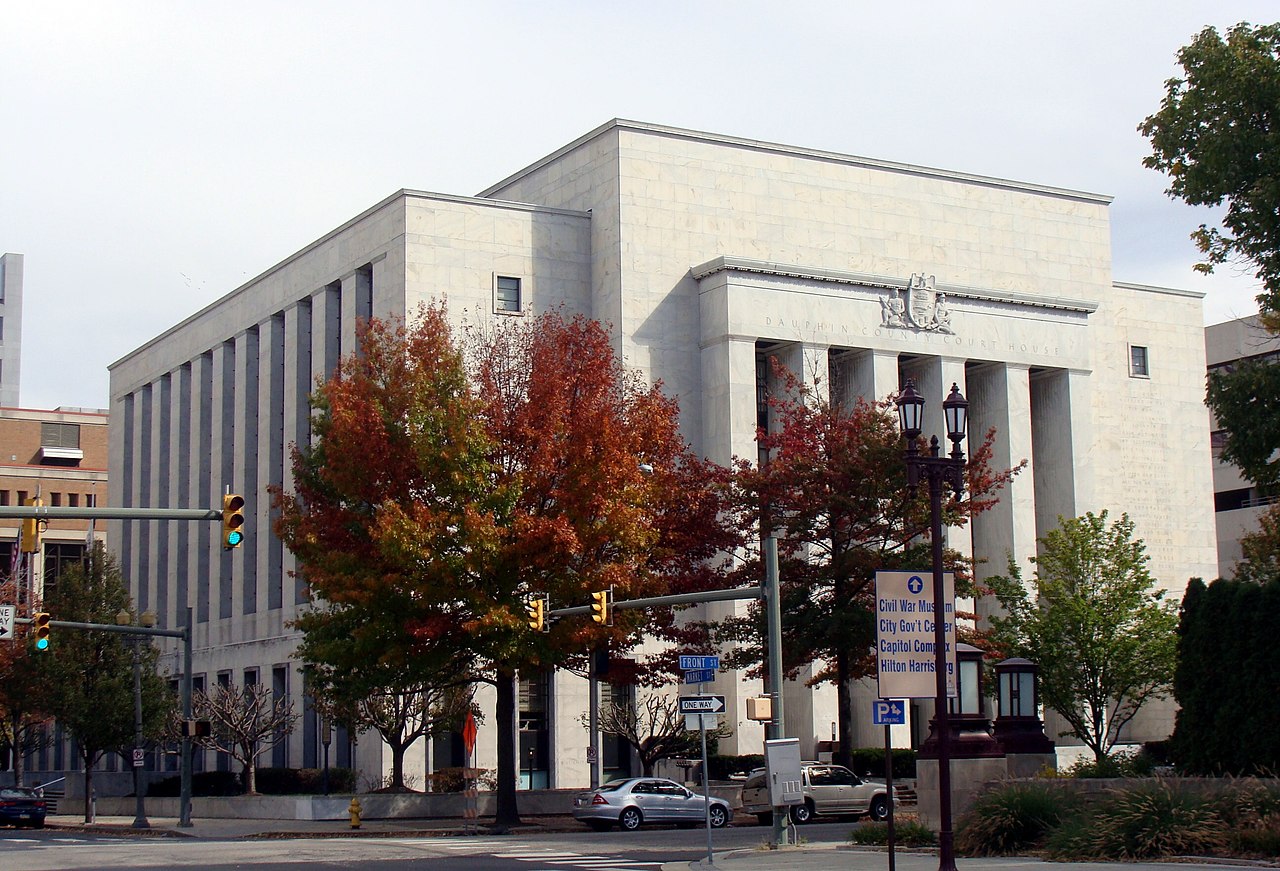


Geography and communities
The county occupies a corridor of the Susquehanna River and extends into the foothills of the Appalachian Mountains. Terrain ranges from river lowlands and floodplains near Harrisburg to rolling agricultural land and wooded ridges. Major population centers include Harrisburg and adjacent boroughs and townships; smaller communities include well-known destinations such as Hershey in Derry Township.
History
Dauphin County was formed in the late 18th century during the early years of the United States. Its name honors the Dauphin of France, reflecting Franco-American ties around the Revolutionary period. Harrisburg developed as a transportation and commercial hub on the Susquehanna and later became the state capital, shaping the county's role in government and public affairs.
Economy and landmarks
The county's economy is diverse. State government and public administration centered in Harrisburg are major employers, and the region has significant health care, education, manufacturing, and service sectors. Tourism and entertainment are important around Hershey, known for chocolate manufacturing, an amusement park, and visitor attractions. Cultural sites include state government buildings, museums, and riverfront recreation.
Government, demographics, and role
Dauphin County is governed by county-level officials and boards typical of Pennsylvania counties; Harrisburg functions as the administrative center. The county is part of the larger Harrisburg–Carlisle metropolitan area and serves as a regional hub for transportation, courts, and state services. Demographically it includes a mix of urban, suburban, and rural populations with a range of incomes and community types.
Notable facts and distinctions
- Dauphin County contains the state capital and thus hosts many state institutions and events.
- The county's riverfront location on the Susquehanna has influenced settlement, industry, and recreation.
- Tourist attractions in the county draw visitors for both family entertainment and historical interpretation.
- For more official details about the county, government structure, or demographics see county and state resources: state overview, local pages and census reports at county seat information and other references (census data).
Related articles
Author
AlegsaOnline.com Dauphin County, Pennsylvania Leandro Alegsa
URL: https://en.alegsaonline.com/art/25670
Sources
- quickfacts.census.gov : "State & County QuickFacts"
- naco.org : "Find a County" · web.archive.org
- books.google.com : The Origin of Certain Place Names in the United States