
Daughters of Bilitis: first US lesbian civil-rights organization
The Daughters of Bilitis (DOB) was the first sustained lesbian civil-rights and social organization in the U.S., formed in San Francisco in 1955 to provide safe social space, education and publication for lesbians.
The Daughters of Bilitis (commonly abbreviated DOB or the Daughters) was an early and influential American organization founded to provide social support, education and political advocacy for lesbian women. Established in San Francisco in 1955, it grew from a small social circle into a national network that combined community-building with efforts to challenge stigma and police harassment. The group helped many women who were reluctant to be open about their sexuality find resources, information and a safer place to meet.
Image gallery
2 Images
Origins and name
The DOB was founded by Del Martin and Phyllis Lyon as a response to the hazards of the mid-20th-century urban nightlife, when lesbian bars and gatherings were frequently subject to police raids and public vilification. Rather than rely solely on nightlife venues, the founders created a private, membership-based organization where women could socialize and organize with reduced risk. The name "Daughters of Bilitis" was chosen as a discreet literary reference; it alluded to the 19th-century poetic figure Bilitis, a pseudonymous creation that had become associated with female same-sex desire.
Activities, publications and structure
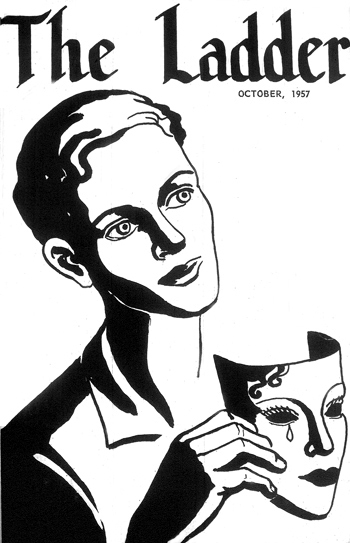
At first the DOB emphasized social meetings, mutual support and education. Local chapters held dances, discussion groups and lectures, and provided referrals to sympathetic doctors, lawyers and counselors. The organization also prioritized outreach to researchers and mental-health professionals in an era when homosexuality was often pathologized. One of its most enduring contributions was The Ladder, a magazine launched in 1956 that offered articles, news, personal stories and cultural commentary aimed at lesbians and their allies. The Ladder circulated nationally, helped unify chapters, and became an important historical record of mid-century lesbian life.
Goals and public stance
Although the DOB began with social aims, over time it adopted a more political posture: educating members about legal rights, publicizing instances of discrimination and resisting police harassment. Its leaders sought to present lesbians as respectable, ordinary citizens to counter prevailing negative stereotypes and to open channels of communication with sympathetic groups and professionals. The organization pursued a strategy of gradual public education rather than direct confrontation, which reflected the constraints and tactical choices of the period.
Growth, limitations and decline
During the late 1950s and 1960s, chapters formed in many U.S. cities, creating a modest national presence. The DOB maintained a membership system and internal procedures intended to protect members’ privacy. Nevertheless, it faced limits: the need for discretion, internal debates about political tactics, and competition from more radical movements that emerged later. By the early 1970s the national organization had largely dissolved and The Ladder ceased publication in 1972, though several local groups and former members continued activism in other forms.
Legacy and significance
The Daughters of Bilitis is widely regarded as the first sustained lesbian civil-rights organization in the United States. It provided community and practical resources for women at a time of widespread discrimination, produced one of the first lesbian periodicals of national reach, and helped create networks that later activists built upon. Scholars and historians often point to the DOB when tracing the development of lesbian and broader LGBT movements, and many of its archival records remain valuable sources for understanding mid-century queer life.
- Founded in San Francisco by Del Martin and Phyllis Lyon; see more about the city context here.
- Founded to serve lesbian women—term explained here.
- Framed as a civil and political rights group with educational aims here.
- Founders and prominent figures: background on Del Martin and Phyllis Lyon here.
- Provided support for women reluctant to come out; resources on disclosure and safety here.
Related articles
Author
AlegsaOnline.com Daughters of Bilitis: first US lesbian civil-rights organization Leandro Alegsa
URL: https://en.alegsaonline.com/art/25666