
Daphnia: biology, ecology and uses of water fleas
Small planktonic crustaceans called water fleas. A concise guide to Daphnia anatomy, habitats, life cycle, ecological role, and importance in research and monitoring.
Overview
Daphnia are tiny, mostly freshwater crustaceans commonly referred to as "water fleas" because of their distinctive jerking swim motion. Individuals range from about 0.2 to 5 mm in length and form an important component of the planktonic community. They belong to a group of branchiopods noted for their role in food webs and their sensitivity to environmental change; many accounts and introductions describe them as an accessible model for studying ecology and physiology. See related background on planktonic organisms.
Image gallery
8 Images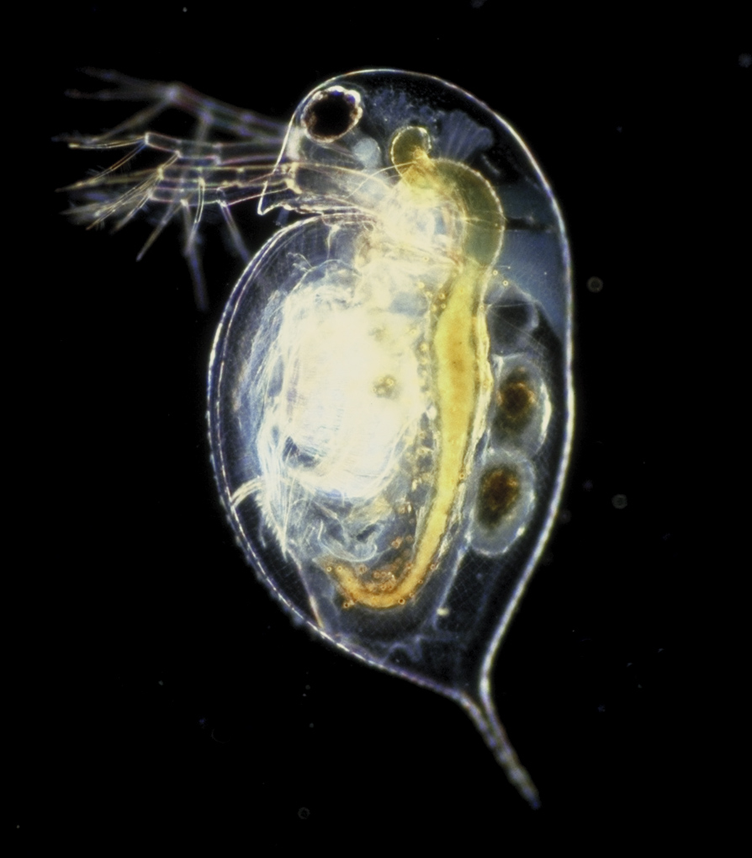



Anatomy and behavior
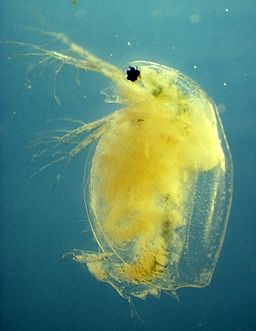
Daphnia have a translucent carapace that encloses most internal organs, allowing observation of the beating heart and gut in live specimens. Key external features include a single large compound eye, pairs of antennae used for locomotion, and filtering appendages for feeding. They are filter feeders that graze on algae, bacteria and detritus, and they can alter feeding and swimming behaviour in response to predators or food levels. More on their wider classification appears under crustaceans.
Taxonomy and common names
The genus Daphnia sits within the order Cladocera, a lineage of small, mostly freshwater branchiopods. The informal name "water fleas" is applied to many cladocerans because of their resemblance in movement to terrestrial fleas; the term is often used in field guides and education resources (water fleas).
Habitats and distribution
Daphnia occupy a wide range of freshwater habitats, from deep temperate lakes to small seasonal ponds and slow-moving streams. Some species tolerate acidic or humic waters and can be found in peat bogs and acidic swamps, while others thrive in neutral to alkaline systems like freshwater lakes, ponds, and rivers. Local species composition varies with climate, water chemistry, and the presence of fish and invertebrate predators.
Life cycle and ecological role
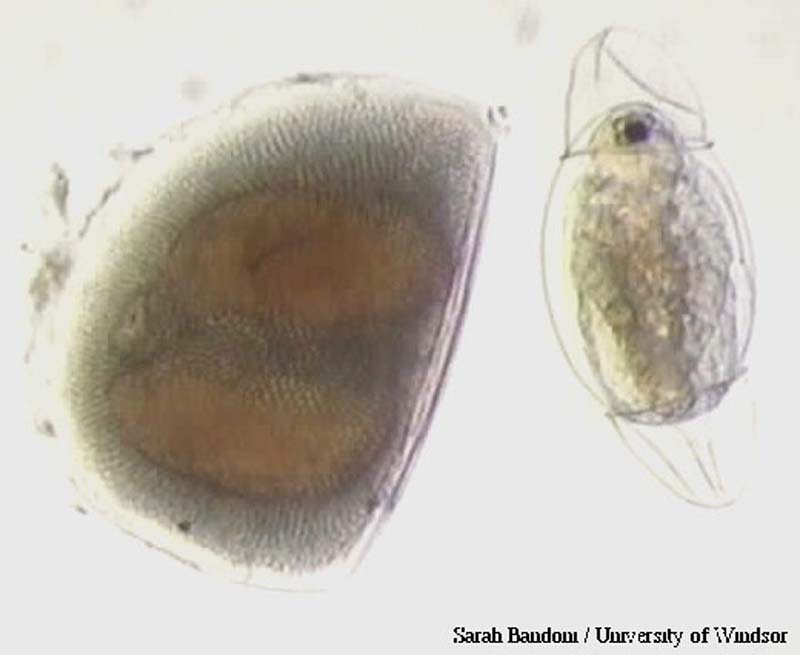
Many Daphnia reproduce by cyclical parthenogenesis: females produce clonal offspring during favorable conditions and switch to sexual reproduction to produce resting eggs (ephippia) when conditions worsen. These durable eggs can survive freezing or drying and hatch when conditions improve. Ecologically, Daphnia link primary producers (algae) to higher consumers such as fish and insect larvae; their grazing can influence algal blooms and water clarity.
Research, monitoring, and notable facts
Daphnia are widely used in classroom demonstrations and scientific research because of their transparency, short generation time, and sensitivity to contaminants. They serve as a standard test organism in ecotoxicology and freshwater monitoring, and some species have been the focus of genomic and evolutionary studies. Their ability to develop inducible defenses in the presence of predators and their production of resting eggs make them useful models for studying phenotypic plasticity and life-history responses.
Distinctions and practical notes
- Daphnia vs. copepods: both are planktonic but differ in body shape, locomotion, and feeding structures.
- Handling: live Daphnia are fragile and often used alive for observation; samples for analysis are typically collected with fine mesh nets.
- Conservation: while not usually endangered, Daphnia populations respond quickly to pollution, eutrophication and invasive species, making them useful ecological indicators.
Questions and answers
Q: What are Daphnia?
A: Daphnia are small, planktonic crustaceans.
Q: How long are Daphnia?
A: Daphnia are between 0.2 and 5 mm in length.
Q: What order do Daphnia belong to?
A: Daphnia belong to the order Cladocera.
Q: Why are Daphnia often called water fleas?
A: Daphnia are often called water fleas because of their jumpy swimming style.
Q: What kind of aquatic environments do Daphnia live in?
A: Daphnia live in various aquatic environments ranging from acidic swamps to freshwater lakes, ponds, streams and rivers.
Q: Are Daphnia insects?
A: No, Daphnia are not insects. They are crustaceans.
Q: Are Daphnia very large?
A: No, Daphnia are very small, between 0.2 and 5 mm in length.
Related articles
Author
AlegsaOnline.com Daphnia: biology, ecology and uses of water fleas Leandro Alegsa
URL: https://en.alegsaonline.com/art/25480
Sources
- decapoda.nhm.org : "Freshwater animal diversity assessment"
- doi.org : 10.1007/s10750-007-9013-5
- dx.doi.org : 10.1007/978-1-4020-8259-7_19
- aquadaily.com : "The amazing Daphnia water flea"