
Dallas County, Iowa
Dallas County is a central Iowa county west of Des Moines. Founded in 1846 and named for Vice President George M. Dallas, its seat is Adel. It has shifted from rural farmland to a fast-growing suburban area.
Overview
Dallas County is a county in the U.S. state of Iowa and lies to the west of the Des Moines metropolitan core. The county was established in 1846 and is commonly reported to be named for Vice President George M. Dallas. According to the 2010 census, 66,135 people lived in the county; since that count the county has experienced notable population growth as suburban development expanded outward from Des Moines. The county seat is Adel, where the courthouse and primary county offices are located (county seat information).
Image gallery
2 Images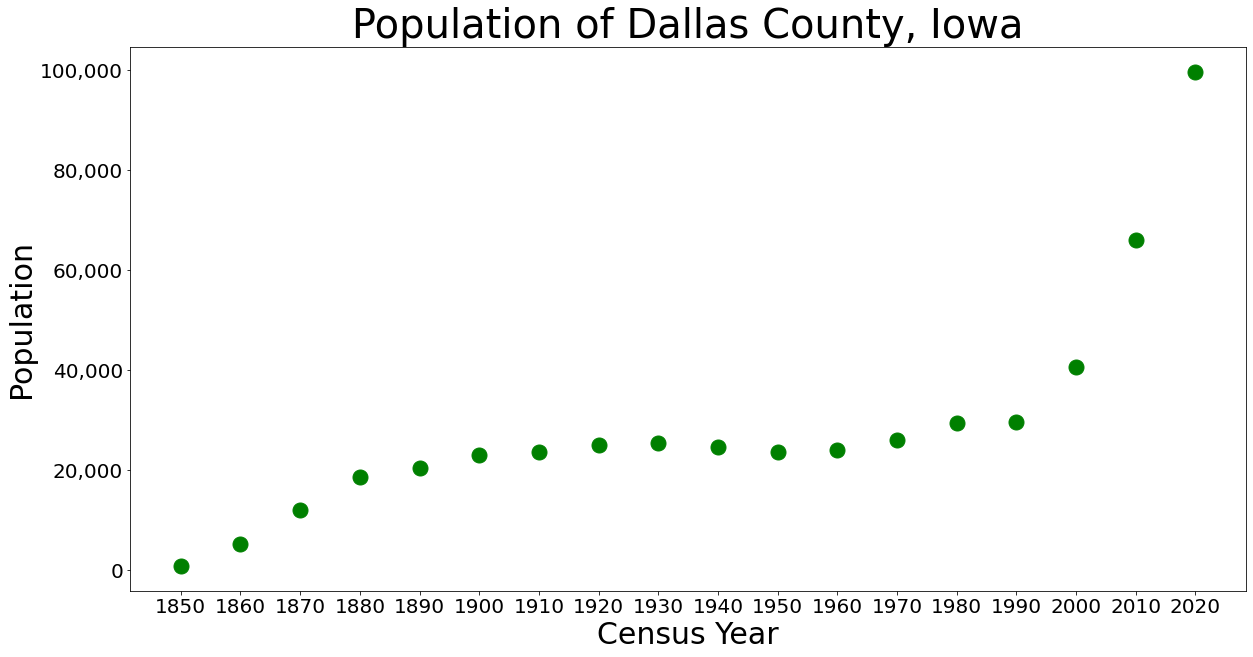

History and development
Early settlement and development were driven by agriculture, with small towns serving local farming communities. Over time, improved roads and the proximity to a regional economy encouraged commuting, residential subdivisions, and commercial growth. Local histories note changes in land use and community patterns as part of broader 20th and 21st century trends in the American Midwest.
Geography and environment
The county features typical central-Iowa terrain of rolling plains, cultivated fields, and a network of creeks and small rivers that drain to larger watersheds. Remaining patches of prairie and riparian corridors provide habitat for native plants and wildlife. Outdoor recreation areas, county parks and trails offer access to natural landscapes for residents and visitors.
Communities and demographics
Dallas County contains small towns, townships and growing suburban neighborhoods. Several school districts serve the county and public services have expanded in response to rising population and commuting patterns. While agriculture continues to be an important economic activity, many residents commute to jobs in Des Moines and nearby communities.
Economy, transportation and services
The local economy blends farming, light industry, retail and service sectors that support suburban and rural populations. Transportation networks—state and county highways, arterial roads, and regional connections—are important for daily commuting and freight movement. County government is administered from the seat by an elected board of supervisors and standard departments responsible for public safety, roads, planning and social services.
Recreation and culture
- Community life includes county fairs, historic downtowns, local museums and annual events that reflect agricultural and small-town traditions.
- Parks, trail systems and river access provide outdoor recreation opportunities such as hiking, fishing and cycling.
For more detailed information on local government, services and visitor resources consult county pages and regional planning documents linked by official sites and community organizations. Additional demographic and historical records can be found through state and federal census and archival sources (Iowa resources and regional references are useful starting points). More local information and contacts are available through county and municipal websites (county homepage).
Related articles
Author
AlegsaOnline.com Dallas County, Iowa Leandro Alegsa
URL: https://en.alegsaonline.com/art/25207