
Cuba, Alabama
Cuba is a small town in Sumter County, Alabama, United States, noted for its rural character and population of 346 at the 2010 census (down from 363 in 2000).
Overview
Cuba is a small town in Sumter County, in the west-central portion of Alabama, United States. According to the 2010 census, the town had 346 residents, a slight decline from 363 recorded in the 2000 census. Like many small towns in the region, Cuba has a compact residential area surrounded by agricultural and wooded land.
Image gallery
3 Images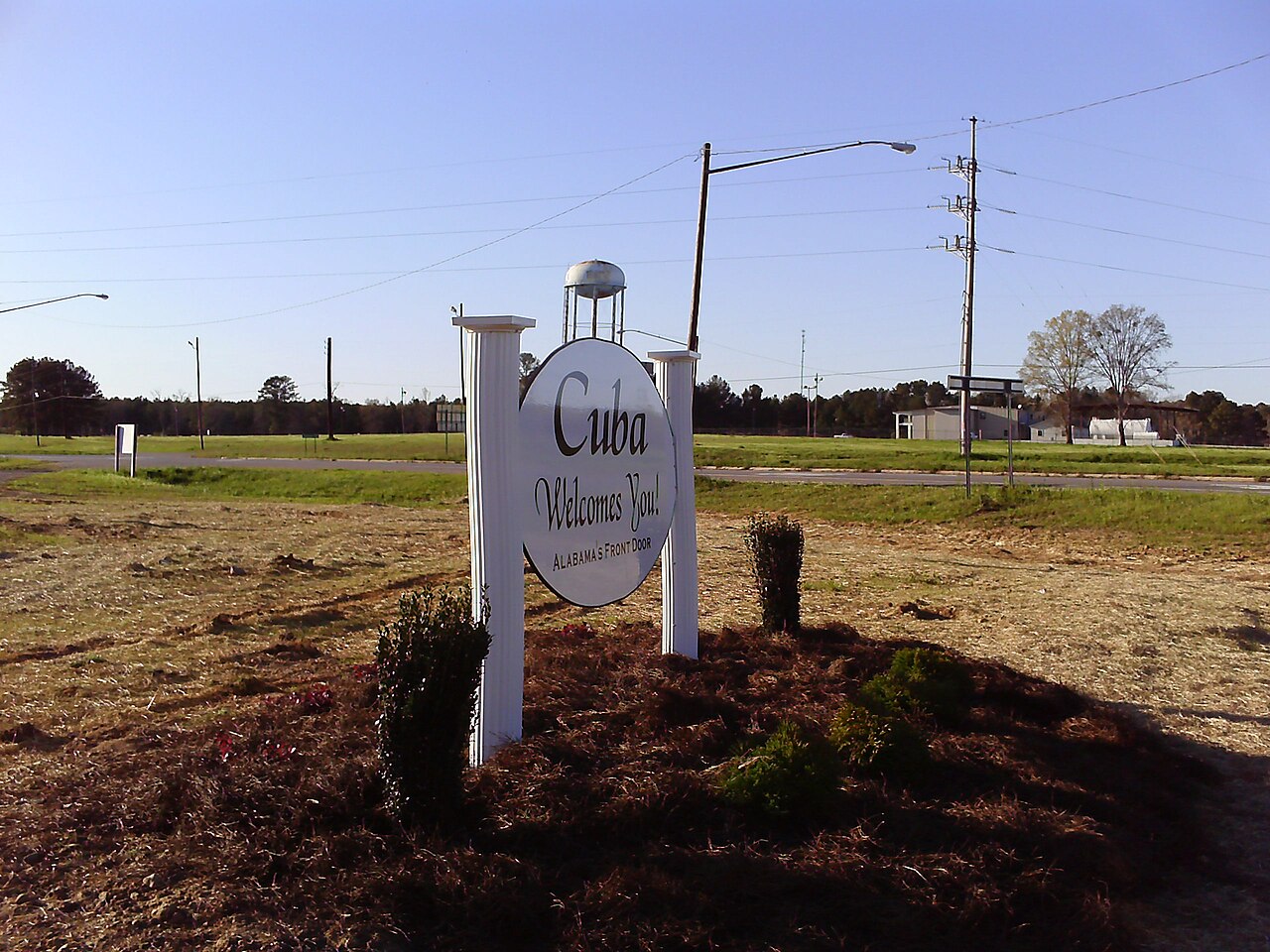


Geography and setting
Cuba sits within a largely rural landscape characterized by farmland, timber tracts and low-density settlement. The town is part of Alabama's historic Black Belt region, an area known for its rich soils and distinct cultural history. Its small size and rural location give it a quiet, community-centered atmosphere.
Demographics and community life
With a population measured in the low hundreds, Cuba exemplifies small-town demographics: a close-knit population, limited municipal services, and local institutions—such as churches and volunteer groups—that often serve as social anchors. Population trends between census counts have shown modest decline, reflecting broader rural population shifts in parts of the state.
History and economy
The town's development followed patterns common to rural Alabama: settlement tied to agriculture, timber, and small-scale commerce serving local needs. While Cuba does not have major industrial or commercial centers, its economy is shaped by surrounding farming operations and natural-resource uses. Over time, changes in agriculture and regional economies have influenced employment and population levels.
Notable facts and distinctions
- Cuba is formally recognized as a town by state and federal agencies and appears in national census records (see 2010 census and 2000 census data).
- Its location in Sumter County places it within the broader cultural and ecological landscape of Alabama's Black Belt.
- As a small municipality, Cuba illustrates common issues facing rural communities, such as maintaining services with a small tax base and adapting to demographic change.
For further statistical and administrative details, official sources and county records provide up-to-date information on governance, population changes and local services (town profile, county resources).
Related articles
Author
AlegsaOnline.com Cuba, Alabama Leandro Alegsa
URL: https://en.alegsaonline.com/art/24505
Sources
- www2.census.gov : "2017 U.S. Gazetteer Files"
- census.gov : "Population and Housing Unit Estimates"