
Cross Timbers: a semi‑savanna ecoregion of the southern Great Plains
A transitional mosaic of post oak–blackjack oak woodland and prairie from southeastern Kansas through central Oklahoma into central Texas, shaped by soils, fire, grazing and human land use.
Overview
The Cross Timbers is a broad band of semi‑savanna and woodland on the southern edge of the Great Plains. It occupies a discontinuous zone of mixed grassland and oak‑dominated woodland that follows the southern Great Plains region and extends from southeastern Kansas across central Oklahoma into central Texas. The landscape is best described as a mosaic: clumps of trees and scrub alternate with patches of prairie and open grassland, creating a distinctive patchwork visible at many scales.
Image gallery
2 Images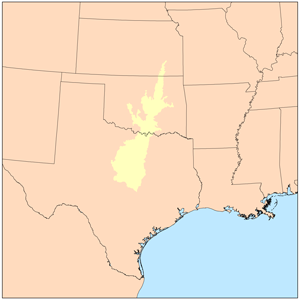

Vegetation, soils and form
The characteristic trees are drought‑tolerant oaks, notably post oak (Quercus stellata) and blackjack oak (Quercus marilandica), mixed with native prairie grasses and forbs. Soils tend to be shallow, rocky or clay‑rich in many places, which limits dense forest development and favors a scattered woodland. Small groves, savanna openings and strips of grassland form the region’s typical structure.
Climate, ecology and wildlife
The Cross Timbers lies in a climatic transition with warm humid summers and variable precipitation that declines westward. As a transition zone between eastern deciduous forest and western grassland, it supports plant and animal species from both provinces. Wildlife includes white‑tailed deer, wild turkey, northern bobwhite and numerous songbirds, reptiles and pollinators that use both woodland and grassland patches. The mosaic creates abundant edge habitat important for biodiversity.
Natural processes and management
Fire and grazing historically maintained the balance between trees and open grassland; periodic low‑intensity fires favored prairie and savanna, while fire suppression and changes in grazing can shift the balance toward denser woodland or reduce native grasses. Contemporary management commonly uses prescribed burning, targeted grazing and mechanical thinning to restore or maintain the mosaic character.
Human history, land use and conservation
Indigenous peoples long used the Cross Timbers for hunting, seasonal movement and resource gathering. With European settlement the region influenced routes, ranching and local timber use; its patchy, brushy nature sometimes impeded travel. Today land use includes ranching, pasture, limited timber harvest, suburban development near growing cities, and protected areas that conserve representative prairie and oak woodland remnants. Conservation priorities emphasize retaining prairie patches, restoring natural fire regimes and reducing fragmentation.
Further information
- The Cross Timbers is best understood as a transition zone rather than a single uniform habitat.
- Its mixture of grassland and oak woodland supports regional cultural traditions such as ranching and hunting, and provides ecosystem services including pollination and soil protection.
- For regional context, see the broader Great Plains and state landscape summaries linked above and in specialist literature (regional overview, state summaries).
Related articles
Author
AlegsaOnline.com Cross Timbers: a semi‑savanna ecoregion of the southern Great Plains Leandro Alegsa
URL: https://en.alegsaonline.com/art/24335