
COVID-19 pandemic in Pakistan
Overview of the COVID-19 pandemic in Pakistan, covering its arrival, public health response, healthcare impact, vaccination rollout, social and economic effects, and regional variations.
Overview
The COVID-19 pandemic reached Pakistan when the first confirmed case was reported on 26 February 2020. The virus spread unevenly across provinces and territories, affecting urban centers more severely than many rural areas. Responses involved national and provincial authorities, health services, and international organisations addressing testing, treatment, prevention and vaccination efforts. For general background see the COVID-19 pandemic entry and for broader context about the country see Pakistan.
Image gallery
10 Images




Progression and characteristics
Transmission followed patterns seen elsewhere: initial imported cases were followed by local chains and multiple waves driven by increased mobility, mass gatherings and emergence of more transmissible variants. Epidemics clustered in densely populated cities, transport hubs and among frontline workers. Public health authorities tracked cases with testing, contact tracing and isolation, adapting measures as scientific understanding advanced.
Government and public-health response
Authorities implemented a mix of non-pharmaceutical interventions—including restrictions on travel, closures of schools and businesses, limits on gatherings, mask mandates and targeted lockdowns—alongside efforts to expand laboratory capacity and medical supplies. Provincial governments often tailored measures to local conditions. The national response included coordination for resources, communication campaigns and support for vulnerable households and businesses.
Healthcare system and vaccination
Hospitals and health workers faced strain during peak periods, prompting accelerated procurement of equipment, oxygen and personnel redeployment. Vaccination campaigns began once vaccines became available, prioritising healthcare workers, older adults and those with comorbidities, then expanding to the wider population. Multiple vaccine types were used and distribution involved federal, provincial and private-sector channels.
Socio-economic effects and notable issues
The pandemic disrupted education, livelihoods and routine health services. Economic measures sought to protect incomes and sustain small businesses, while the informal sector and daily wage earners experienced significant vulnerability. Routine immunisation and disease-control campaigns were interrupted in some areas, raising concerns about other public‑health programmes. Cross-border trade, remittances and supply chains were also affected.
Regional differences and lasting impact
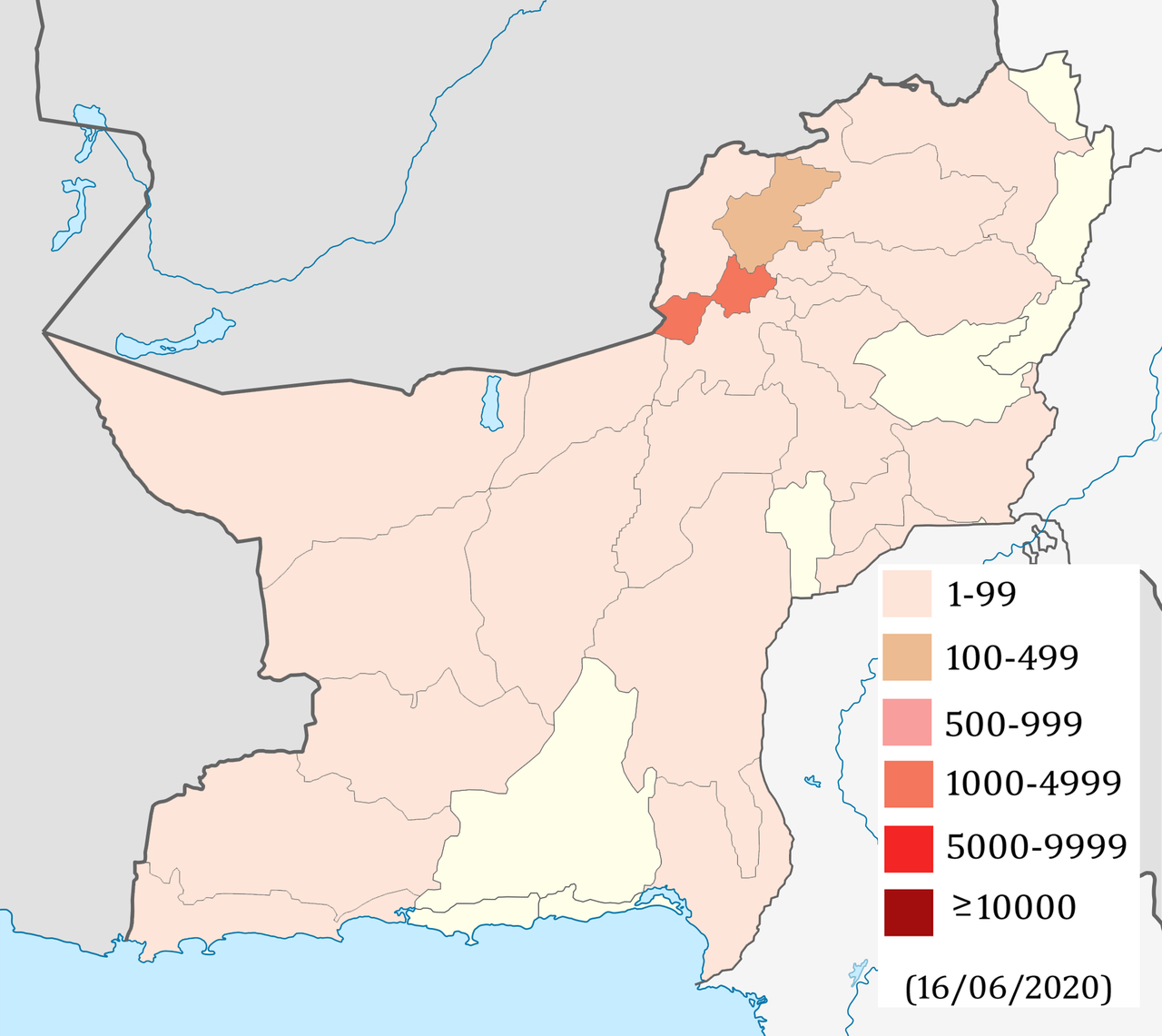
Impact varied by province, with large metropolitan areas experiencing higher caseloads and rural districts often facing access challenges. Lessons highlighted the importance of surveillance, testing capacity, clear risk communication and equitable vaccine distribution. The pandemic prompted investments in health infrastructure and renewed attention to pandemic preparedness and public-health systems.
Related articles
Author
AlegsaOnline.com COVID-19 pandemic in Pakistan Leandro Alegsa
URL: https://en.alegsaonline.com/art/23794
Sources
- covid.gov.pk : "Coronavirus in Pakistan - Confirmed Cases"
- geo.tv : "Coronavirus updates, March 18: Latest news on the coronavirus outbreak from Pakistan and around the world"
- emeatribune.uk : "Pakistan to ease lockdown nationwide from saturday"
- timesofindia.indiatimes.com : "Pakistan announces to ease lockdown from Saturday - Times of India"
- geo.tv : "Coronavirus updates, April 4: Latest news on the COVID-19 pandemic from Pakistan and around the world" · web.archive.org
- geo.tv : "Number of cases expected to rise to 50,000 by April 25, govt tells Supreme Court" · web.archive.org
- tribune.com.pk : "LIVE: PM Imran urges Pakistanis to be steadfast in their faith amid COVID-19 crisis"
- geo.tv : "Coronavirus updates, April 25: Latest news on the COVID-19 pandemic from Pakistan and around the world"
- rackpost.com : "China has prepared a vaccine to treat COVID-19 patients and it would be launched in Pakistan in three months"