
COVID-19 pandemic in Finland
Overview of the emergence, public-health measures, impacts and developments of the COVID-19 pandemic in Finland, including early cases, responses, vaccination and notable features.
The first confirmed case of the global COVID-19 pandemic in Finland was reported on 29 January 2020: a Chinese tourist visiting Ivalo who had travelled from Wuhan tested positive. That initial event marked the start of a broader public health episode that unfolded in waves, driven by introduced infections, subsequent community transmission and the emergence of new viral variants.
Image gallery
6 Images


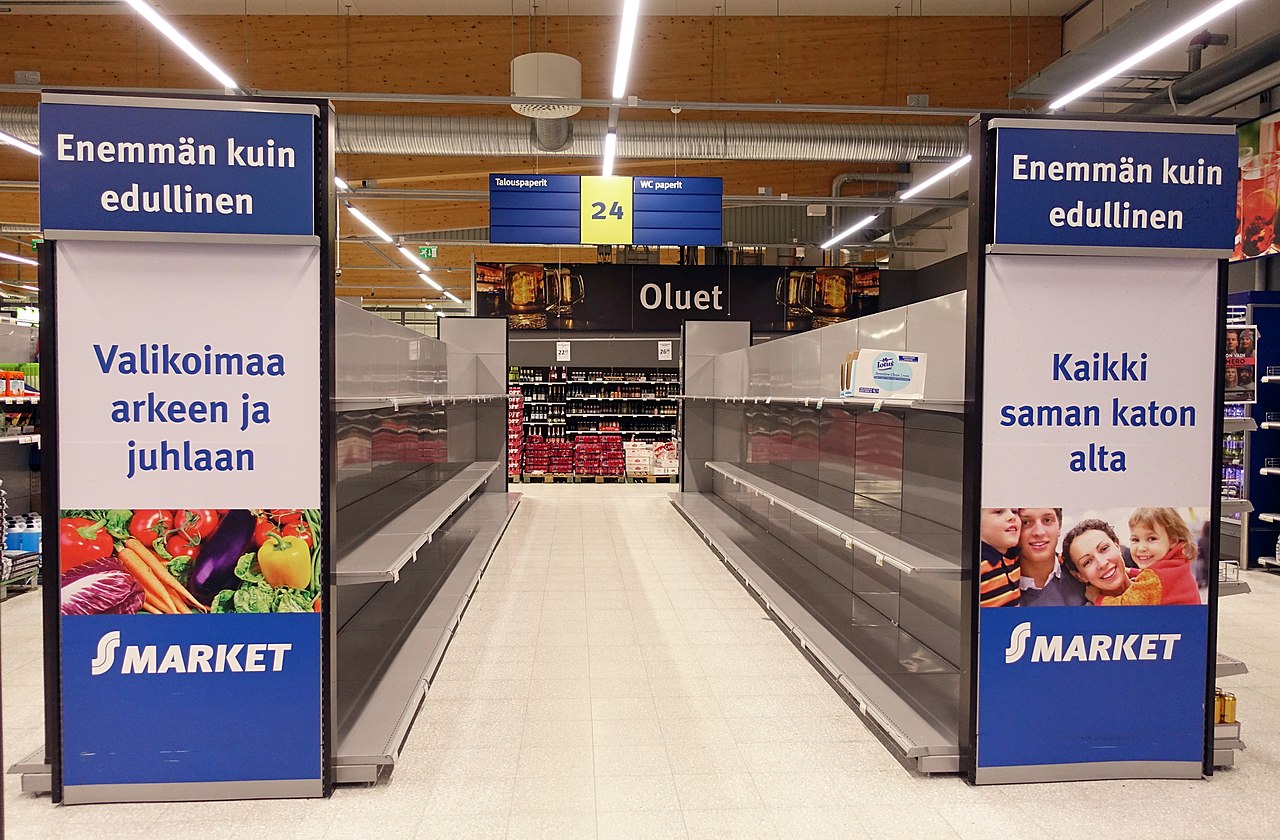


Overview and early development
In the months after the first diagnosis, most early infections in Finland were linked to travel and to contacts of travellers. Major population centres experienced higher transmission because of greater movement of people. National authorities gradually introduced measures to detect, isolate and trace cases while restrictions on travel and public gatherings were used to reduce spread.
Public-health measures and capacity
Finland employed a combination of non-pharmaceutical interventions and health-system actions: testing and contact tracing, quarantine rules for arrivals, limits on large events, temporary school and workplace closures, and recommendations on physical distancing and hygiene. The health system expanded testing capacity and monitored hospital and intensive-care occupancy to avoid overload. Authorities issued changing guidance as scientific understanding and local epidemiology evolved.
Vaccination, variants and later phases
Vaccination programmes began when safe, authorized vaccines became available and were rolled out in phases, prioritizing older adults, health-care workers and other high-risk groups. Over time new variants of the virus altered transmission dynamics, sometimes producing sharper waves of infection; public messaging and the vaccine strategy were adjusted accordingly.
Social and economic impacts
The pandemic affected daily life, education, the economy and cross-border travel. Remote working and distance education became common for portions of the population. The government and social institutions introduced measures to support businesses, workers and public services, while public compliance and trust in health authorities were important factors in implementing policy.
Notable features and lessons
- Finland's outbreak pattern included localized clusters and periods of low transmission between waves, influenced by geography and population density.
- Robust public-health infrastructure, testing and contact tracing were central to response efforts.
- Policy responses balanced health protection with social and economic considerations and changed as evidence and circumstances developed.
For readers seeking more detailed timelines, statistical summaries and official guidance, consult national public-health sources and archived announcements from health authorities and governments for the most current and region-specific information.
Related articles
Author
AlegsaOnline.com COVID-19 pandemic in Finland Leandro Alegsa
URL: https://en.alegsaonline.com/art/23741
Sources
- who.int : who.int/csr/don/05-january-2020-pneumonia-of-unkown-cause-china/en/
- salute.gov.it : "Covid-19 - Situazione nel mondo"
- yle.fi : "Finland issues China travel advisory over coronavirus concerns"
- yle.fi : "Finnair suspends five weekly routes to China due to coronavirus"
- yle.fi : "Up to 24 people in Finland possibly exposed to coronavirus symptom-free"
- yle.fi : "Finland closes schools, declares state of emergency over coronavirus"
- yle.fi : "Uusimmat tiedot koronaviruksesta: Hallitus kertoo lisätoimista klo 16 jälkeen, Suomessa 272 varmennettua tartuntaa, sairastuneita todennäköisesti 20–30 kertaa enemmän"