
COVID-19 pandemic in Bulgaria: overview, response, and impacts
Summary of the spread, public-health measures, societal and economic effects, and notable features of the COVID-19 pandemic in Bulgaria since first confirmation in March 2020.
The COVID-19 pandemic reached Bulgaria in March 2020, when the first confirmed infections were reported and public authorities began tracking cases. The outbreak unfolded in multiple waves over subsequent years, affecting health services, the economy and everyday life. For global context on the disease and countermeasures see WHO information on COVID-19, and for national reporting and announcements consult official Bulgarian sources Bulgaria COVID-19 updates.
Image gallery
7 Images
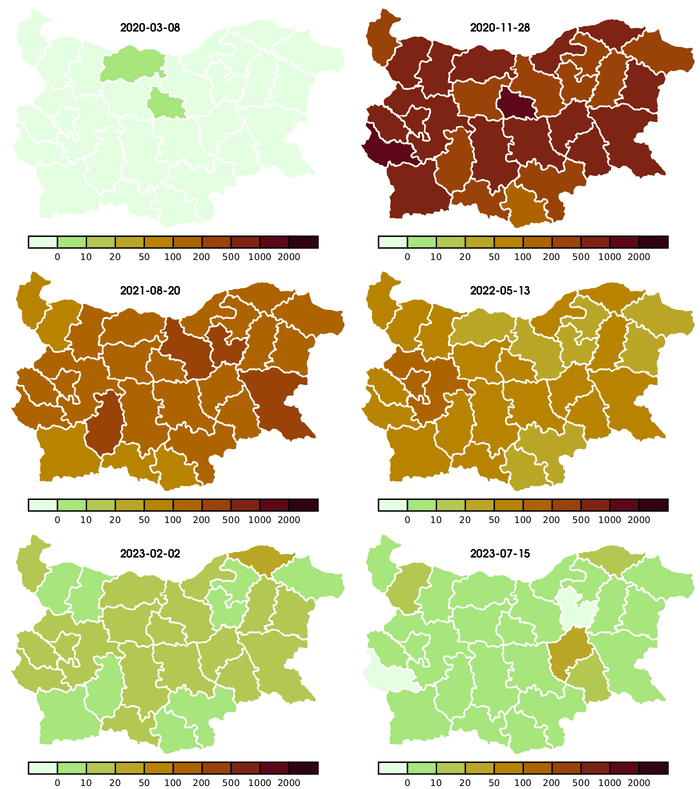


Timeline and public-health response
Bulgaria followed patterns seen across Europe: initial containment measures, followed by periods of eased restrictions and renewed controls as case numbers rose. Authorities used a mix of measures including declared states of emergency, travel and border controls, limits on gatherings, school closures or shifts to remote learning, testing-and-tracing efforts, and targeted lockdowns. Vaccination campaigns began after regulatory approval became available in late 2020, with supply and uptake shaping the later course of the pandemic.
Healthcare system and outcomes
The pandemic placed substantial strain on hospitals and intensive care units, prompting temporary reorganisation of services and staff redeployment. Like many countries, Bulgaria faced challenges in sustaining routine care while responding to surges of COVID-19 patients. Public-health authorities monitored case counts, hospital occupancy and mortality; long-term effects included attention to post-acute ('long COVID') conditions and pressures to strengthen preparedness.
Societal and economic effects
- Education: interruptions, remote teaching and phased reopenings affected students and schools.
- Economy: sectors such as tourism and hospitality were hit hard, while governments introduced fiscal and social support measures to mitigate impacts.
- Work and daily life: shifts to remote work, altered healthcare access and heightened public health awareness became widespread.
Public attitudes and vaccine acceptance influenced the effectiveness of mitigation. Bulgaria experienced comparatively lower vaccine uptake than some neighboring countries, which affected the trajectory of later waves and policy debates about mandates, incentives and communication strategies.
Notable lessons and present outlook
The pandemic highlighted the need for resilient health-care capacity, clear public communication and coordinated regional responses. Ongoing surveillance, booster campaigns when recommended, and integration of pandemic lessons into health policy remain priorities as the country transitions to long-term management of SARS-CoV-2 alongside other respiratory diseases.
Related articles
Author
AlegsaOnline.com COVID-19 pandemic in Bulgaria: overview, response, and impacts Leandro Alegsa
URL: https://en.alegsaonline.com/art/23718
Sources
- esribulgaria.maps.arcgis.com : "Коронавирус COVID-19 на територията на България"
- rferl.org : "Bulgaria, Moldova Report First Coronavirus Cases"
- focus-news.net : "Проф. Тодор Кантарджиев: От Плевен имаме две положителни проби за коронавирус, от Габрово също"
- news.bnt.bg : "НС прие с пълно единодушие обявяването на извънредно положение в цялата страна - По света и у нас"
- dariknews.bg : "28-дневна карантина за заразени с коронавирус - България"
- dw.com : "Коронавирус: В България удължават извънредното положение"
- coronavirus.bg : "Новини"