
Corporate tax
Levies imposed on corporate profits; covers who pays, taxable base, common features, international issues, and distinctions from other business taxes.
Overview
Corporate tax is a government levy imposed on the profits of legal entities that operate as corporations. The obligation falls on the business itself rather than on individual owners or shareholders, so it differs from personal income tax. In many jurisdictions the term refers to an income-style charge assessed on a company's net earnings after allowable expenses and adjustments. A corporation may therefore file returns, pay installments, and claim credits under rules that vary by country. The general concept of a tax on corporate profit underpins public revenue systems around the world.
Image gallery
1 Image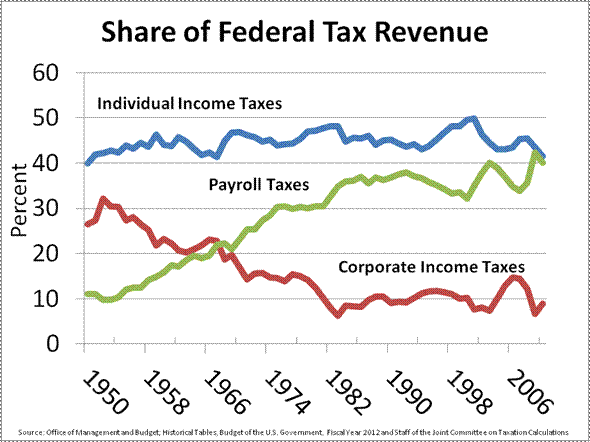
Key features
Corporate tax systems share several common elements but differ in details. Typical features include definitions of taxable income, allowable deductions, tax rates (which may be flat or graduated), and mechanisms to avoid double taxation of dividends. Many systems distinguish between gross revenue and net profit, taxing the latter after costs, depreciation, and specific exemptions. Governments may also offer credits for research, investment, or regional development to influence corporate behaviour.
- Tax base: generally net profits rather than turnover.
- Deductions and allowances: operational costs, depreciation, interest in some cases.
- Credits and incentives: targeted reliefs to promote activities.
- Compliance: corporate filings, audits, and transfer pricing rules for cross-border trade.
Corporate taxation can produce double taxation: profits are taxed at the corporate level and again when distributed to owners as dividends, unless mitigated by credits or integration regimes.
History and development
Corporate taxes became widespread as modern fiscal states developed. From relatively simple beginnings, systems grew more complex as economies industrialized and international trade expanded. Over time, rules have been layered to address new forms of business organization, cross-border income, and tax planning techniques.
International and policy issues
Globalization created challenges such as profit shifting, base erosion, and the use of tax havens. Countries now negotiate treaties, adopt transfer pricing rules, and sometimes harmonize measures to limit avoidance. Policymakers balance revenue needs with competitiveness: lower headline rates can attract investment, while targeted incentives seek social or economic goals. Cooperative entities may face different treatments; for example, cooperatives and certain nonprofit associations are often eligible for special exemptions or reduced rates depending on their structure and purpose.
Distinctions and importance
Corporate tax is distinct from taxes on individuals or on consumption. It plays a central role in public finance and in shaping business decisions about investment, financing, and organization. Debates continue about fairness, efficiency, and the best ways to tax corporate activity in an increasingly interconnected economy.
Related articles
Author
AlegsaOnline.com Corporate tax Leandro Alegsa
URL: https://en.alegsaonline.com/art/23209