
Copacabana, Rio de Janeiro: Beachfront neighborhood and cultural landmark
Copacabana is a South Zone neighborhood of Rio de Janeiro famed for its 4 km beachfront, lively promenade, historic fort, and major cultural events. This entry outlines its geography, history, attractions, and significance.
Overview
Copacabana is a densely populated bairro (neighbourhood) in the South Zone of Rio de Janeiro (city), Brazil (country). It is celebrated worldwide for its long, gently curved balneario beach (beach) roughly 4 km in length. The district combines residential blocks, large hotels, restaurants and a continuous seafront promenade that forms a major focal point for both locals and visitors.
Image gallery
10 Images




Geography and principal features
Copacabana stretches along the Atlantic coastline between the neighboring districts and is bordered by hills and urban thoroughfares. The beachfront is lined by Avenida Atlântica and a broad pedestrian promenade paved in a signature black-and-white wave pattern inspired by Portuguese pavement traditions. At the southern end stands the historic Forte de Copacabana, and the beachfront is divided into numbered lifeguarded sectors commonly used as meeting points.
History and development
The name Copacabana derives from a Marian devotion associated with the town of Copacabana in Bolivia. The area developed from a seaside suburb in the late 19th and early 20th centuries into a dense urban neighborhood as hotels, apartment blocks and cultural venues were built. Over the decades it became a model of Brazilian beach culture and modern seaside urbanism.
Culture, events and everyday life
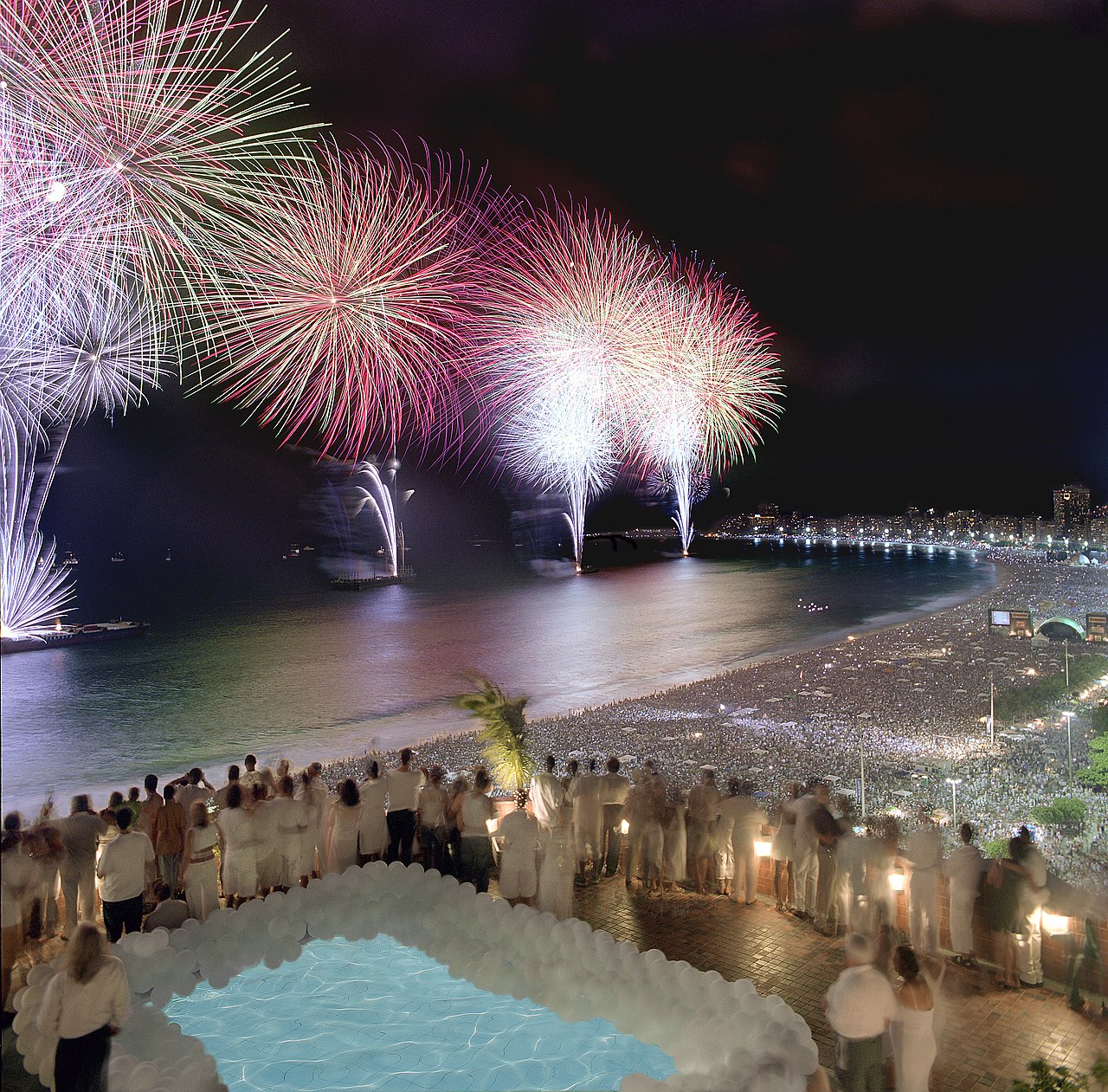
Copacabana is a stage for street life, music, and sport. The sand hosts informal games of futebol and volleyball, and the promenade is popular with joggers and dancers. It is also a principal site for major public gatherings: New Year’s Eve fireworks and celebrations draw very large crowds, while Carnival and other festivals animate streets and squares. Cafés, samba bars and seafood restaurants contribute to a lively nightlife.
Attractions and uses
- Fort of Copacabana with military museum and coastal views
- Wide beach with lifeguard stations and sports zones
- Promenade for walking, cycling and patterned pavement viewing
- Hotels, restaurants and retail serving tourism and local residents
Notable facts and visitor information
Copacabana is one of the most recognizable urban beaches in the world and often symbolizes Rio’s beachfront culture in photography and film. As a busy tourist area it offers excellent services but also shares common large-city challenges such as crowding and petty crime; typical precautions like securing belongings and staying in well-lit areas are recommended. Its mix of leisure, commerce and history makes Copacabana both a practical neighborhood and an enduring global icon of seaside urban life.
Related articles
Author
AlegsaOnline.com Copacabana, Rio de Janeiro: Beachfront neighborhood and cultural landmark Leandro Alegsa
URL: https://en.alegsaonline.com/art/22932
Sources
- photos4travel.com : "Top 10 Most Popular Beaches in the World, Beach Vacation"