
Concepción Picciotto — longtime White House peace vigil activist
Spanish-born activist Concepción Picciotto maintained a continuous peace vigil opposite the White House from 1981 until 2016, protesting nuclear weapons and advocating nonviolent disarmament.
Overview
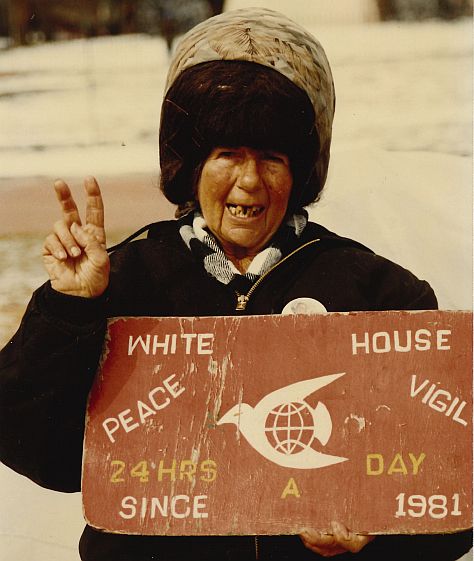
Concepción Picciotto (January 15, 1936 – January 25, 2016), often called Conchita or Connie, was a Spanish-born peace activist best known for maintaining a continuous protest camp directly across from the White House in Washington, D.C. Beginning in 1981, she lived publicly in a small shelter and kept an ongoing vigil to draw attention to nuclear weapons, war, and the need for nonviolent solutions. Her presence became a persistent symbol of single-person dissent in the U.S. capital.
Image gallery
3 Images

Vigil, methods, and daily life
Picciotto's protest took the form of a long-standing, highly visible vigil consisting of candles, signs, and quiet demonstrations. She positioned herself on the 1600 block of Pennsylvania Avenue in a spot supporters sometimes called "1601 Pennsylvania Avenue." The vigil involved simple, sustained acts: holding signs, displaying messages about disarmament, and keeping watch day and night. Her methods emphasized continuity and moral witness rather than large-scale organizing or electoral politics.
History and context
Picciotto began her public vigil in August 1981, during an era of heightened Cold War tensions and an expanded U.S. nuclear arsenal. Her protest coincided with widespread peace and anti-nuclear movements both in the United States and internationally. Over the decades she continued through multiple administrations, adapting her message to changing political circumstances while maintaining the central demand for nuclear disarmament and peaceful conflict resolution.
Impact and public reception
Although she remained a solitary figure for much of her vigil, Picciotto attracted attention from the media, visitors, and fellow activists. Her long-term presence sparked debates about the rights of protesters, public space regulations, and how governments respond to persistent dissent. Supporters regarded her vigil as a moral admonition to leaders, while critics sometimes questioned the effectiveness of continuous solo protests. Regardless, her vigil became widely recognized as one of the longest-running acts of political protest in the United States.
Notable facts and later years
- Born in Vigo, Spain, Picciotto immigrated to the United States and made Washington, D.C. the site of her protest.
- She continued the vigil for more than three decades, keeping a public presence through changing political eras.
- Her protest occasionally brought her into contact with municipal authorities and park officials, and she navigated changing rules around encampments and public demonstrations.
- Picciotto died in Washington, D.C., on January 25, 2016, after complications related to a fall.
For more context on peace activism and public demonstrations, see resources on the broader movement: peace movement overview, legal aspects of protest and public space: public protest law, historical accounts of anti-nuclear activism: anti-nuclear history, profiles of individual advocates: activist profiles, and contemporary coverage of Picciotto's vigil: media reports.
Note: This article summarizes widely reported aspects of Concepción Picciotto's life and activism without exhaustive detail about every episode or legal matter; it aims to convey the significance of her long-term vigil and its place in modern protest history.
Related articles
Author
AlegsaOnline.com Concepción Picciotto — longtime White House peace vigil activist Leandro Alegsa
URL: https://en.alegsaonline.com/art/22375
Sources
- news.google.com : "A life of protest"
- news.google.com : "For some, the vigil isn't over yet"
- news.smh.com.au : "Washington protester who outlasts presidents"
- prop1.org : "The President's Neighbor"
- washingtonpost.com : Concepcion Picciotto, who held vigil outside the White House for decades, dies