
Complex plane
A clear, compact overview of the complex plane: its structure, coordinate systems, history, common operations, and applications in science and engineering.
Overview
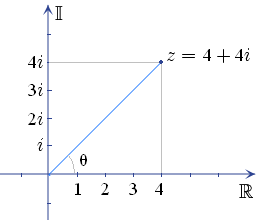
The complex plane is a two-dimensional way to represent complex numbers as points or vectors. Each complex number z is written algebraically as a + bi, where a (the real part) and b (the imaginary part) are real numbers and i denotes the principal square root of -1. Visually, the horizontal axis is the real axis and the vertical axis is the imaginary axis, so the number a + bi corresponds to the point with coordinates (a, b). For a general introduction see complex plane.
Image gallery
4 Images

Coordinates and basic operations
In the plane one may treat complex numbers like vectors: addition corresponds to vector addition and subtraction corresponds to translating points. Important quantities associated to a complex number z = a + bi include the real part Re(z) = a, the imaginary part Im(z) = b, and the complex conjugate \u0301z = a - bi. The distance from the origin to the point is the modulus |z| = sqrt(a^2 + b^2) and the angle the vector makes with the positive real axis is the argument arg(z). The algebra of real numbers underlies these coordinates: both a and b belong to the set of real numbers, commonly denoted with real numbers.
Polar form, Euler's formula, and multiplication
Besides Cartesian coordinates, complex numbers are often expressed in polar form as r(cos θ + i sin θ) = r e^{iθ}, where r = |z| is the modulus and θ = arg(z) is the argument. Euler's formula links exponential and trigonometric representations and makes geometric properties of multiplication transparent: multiplying by a complex number scales lengths and rotates angles. The symbol i itself is the canonical imaginary unit; more on this is available at i, the square root of -1. Polar coordinates are especially useful for powers, roots, and describing rotations.
Common operations and visual interpretations
- Addition: translate points or add vectors componentwise.
- Multiplication: multiply moduli and add arguments (scaling and rotating).
- Conjugation: reflect across the real axis (z \u2192 \u0301z).
- Modulus and argument: give polar coordinates and measure distance/angle from the origin.
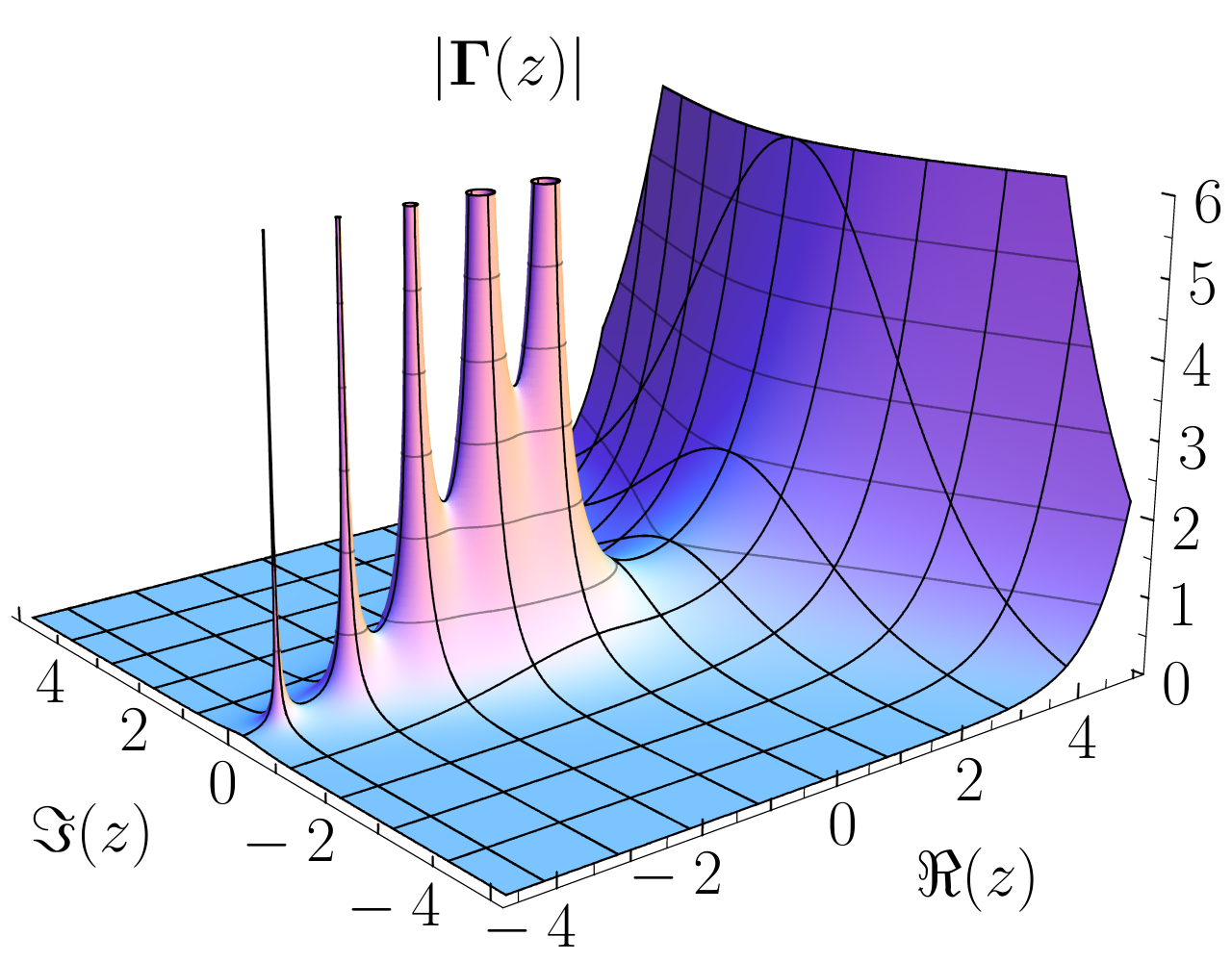
- Mappings: complex functions map the plane to itself and can produce stretching, folding, and rotation; to explore these ideas see resources on complex functions.
History and mathematical context
The geometric picture of complex numbers has roots in work by mathematicians who proposed representing complex quantities as points in a plane. This visualization clarified many algebraic identities and led to geometric interpretations of roots, powers, and transformations. Over time the complex plane became central to complex analysis, a branch of mathematics that studies differentiable functions of a complex variable and their remarkable properties, such as conformality and analytic continuation.
Applications and significance
The complex plane and complex-valued functions play an essential role across sciences and engineering. In physics and chemistry they appear in wave descriptions and quantum models (for example, in the study of atoms and their energy levels, see atomic applications), while electrical engineering uses complex numbers to represent alternating currents, impedances, and signal phasors (see electrical applications). In addition, techniques from complex analysis assist with problems in fluid dynamics, aerodynamics, control theory, and many computational methods.
Distinctions and notable facts
Although the complex plane is isomorphic to the two-dimensional real plane R^2 as a real vector space, its structure as a field (with multiplication defined to reflect rotation and scaling) makes it richer than ordinary planar geometry. Analytic functions on the complex plane obey stricter rules than real-differentiable functions, which is why complex analysis yields strong results such as the maximum modulus principle, Cauchy's integral formulas, and powerful classification of singularities.
For further reading and visual demonstrations, see introductory materials on the complex plane, tutorials about complex functions, and applied examples in physics and engineering at the linked resources above.
Related articles
Author
AlegsaOnline.com Complex plane Leandro Alegsa
URL: https://en.alegsaonline.com/art/22251