
Calculator — functions, history, types, and everyday uses
Overview of calculators: what they do, how they developed, main types (mechanical, electronic, scientific, graphing), typical features and common applications in education, engineering and finance.
A calculator is a device designed to perform arithmetic and other mathematical operations quickly and with minimal effort. At its simplest, a calculator helps with mathematical tasks by automating repetitive or error‑prone steps. Common single‑key operations include addition, subtraction, multiplication and division, while many models also provide roots such as the square root and functions needed for higher mathematics like calculus. Modern general‑purpose computers and mobile devices also offer calculator functions — for example a smartphone or other computer can run calculator applications that range from simple to highly specialized.
Image gallery
10 Images


Characteristics and common parts
Typical electronic calculators include a numeric keypad, operator keys, a display and some form of internal circuitry to execute operations. Displays may be LED, LCD or graphical, allowing both numeric output and plotted curves. Power comes from small batteries, solar cells, or both. Simpler mechanical variants rely purely on gears and levers and require no electricity.
Types and capabilities
- Basic calculators: perform arithmetic and sometimes percentages or square roots.
- Scientific calculators: offer exponents, logarithms, trigonometric functions and constants useful in algebra, geometry and physics.
- Graphing calculators: plot functions and handle symbolic expressions and numerical solvers.
- Financial calculators: include functions for interest rates, cash flows and amortization.
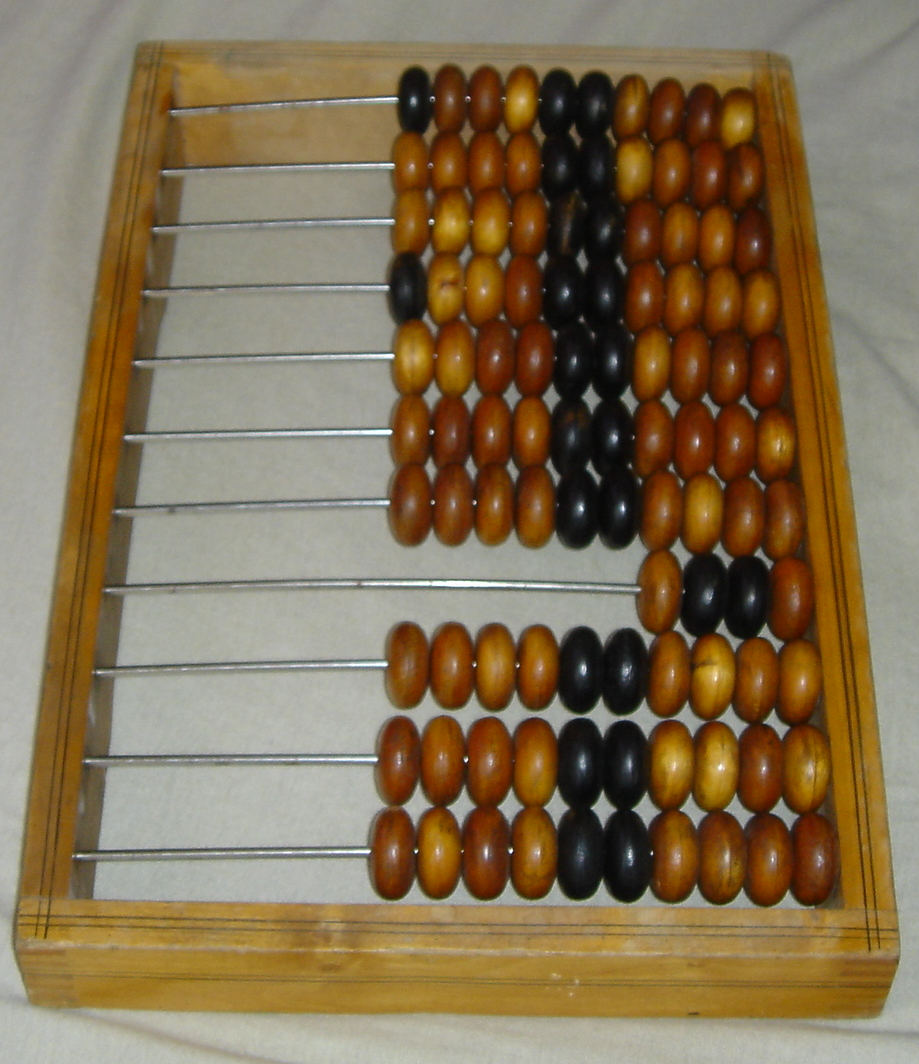
- Mechanical devices: such as the abacus and historical slide rules, which operate without electronic components.
Historical development
The need for calculation tools goes back thousands of years. Early aids like the abacus provided a physical way to track values. From the 17th to 19th centuries, inventors produced mechanical calculators that used gears and cams to add, subtract and multiply. The 20th century brought electronic calculators, initially large and expensive, then rapidly miniaturized with integrated circuits. By the late 20th century handheld electronic and graphing models became common in classrooms and workplaces.
Uses, examples and importance
Calculators are used across many domains: students use them to learn and check work; engineers and scientists rely on them for design and analysis; accountants and financial professionals apply specialized machines for spreadsheets and forecasts. Programmable calculators allow researchers and technicians to automate repetitive routines. In daily life, people use small pocket calculators or apps on a smartphone and computer for budgeting, shopping and basic conversions.
Notable distinctions and practical considerations
Different calculators offer tradeoffs between precision, ease of use and range of functions. Some use postfix entry methods (for example RPN) favored in certain professional circles, while others follow standard algebraic input. Exam rules often restrict the type of calculator allowed to ensure fairness. Battery life, display clarity, programmability and the availability of numerical methods distinguish entry‑level models from advanced scientific or graphing units.
While many traditional calculators perform a fixed set of operations, software tools and apps continue to blur the line between a calculator and a general‑purpose computing environment. For further reading on fundamental operations and mathematical topics referenced here, see resources on mathematics, basic addition, subtraction, multiplication, division, methods for extracting a square root, introductions to calculus, tools such as the abacus, and materials on trigonometry.
Questions and answers
Q: What is a calculator?
A: A calculator is a machine which allows people to do math operations more easily.
Q: What types of calculations can most calculators do?
A: Most calculators can add, subtract, multiply, and divide. Some also do square roots, and more complex calculators can help with calculus and draw function graphs.
Q: Where are calculators found?
A: Calculators are found everywhere. A smartphone or other computer can also act as a calculator.
Q: How does an abacus work?
A: An abacus will work without electricity.
Q: How does an electronic calculator work?
A: An electronic calculator uses batteries for power.
Q: What type of calculations can simple calculators do?
A: Simple calculators can only add, subtract, multiply and divide, and sometimes take square roots.
Q: What type of calculations can scientific calculators do?
A: Scientific calculators can use exponents (or powers or indices) and trigonometry functions in addition to the basic operations like adding, subtracting etc..
Related articles
Author
AlegsaOnline.com Calculator — functions, history, types, and everyday uses Leandro Alegsa
URL: https://en.alegsaonline.com/art/16049