
College basketball
Organized basketball played by college and university teams, primarily in the United States. Covers leagues, season structure, the NCAA divisions and tournaments, rules, history, and cultural impact.
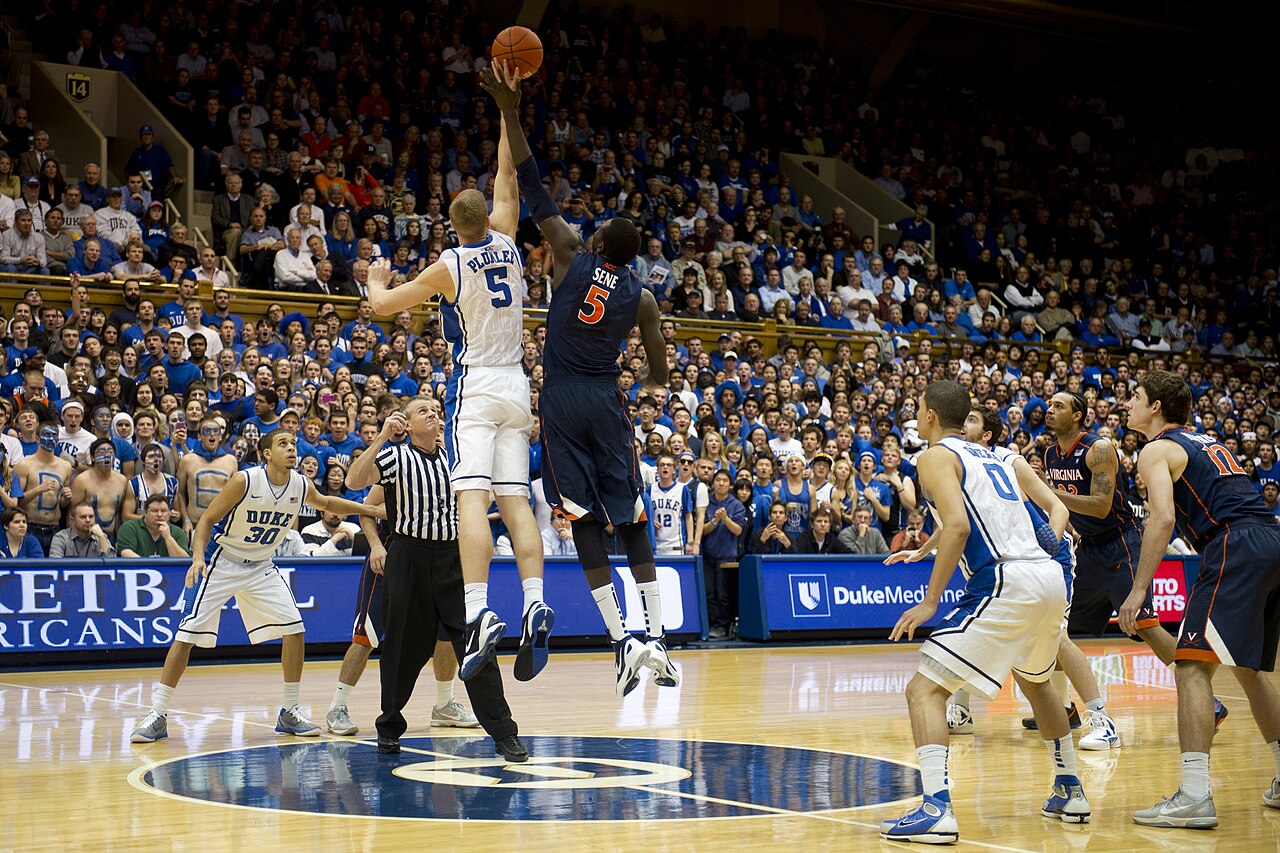
College basketball refers to organized basketball contests between teams representing colleges, universities and other post‑secondary institutions. In the United States it is the dominant form of amateur basketball and is governed by a number of associations and rulebooks. The game serves both as a competitive sport and as a developmental stage for players, coaches and officials. For a general description of the sport itself see basketball, while the American context is often described simply as college basketball in the United States.
Image gallery
7 Images


Organization and structure
Most U.S. college programs belong to the National Collegiate Athletic Association (NCAA), which organizes schools into three divisions (I, II and III) according to institutional size, scholarship allowances and competitive emphasis. Other organizations, such as the National Association of Intercollegiate Athletics (NAIA) and junior college associations, operate parallel systems. Within each governing body, teams are grouped into conferences — regional or historical alliances of institutions that schedule regular‑season play and often run conference tournaments.
Season, tournaments and championships
A typical college season includes an autumn/winter regular season, conference tournaments in late winter, and national postseason tournaments. In NCAA Division I, the most visible postseason event is the national championship tournament: a single‑elimination field of 68 men's teams and 64 women's teams, commonly known as "March Madness." Conference champions receive automatic bids, and additional teams are selected by a committee to fill the remaining slots. The tournament culminates in the Final Four and the national championship game.
Gameplay and rules
College basketball follows rules similar to professional play but with notable differences intended for the amateur level and competitive balance. NCAA games are generally 40 minutes long (two 20‑minute halves for men's play; women's play uses four 10‑minute quarters), and both men’s and women’s college games use a 30‑second shot clock. Three‑point lines, foul handling, substitution rules and overtime formats also differ in detail from professional leagues. These rules are periodically updated by the governing bodies.
History and development
Basketball was invented in 1891 and spread quickly through schools and colleges. College teams and rivalries were instrumental in popularizing the sport before professional leagues became dominant. The NCAA tournament began in 1939 and expanded over decades into a major national event, aided by radio and television coverage. Women's college basketball grew substantially in visibility and support following Title IX and the establishment of organized championships.
Role and cultural importance
Beyond competition, college basketball is a cultural institution: it builds campus identity, produces famous rivalries, and generates significant economic activity for schools and host cities. For many players it is a pathway to professional leagues, including the NBA, though other routes exist. Notable phenomena associated with the sport include bracket contests, "Cinderella" upsets in the national tournament, and public debates about amateurism, athlete compensation and academics.
Key distinctions and formats
- Divisions: Division I programs typically offer athletic scholarships; Divisions II and III differ in scholarship rules and institutional priorities.
- Associations: The NCAA, NAIA and junior college bodies each have distinct membership and postseason structures.
- Tournament formats: Single‑elimination play in the national tournament contrasts with regular‑season conference scheduling and round‑robin formats.
For more detail on rules, governance and current seasons, readers can consult the official pages of the sport and its governing bodies, including the organizations linked above. Coverage of specific teams, conferences and historic tournaments offers deeper insight into the variety and local significance of college basketball across campuses and regions.
Related articles
Author
AlegsaOnline.com College basketball Leandro Alegsa
URL: https://en.alegsaonline.com/art/21577