
Clinch County, Georgia
Clinch County is a rural county in southern Georgia, established in 1850 and named for Duncan L. Clinch. Homerville is the county seat; the area has a small population and an economy based on agriculture and forestry.
Overview
Clinch County is a rural county located in the state of Georgia in the southeastern United States. It was created on February 14, 1850, and takes its name from Brigadier General Duncan Lamont Clinch, a 19th‑century military officer. The county's population has remained small and largely dispersed across farmland, forest and small towns.
As the local center of government and services, the county seat is Homerville, which functions as the primary hub for commerce, schools and county administration. Homerville is the largest community in the county and contains the courthouse, public offices and many civic institutions.
Image gallery
2 Images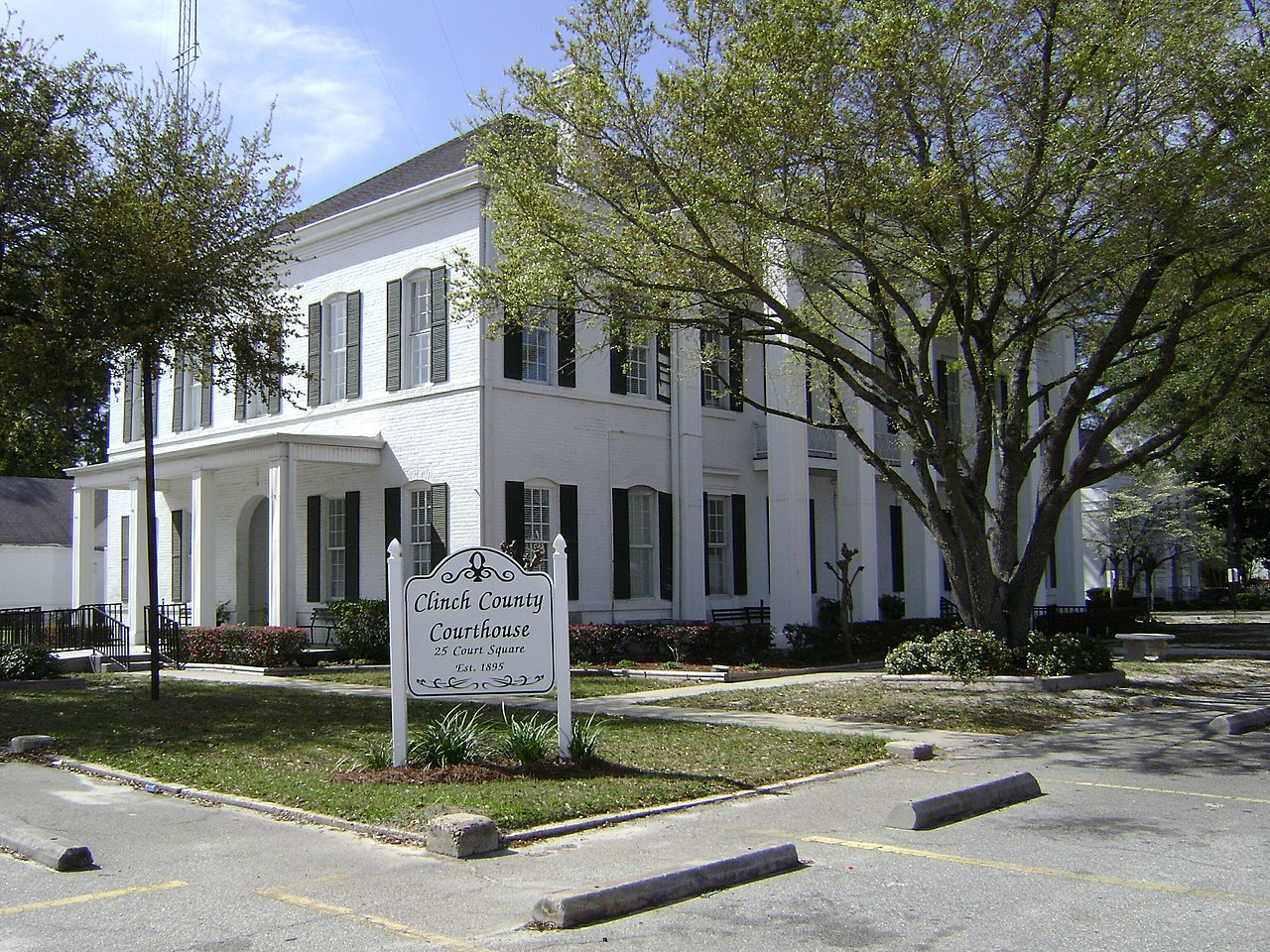

Population and economy
According to the 2010 census, Clinch County had a population of 6,798; it is typical of many South Georgia counties in having a modest, rural population. The local economy is dominated by agriculture, forestry and related industries, with timber production, row crops and small‑scale farming playing important roles. Outdoor recreation, hunting and small businesses also contribute to local livelihoods.
Geographically, Clinch County lies in a region characterized by flat to gently rolling terrain, pine forests and wetlands. It is part of a broader coastal plain area that includes significant tracts of managed forest and wildlife habitat, and it lies near larger wetland complexes that are important for regional ecology and recreation.
History and government
Established by the Georgia General Assembly in 1850, the county was formed during a period of growth and county organization across the state. Its namesake, Duncan L. Clinch, was a figure associated with military campaigns in the early 19th century. Local government is centered in Homerville and provides typical county services such as public safety, road maintenance and education oversight.
- Founded: February 14, 1850
- Namesake: Duncan Lamont Clinch
- County seat: Homerville
- Reference: state of Georgia records and census data
For visitors and residents, Clinch County offers a quiet, rural lifestyle and access to natural areas. Local history, small‑town culture and outdoor pursuits are central to the county’s identity and appeal.
Related articles
Author
AlegsaOnline.com Clinch County, Georgia Leandro Alegsa
URL: https://en.alegsaonline.com/art/21005
Sources
- books.google.com : The Origin of Certain Place Names in the United States
- 2010.census.gov : "2010 Census Data"