
Classic Controller (Nintendo Wii)
Wired controller that connects to the Wii Remote to provide a traditional gamepad layout for the Wii's Virtual Console, WiiWare and compatible titles.
The Classic Controller is a gamepad accessory introduced by Nintendo during the Wii era to offer a conventional control scheme alongside the console's motion-based Wii Remote. Rather than replacing motion input, it provided a familiar two-analog-stick layout and standard face and shoulder buttons for software that benefits from precise directional and button-based control.
Image gallery
4 Images


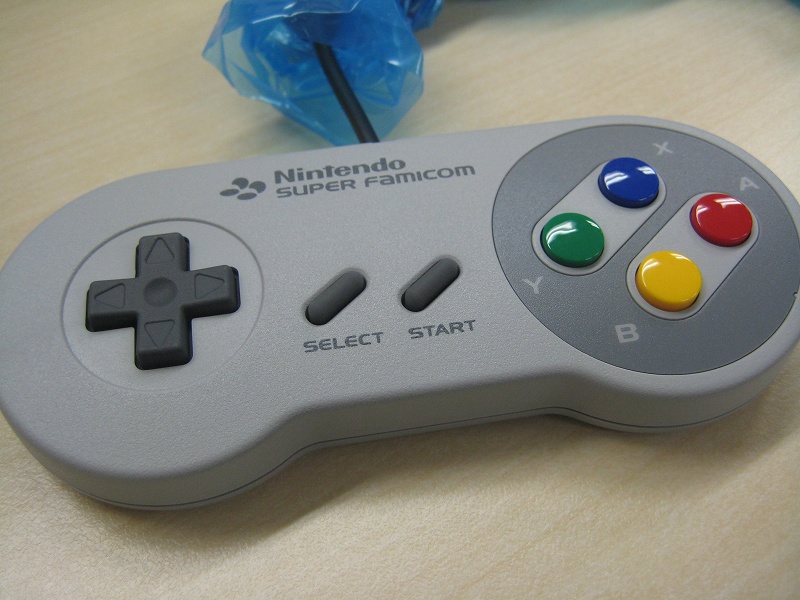
Design and features
The controller is a small, lightweight plastic unit that plugs into the expansion port on the underside of a Wii Remote. Its main elements include two analog sticks, a digital directional pad, four face buttons labeled A/B/X/Y, two pairs of shoulder buttons (L/R and ZL/ZR), and system buttons such as Start/Select and Home. Because it relies on the Wii Remote for wireless communication and power, it is not a standalone Bluetooth controller.
History and development
Released during the mid-2000s as part of Nintendo's strategy to support both motion and traditional playstyles, the Classic Controller responded to demand for a familiar input method for older titles and genres that do not require motion sensing. Nintendo later produced variants, including a slightly reworked "Pro" style with a different grip and button arrangement, while third-party manufacturers offered compatible designs.
Uses and compatibility
- Commonly used with Virtual Console releases of older Nintendo and third-party games that expect a traditional controller.
- Supported by many WiiWare titles and a selection of retail Wii games that provided alternative control schemes.
- Requires a Wii Remote to be connected; wired to that controller and functions through the Remote's wireless link to the console.
Distinctions and legacy
The Classic Controller differs from the Wii Remote and Nunchuk primarily by omitting motion sensors and offering twin analog sticks and a full complement of shoulder buttons. It is distinct from the GameCube controller in button layout and connector format. Although later Nintendo systems introduced their own modern controllers, the Classic Controller played a key role in preserving the playability of legacy games on the Wii and influenced the design of subsequent traditional controllers and adapters.
Today it remains notable as a transitional accessory bridging motion-centric and conventional control schemes; it is simple, broadly compatible within the Wii ecosystem, and often recommended when playing Virtual Console libraries or titles that benefit from precise stick and button input.
Related articles
Author
AlegsaOnline.com Classic Controller (Nintendo Wii) Leandro Alegsa
URL: https://en.alegsaonline.com/art/20763