
Chukha District (Bhutan)
Chukha is a southwestern Bhutan district whose administrative centre is Phuentsholing. It is a commercial and financial hub and hosts major hydropower projects and a key border crossing with India.
Overview
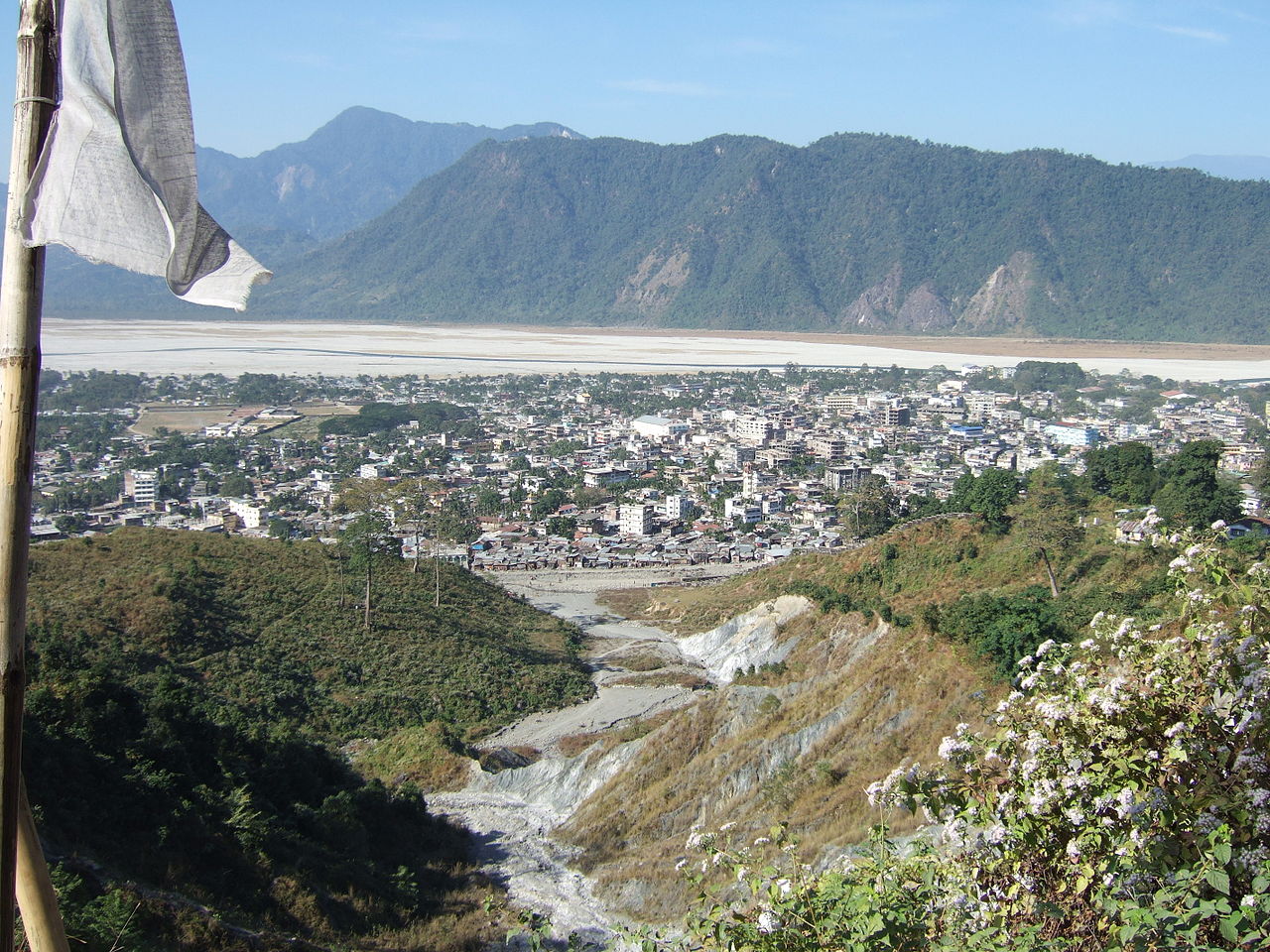
Chukha District is one of the twenty districts of Bhutan. Located in the country's southwest, it occupies a strategic position along Bhutan's international boundary and serves as a primary gateway for cross-border commerce. The district combines lowland trade zones with steep, forested uplands typical of Bhutan's varied terrain.
Image gallery
6 Images



Administration and settlement
The district is governed as a dzongkhag and is subdivided into eleven village blocks, locally known as gewogs. The administrative and commercial centre is Phuentsholing, a major urban settlement and border town that functions as an entry point between Bhutan and India. Phuentsholing concentrates public services, banking, and customs operations that support trade and travel across the frontier. See the district at Chukha District and the town at Phuentsholing.
Economy and infrastructure
Chukha is widely regarded as a commercial and financial hub within Bhutan. Its economy is shaped by cross-border trade, transportation, and energy production. The district hosts important hydropower facilities that generate electricity for domestic use and export, contributing to national revenues and energy security. Road connections through Phuentsholing link Bhutan’s internal network to Indian markets, making the district a logistics and services centre.
History and development
Historically a corridor for trade and cultural exchange, Chukha grew in prominence as modern transport and hydropower investments expanded in the later 20th century. Development has tended to concentrate around Phuentsholing and along major roads, while many gewogs retain agricultural livelihoods and rural settlement patterns. The district’s evolution reflects broader national priorities of economic integration and sustainable resource use.
Culture, environment, and society
Local communities combine traditional Bhutanese customs with influences from cross-border interaction. Languages, family ties, and markets reflect a mix of cultural connections. The landscape includes forested slopes and river valleys, and managing environmental impacts from infrastructure and energy projects is an ongoing concern for planners and residents.
Notable facts
- Gateway role: Phuentsholing functions as one of Bhutan’s principal border crossings and trade centres.
- Energy: Hydropower projects in the district are key contributors to Bhutan’s electricity exports and fiscal receipts.
- Administrative structure: The dzongkhag is divided into eleven gewogs that combine urban, semi-urban and rural areas.
- Development challenges: Balancing economic growth, cross-border commerce, and environmental stewardship remains a priority.
Taken together, these features make Chukha District a vital region for Bhutan’s economy and an important point of contact with neighbouring India.
Related articles
Author
AlegsaOnline.com Chukha District (Bhutan) Leandro Alegsa
URL: https://en.alegsaonline.com/art/20281