
Chub — common name for several freshwater ray-finned fishes
Chub is a vernacular name applied to several small-to-medium freshwater ray-finned fishes (mainly in the carp family). This article summarizes their traits, distribution, ecology, uses and identification notes.
Overview
"Chub" is a nontechnical, widely used name for a variety of freshwater ray-finned fishes found in different regions. The label is applied to several genera and species rather than to a single taxon, and usage varies by country and local tradition. In general conversation it often denotes plump, silvery fishes common in rivers and lakes.
Image gallery
2 Images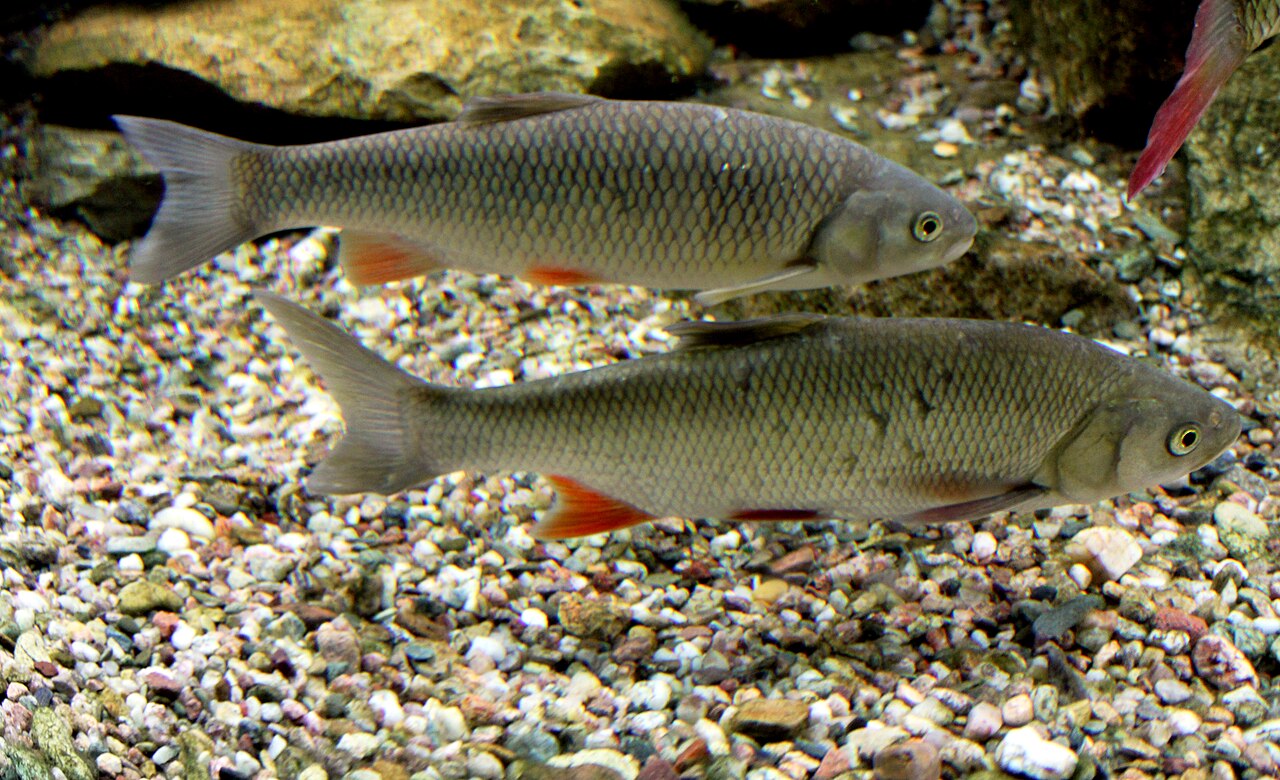

Characteristics
Species called chub tend to share a rounded, stout body and a single dorsal fin, with small to moderately sized scales and a blunt snout. They are usually omnivorous, feeding on invertebrates, plant material and small fish. Most are small-to-medium in size and display the typical appearance of many members of the carp family (Cyprinidae), though not all chubs belong to a single scientific group.
Distribution and common examples
Chubs occur across Europe, North America and parts of Asia. Regional common names differ: in Europe the term commonly refers to the European chub, while in North America separate species are called creek chub, fallfish or lake chub, among others.
- European chub (often referenced as the typical "chub") — a familiar river fish in Europe; see European chub.
- North American chubs — names like creek chub, river chub or fallfish indicate several distinct species across streams and lakes.
- Other groups — similar common names appear for various genera and local species; consult a regional guide or taxonomic overview for specifics.
Ecology, uses and significance
Chubs play important ecological roles as mid-level consumers and as forage for larger predatory fish and birds. They are popular with coarse anglers in some regions, sometimes used as bait, and studied in freshwater ecology because of their abundance and sensitivity to habitat change. Their diets and spawning behaviour can influence river and lake food webs.
Identification and notable facts
Because "chub" is a common name, correct identification requires checking regional guides or scientific names. The name itself likely stems from a colloquial term referring to a rounded shape. Conservation status varies by species: some chub populations are widespread and stable, while others are affected by habitat loss, pollution or introduction of nonnative competitors.
Further reading
For detailed information on particular species called chub, consult regional field guides or fish fauna databases. Scientific names provide the most reliable way to match common names to specific species: use the links above or a trusted local resource for identification and management guidance.
Related articles
Author
AlegsaOnline.com Chub — common name for several freshwater ray-finned fishes Leandro Alegsa
URL: https://en.alegsaonline.com/art/20250