
Chevrolet Tracker (subcompact SUV)
Compact sport-utility vehicle sold by General Motors, developed with Suzuki and produced in Canada. History spans Geo branding, Chevrolet rebadging, international variants and later replacements.
The Chevrolet Tracker is a small sport-utility vehicle sold by General Motors that established a presence in the North American subcompact SUV market. Introduced in the late 1980s under the Geo marque, the Tracker is best known as a compact, lightweight off-road capable model that bridged the gap between passenger cars and larger SUVs. It drew heavily on engineering from Suzuki, sharing underpinnings with the Escudo/Vitara family of compact 4x4s.
Image gallery
9 Images

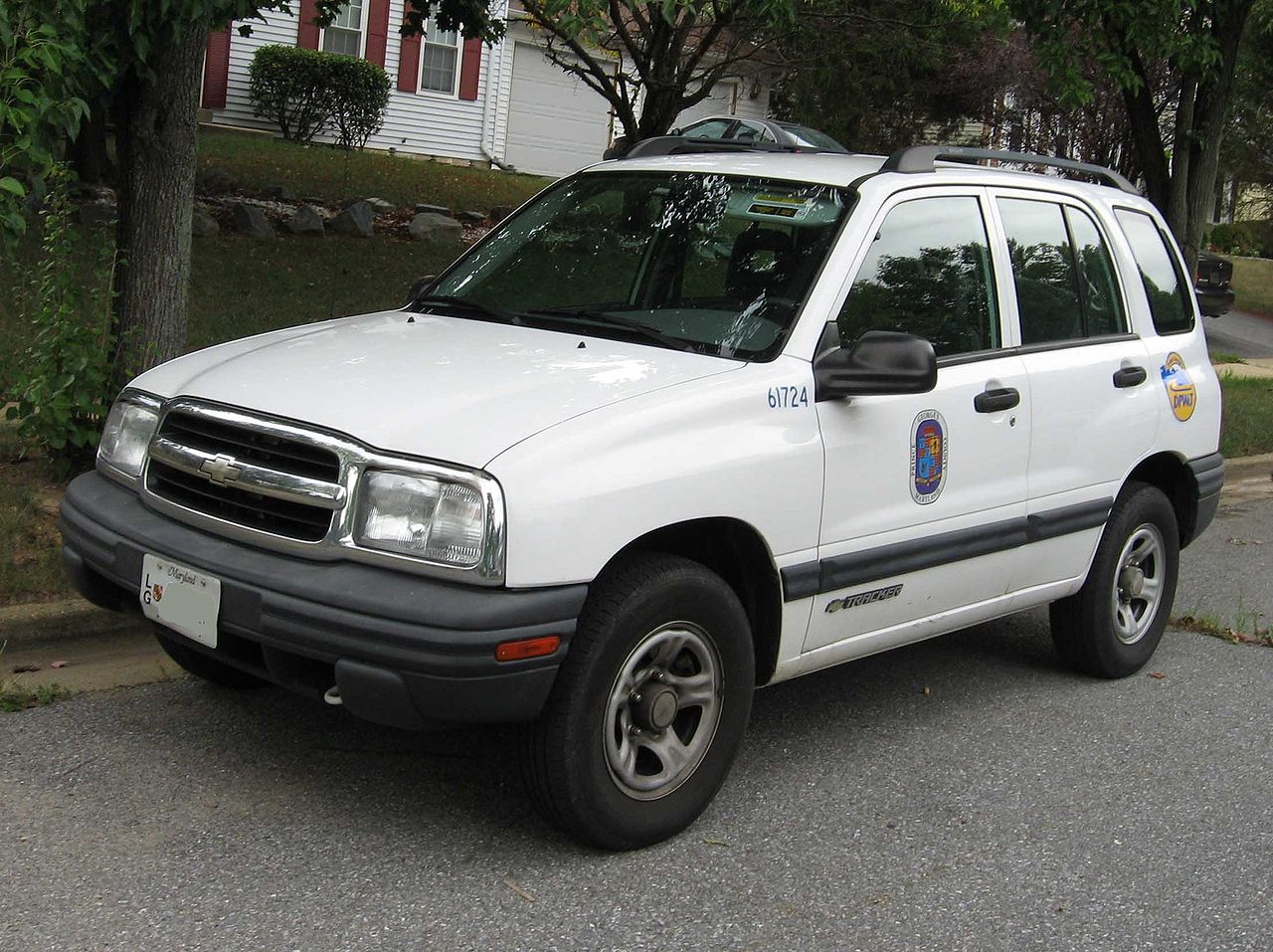


Characteristics and body styles
The Tracker was offered in several body configurations and drivetrain options over its lifetime. Early versions were simple, utilitarian designs emphasizing light weight and easy maintenance; common features included a short wheelbase, relatively narrow track, and available four-wheel drive. Roof and rear treatments varied: two-door versions, four-door versions, and removable soft or hard tops appeared in different markets. Small-displacement multi-valve four-cylinder engines were typical, tuned for fuel economy and modest low-end torque rather than high-speed performance.
Development, manufacture and partnerships
Development of the Tracker reflects a close collaboration between GM and Suzuki. The vehicle was produced at CAMI Automotive in Canada, a factory created as a GM–Suzuki joint venture; CAMI built Trackers for North American markets for many years. The design lineage runs directly to Suzuki's compact Escudo/Vitara models, which supplied the platform, driveline components and much of the mechanical architecture.
Branding, markets and timeline
Throughout its commercial life the Tracker was marketed under multiple nameplates. It debuted in North America as a Geo model, reflecting GM's late-1980s Geo brand; this association is often recalled in discussions of the car's origins and style (Geo). In Canada it also appeared rebadged as a GMC Tracker and under short-lived GM divisions such as Asüna and the Pontiac Sunrunner. The Sunrunner nameplate was later succeeded in part by the Aztek in some lineups (Aztek), and when GM folded Geo into Chevrolet in the late 1990s the Tracker carried the Chevrolet bowtie badge.
- Key milestones: introduction under Geo; CAMI production; consolidation into Chevrolet; North American discontinuation and international continuation.
- Discontinuation and replacement: the Tracker ceased North American sales in the early 2000s and GM shifted buyers toward larger crossover models such as the Chevrolet Equinox. Later international production persisted in markets like Mexico and Brazil until replacements such as the Chevrolet Captiva family took over.
- Later developments: in the 2010s Chevrolet introduced modern subcompact crossovers (for example the Trax) that serve as spiritual successors to the Tracker in many showrooms.
Despite being superseded by newer crossovers, the Tracker left a clear legacy as one of the earliest mass-market subcompact SUVs in North America. Its blend of compact footprint, available four-wheel drive and simple mechanicals made it popular with drivers who wanted light off-road capability or a small, economical utility vehicle. Today it remains a recognizable example of late-20th-century badge engineering and joint-venture production: a GM-sold vehicle built with significant Suzuki input at a Canadian factory. For regional histories and variant lists, primary sources and marque histories provide deeper model-by-model detail (CAMI/Canada, GM, Geo, Suzuki, Aztek, Equinox, Captiva).
Related articles
Author
AlegsaOnline.com Chevrolet Tracker (subcompact SUV) Leandro Alegsa
URL: https://en.alegsaonline.com/art/19427
Sources
- commons.wikimedia.org : Chevrolet Tracker
- automotive.com : "Chevrolet Tracker"
- conceptcarz.com : "1999 CHEVY TRACKER BLENDS NEW STYLE, HANDLING AND PERFORMANCE WITH SPORT UTILITY HERITAGE"