
Chevrolet TrailBlazer
Mid-size Chevrolet SUV nameplate that began as an S10 Blazer trim and became a standalone model in the early 2000s; later reused on smaller crossovers as market preferences shifted.
Overview
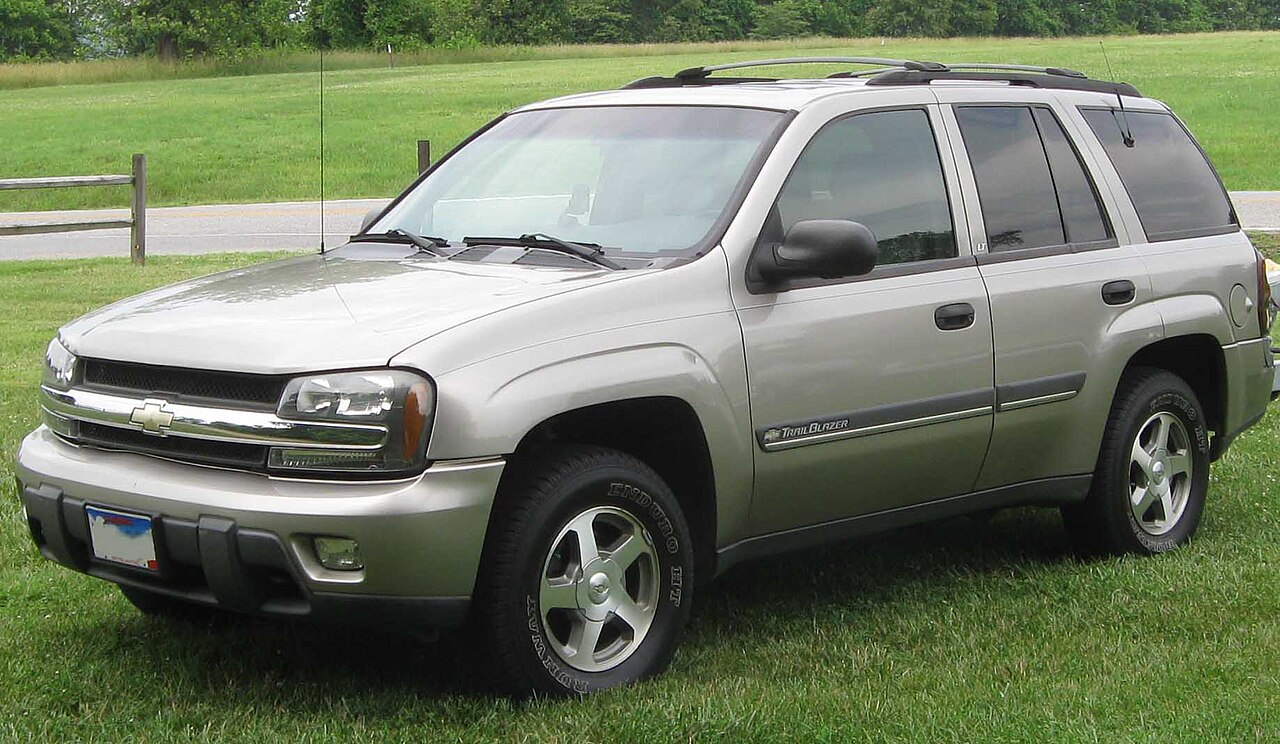
The Chevrolet TrailBlazer began as a trim package on the S10 Blazer and later became a distinct midsize sport-utility vehicle sold by Chevrolet, the consumer brand of General Motors. Introduced as a body-on-frame, truck-based SUV in the early 2000s, it occupied a middle position in Chevrolet's lineup between compact and full-size models and aimed to combine passenger comfort with utility and towing capability.
Image gallery
10 Images



Design and construction
Early TrailBlazer models used a traditional ladder-frame chassis and were offered with two- and three-row seating configurations in some versions. The design emphasized a rugged exterior, elevated ride height, and cargo flexibility. Features evolved over time to include multi-zone HVAC, increasingly sophisticated restraint systems, and optional all-wheel-drive or four-wheel-drive systems to improve traction off pavement or in adverse weather.
Powertrains and performance
Throughout its run, the TrailBlazer was available with a range of engines and transmissions suited to different buyer priorities, from economical choices to more powerful options in sport-oriented variants. A high-performance model promoted quicker acceleration and sport-tuned suspension and was aimed at buyers seeking a more dynamic driving experience than the standard family-oriented versions provided.
Variants and nameplate evolution
Notable variants included extended-length versions with third-row seating and sport-tuned editions that emphasized performance and styling. The TrailBlazer name was later revived on smaller, unibody crossover vehicles in several global markets to reflect changing consumer demand for more fuel-efficient, car-like SUVs. The name thus illustrates how a single nameplate can shift across vehicle architectures and sizes over time.
Usage and legacy
As a practical midsize SUV, the TrailBlazer was commonly used for family transportation, light towing and recreational activities. Its combination of interior space, towing capability and straightforward mechanical design made it a common choice among private buyers and fleet operators. The model remains notable for showing the industry transition from truck-based SUVs toward unibody crossovers.
- Origins: name derived from an S10 Blazer trim package (S10 Blazer).
- Construction: originally body-on-frame; later name reused for unibody crossovers.
- Variants: extended third-row models and sport/performance editions.
Related articles
Author
AlegsaOnline.com Chevrolet TrailBlazer Leandro Alegsa
URL: https://en.alegsaonline.com/art/19428
Sources
- carseek.com : "Chevrolet TrailBlazer"
- edmunds.com : "Chevrolet TrailBlazer Review"
- nadaguides.com : "Chevrolet TrailBlazer Model History"
- motortrend.com : "Chevrolet Trailblazer"
- commons.wikimedia.org : Chevrolet TrailBlazer