
Chat room
An online space where multiple people exchange real-time text (and often media) messages. Chat rooms power social interaction, customer support, group work, gaming, and community formation.
A chat room is a virtual space on the Internet where two or more participants exchange messages in real time. Modern chat rooms typically allow typed text messages and frequently support images, file transfers, voice and video links, reactions, and threaded replies. They can be public meeting places, private channels for invited members, or ephemeral temporary rooms opened for a single event or topic.
Image gallery
3 Images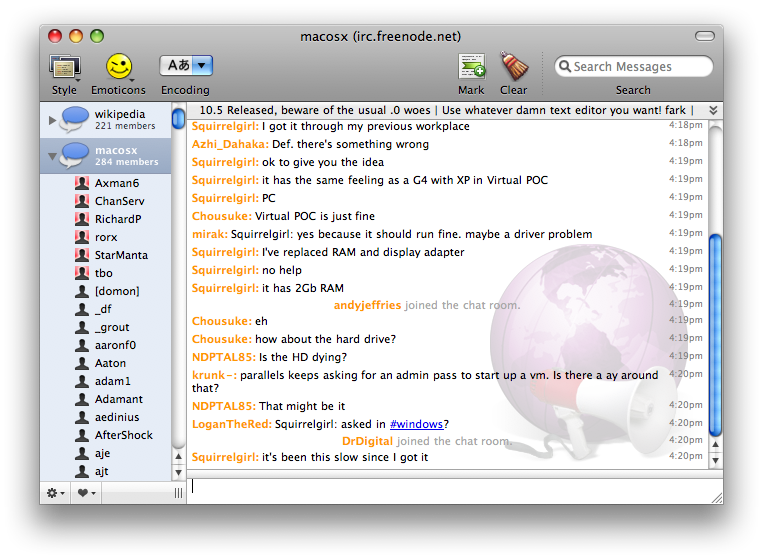

Characteristics and common features
Chat rooms vary in design and purpose but often share several features: a list of active participants, a message stream visible to the group, nicknames or user accounts, channels or topics to separate conversations, and moderation tools to manage behavior. Some rooms offer presence indicators, message history, search, and integration with external services. Others focus on anonymity and real-time immediacy.
- Synchronous messaging: exchanges occur in real time, giving a conversational flow similar to spoken chat.
- Channels and rooms: conversations are organized by subject, project, or social group.
- Moderation: operators or automated systems control access, enforce rules, and remove abusive content.
- Multimedia support: modern clients enable images, links, file sharing, and sometimes audio/video.
History and technical roots
The concept of networked, real-time messaging predates the modern web. Early research and military networks experimented with interactive messaging in the 1960s and 1970s; one of the early chat-like systems emerged in the early 1970s on government and research networks. Through the 1980s and 1990s, protocol-based systems such as IRC (Internet Relay Chat) popularized persistent public channels and nickname culture. Later developments produced proprietary and web-based platforms that shaped today's ecosystem.
Platforms and examples
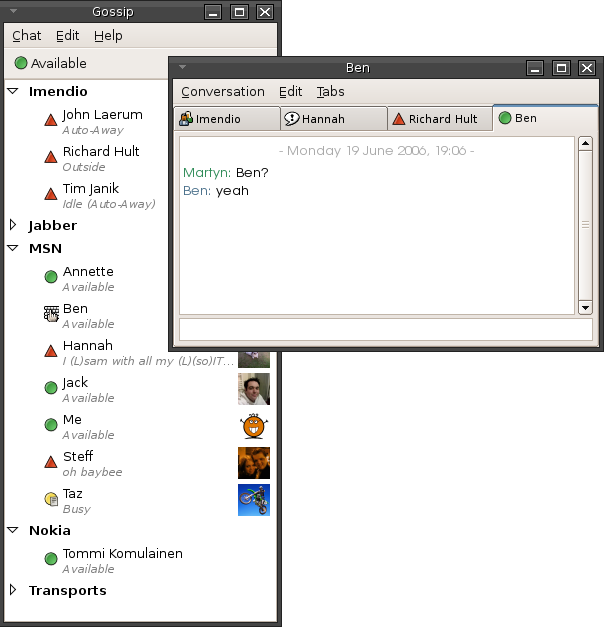
Chat functionality appears in many forms: standalone clients, embedded web widgets, and integrated messaging in social networks and collaborative tools. Traditional instant messaging and presence systems evolved into richer services; the term instant messenger often refers to software that supports both one-on-one messaging and group chat. Web applications now add features like message threading, searchable archives, and programmable bots.
Uses, importance, and social impact
Chat rooms serve diverse roles: casual socializing, hobbyist communities, technical support, telemedicine triage, educational discussion groups, and coordination in gaming and remote work. They lower barriers to meeting new people and enable real-time collaboration across time zones. At the same time, public chat rooms raise concerns about privacy, moderation, misinformation, and harassment, prompting platforms to offer safety settings and reporting tools.
Distinctions and notable facts
Chat rooms differ from forums and email by emphasizing immediacy and live interaction rather than long-form, asynchronous discussion. They can be ephemeral (no saved history) or persistent (archived messages). Community norms, moderation policies, and technical protocols shape the experience: some rooms favor pseudonymity and loose moderation, while others require verified identities and strict rules.
For further technical and historical context, see resources and protocol specifications available through general reference sites and platform documentation. For general introductions or to join specific public networks, consult the relevant provider pages or community guides linked from mainstream web portals.
Learn more about online communication • Text-based messaging • IRC and protocol history • Instant messaging services
Related articles
Author
AlegsaOnline.com Chat room Leandro Alegsa
URL: https://en.alegsaonline.com/art/18927