
Instant messaging
Instant messaging (IM) is real-time text-based communication over a network, supporting presence, typing indicators, media sharing and group chat across desktop and mobile clients.
Overview
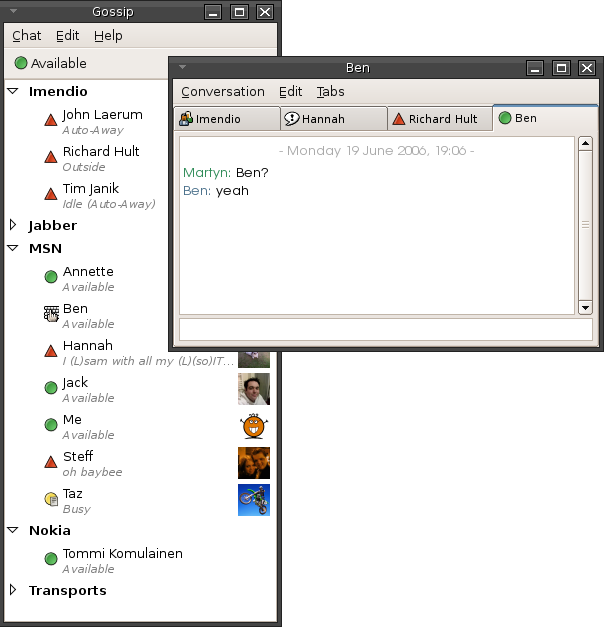
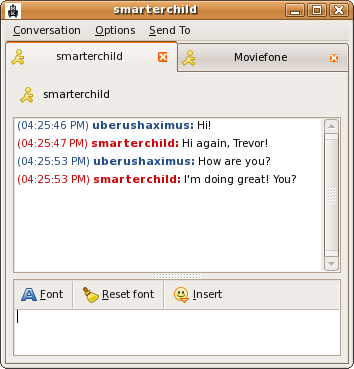
Instant messaging (IM) refers to the exchange of short text messages and other content between two or more people in near real time over a digital network. IM systems typically connect users through dedicated applications called clients that run on computers, phones or web browsers. Messages commonly appear almost immediately to recipients, creating a conversational flow more like a spoken exchange than traditional mail.
Image gallery
9 Images




Common features and message types
Modern IM platforms support a variety of message forms and interaction cues beyond plain text. Typical features include:
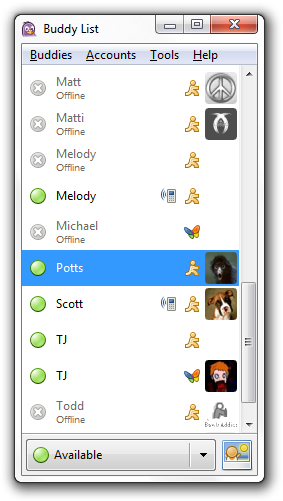
- Presence and status: indicators that show whether a contact is online, away or do-not-disturb.
- Typing indicators: notifications that another participant is composing a message.
- Read receipts: markers that a message has been delivered and/or read.
- Media and files: images, voice notes, videos, documents, location and stickers or emojis.
- Group chat and roles: conversations that include multiple participants, sometimes with administrative controls.
- Voice and video calling: many clients integrate or link to real-time audio and video sessions.
History and development
Instant messaging evolved from earlier online chat systems. Early real-time chat services and multi-user environments introduced ideas such as channels and nicknames. One influential predecessor was Internet Relay Chat (IRC), which established conventions for synchronous group chat and channels. As personal computers and mobile devices became widespread, IM applications shifted toward streamlined, user-friendly clients and richer media support.
Technical models and standards
IM systems can use many architectures and protocols. Some operate on client-server models with centralized servers that route messages, store history and manage accounts. Others have experimented with peer-to-peer designs. A number of open and proprietary protocols exist; efforts to standardize interoperability have had limited success because many providers prioritize features and platform control. Encryption and privacy are major technical considerations: some services offer end-to-end encryption to prevent intermediaries from reading messages, while others encrypt only between client and server.
Uses and significance
Instant messaging is used for casual conversation, group coordination, customer support, professional collaboration and real-time notifications. Its immediacy makes it well suited to quick questions, breaking news and social interaction; integration with calendars, file sharing and bots expands its role in productivity and automation. Because IM is ubiquitous on mobile devices, it has reshaped everyday communication patterns and expectations about response time.
Distinctions and notable issues
IM differs from email in latency and conversational style, and from SMS in transport and feature richness. Key considerations for users and organizations include privacy, data retention, interoperability and moderation in group settings. Accessibility, archival needs and legal compliance can influence which IM tools are chosen for work or public use.
Questions and answers
Q: What is instant messaging?
A: Instant messaging is a way of two or more people to communicate over a network by sending and receiving messages through messaging clients.
Q: How are messages sent in instant messaging?
A: When the sender sends a message, the message is sent to all the recipients in the group.
Q: What types of messages are supported in instant messaging?
A: The type of message supported depends on the specific client and network, but most of the time, it is text with some clients also supporting images or other types of media.
Q: What was the inspiration for instant messaging services?
A: Instant messaging services got inspiration from an older and still popular way to online chat named Internet Relay Chat (IRC).
Q: How was instant messaging different in its early days?
A: In early instant messaging programs, each letter appeared when it was typed and when letters were deleted to correct typos, they were also seen by the reader, making it more like a telephone conversation than sending letters.
Q: How is instant messaging different now?
A: In newer instant messaging programs, the other readers in the conversation generally only see each line of text right after a new line is started.
Q: What is the purpose of a status message in instant messaging?
A: Most instant messaging programs have a way to set a status message which works like a message on a telephone answering machine, showing whether or not people are online and available to chat.
Related articles
Author
AlegsaOnline.com Instant messaging Leandro Alegsa
URL: https://en.alegsaonline.com/art/47464
Sources
- qlinklives.org : Screenshot of a Quantum Link OLM
- uspto.gov : Summary of final decisions issued by the trademark trial and appeal board, January 16-20, 2006
- pidgin.im : "Important and Long Delayed News, Announcement of Gaim renaming (to Pidgin)"
- gsmworld.com : Leading Mobile Operators to Deliver Ubiquitous Instant Messaging
- imsecuritycenter.com : "IM Security Center"
- searchstorage.techtarget.com : "ESG compliance report excerpt, Part 1: Introduction"
- akonix.com : "Akonix Warns Corporations of Risqué Employee IM Behavior"