
Muthanna Governorate
Muthanna is a governorate in southern Iraq with its capital at Samawa. It is an arid province along the Euphrates and the Saudi border, known for agriculture, Bedouin communities and recent reconstruction efforts.
Overview
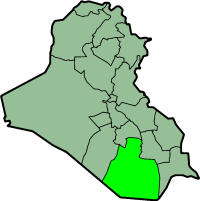
Al-Muthanna (Arabic: المثنى) is a governorate in southern Iraq. The provincial capital is Samawa (Al-Samawa), a city located on the Euphrates River. The governorate covers roughly 51,740 km² and, by early 21st-century estimates, had a population on the order of several hundred thousand sedentary residents plus nomadic and semi-nomadic Bedouin groups. The name commemorates historical figures from the early Islamic period and reflects the long continuity of settlement and tribal presence in the region.

Image gallery
3 Images

Geography and climate
Muthanna lies in the southern Mesopotamian plain and stretches to Iraq's border with Saudi Arabia. Much of the governorate is desert or semi-desert, with irrigation-fed agricultural land concentrated along the Euphrates and associated canals. The climate is arid, with extremely hot summers, mild winters and sparse, irregular rainfall. Natural vegetation is limited, and soil salinity and water management are important local concerns for farming.
Administration and districts
The governorate is divided into several administrative districts. Principal districts include:
- Al-Samawa (the provincial capital)
- Al-Khidhir
- Al-Rumaitha
- Al-Salman
Local government follows Iraq's governorate model, with a governor and a provincial council responsible for municipal services, development planning and coordination with national ministries.
History and development
The territory now forming Muthanna Governorate is part of the broader historical Mesopotamian heartland and has been inhabited since antiquity where watercourses supported agriculture and towns. Over centuries it has been shaped by successive empires, Ottoman provincial systems and the modern Iraqi state. In the early 21st century the province experienced the effects of conflict and post-conflict reconstruction: international forces and Iraqi authorities invested in infrastructure projects and security arrangements to stabilize border areas and local communities.
Economy and society
The local economy centers on irrigated agriculture (grain, date palms and other crops where water permits), livestock grazing by Bedouin groups and public-sector employment. Industry is limited and mainly connected to processing agricultural products, construction and services. The population is predominantly Arab and includes both settled rural and urban residents as well as nomadic pastoralists. Social life is influenced by tribal structures, religious institutions and the rhythms of farming and herding.
Security, infrastructure and notable facts
Because Muthanna borders Saudi Arabia, border security is a recurrent concern. In the mid-2000s local and national security forces, including border police and army brigades, were reported deployed to guard the frontier, and international reconstruction aid supported roads, water projects and public buildings. The governorate is relatively sparsely populated compared with Iraq's central and southern urban centers, and it is often characterized in modern accounts by its strategic location, desert landscapes and the centrality of the Euphrates to local life.
Tags
Related articles
Author
AlegsaOnline.com Muthanna Governorate Leandro Alegsa
URL: https://en.alegsaonline.com/art/1892