
Cesar Virata
Cesar Virata (born 1930) is a Filipino economist and politician who served as Prime Minister (1981–1986) and as Finance Minister (1984–1986) during the final years of the Marcos administration.
Overview
Cesar Enrique Aguinaldo Virata (born 12 December 1930) is a Filipino economist and public official best known for serving as Prime Minister of the Philippines from 30 June 1981 until 25 February 1986. He also held the post of Finance Minister from 1984 to 1986. Virata is widely described as a technocrat whose responsibilities focused on economic and fiscal policy during a turbulent period in Philippine history.
Image gallery
4 Images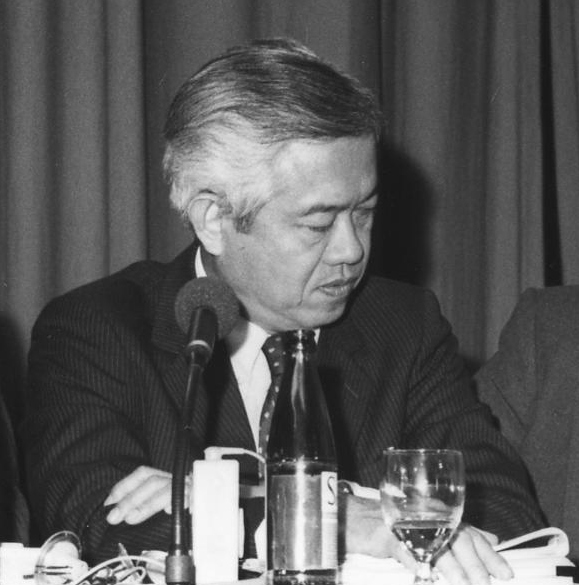


Background and professional profile
Trained in business and public finance, Virata built a reputation as a finance-oriented administrator and policymaker. He was counted among the cadre of professional officials who managed government economic portfolios in the 1970s and 1980s. His role combined cabinet leadership with oversight of monetary, budgetary and administrative matters typical of a finance minister and prime minister in a presidential-parliamentary system.
Role as Prime Minister and Finance Minister
As Prime Minister he functioned as head of government while President Ferdinand Marcos remained head of state. In 1984 he assumed the additional responsibilities of Finance Minister, a position in which he was responsible for preparing budgets, managing public debt and coordinating economic policy across ministries. His tenure coincided with significant economic and political challenges, including external debt pressures and mounting domestic opposition to the Marcos regime.
Historical context and succession
Virata's term ended in February 1986 with the collapse of the Marcos administration during the People Power uprising. He was the last person to hold the prime ministership under the 1973 Constitution; the position was not part of the 1987 constitutional framework that followed. His period in office is often examined by scholars studying technocratic governance, economic management under authoritarian rule, and the institutional transitions of the mid-1980s.
Later life and legacy
After leaving government, Virata returned to private-sector and advisory roles and remained a reference point in discussions of economic policy from that era. He is frequently cited in histories of the Philippines for his managerial approach to economic affairs and for being a central figure during the final phase of the Marcos presidency. For further reading, see a concise biography and collection of references here.
Related articles
Author
AlegsaOnline.com Cesar Virata Leandro Alegsa
URL: https://en.alegsaonline.com/art/18235