
Carouge (Geneva) — overview, history and character
Carouge is a municipality in the canton of Geneva, Switzerland, known for its 18th-century planned layout, Mediterranean-influenced architecture, lively cultural scene, markets and a strong small-business presence.
Overview
Carouge is a municipality in the canton of Geneva in Switzerland. Immediately south of the city of Geneva, it forms a compact district with a distinctive identity. The area combines residential neighbourhoods, small businesses, cafés and artisan workshops clustered around a historic centre. For administrative and civic information consult the municipality page.
Image gallery
9 Images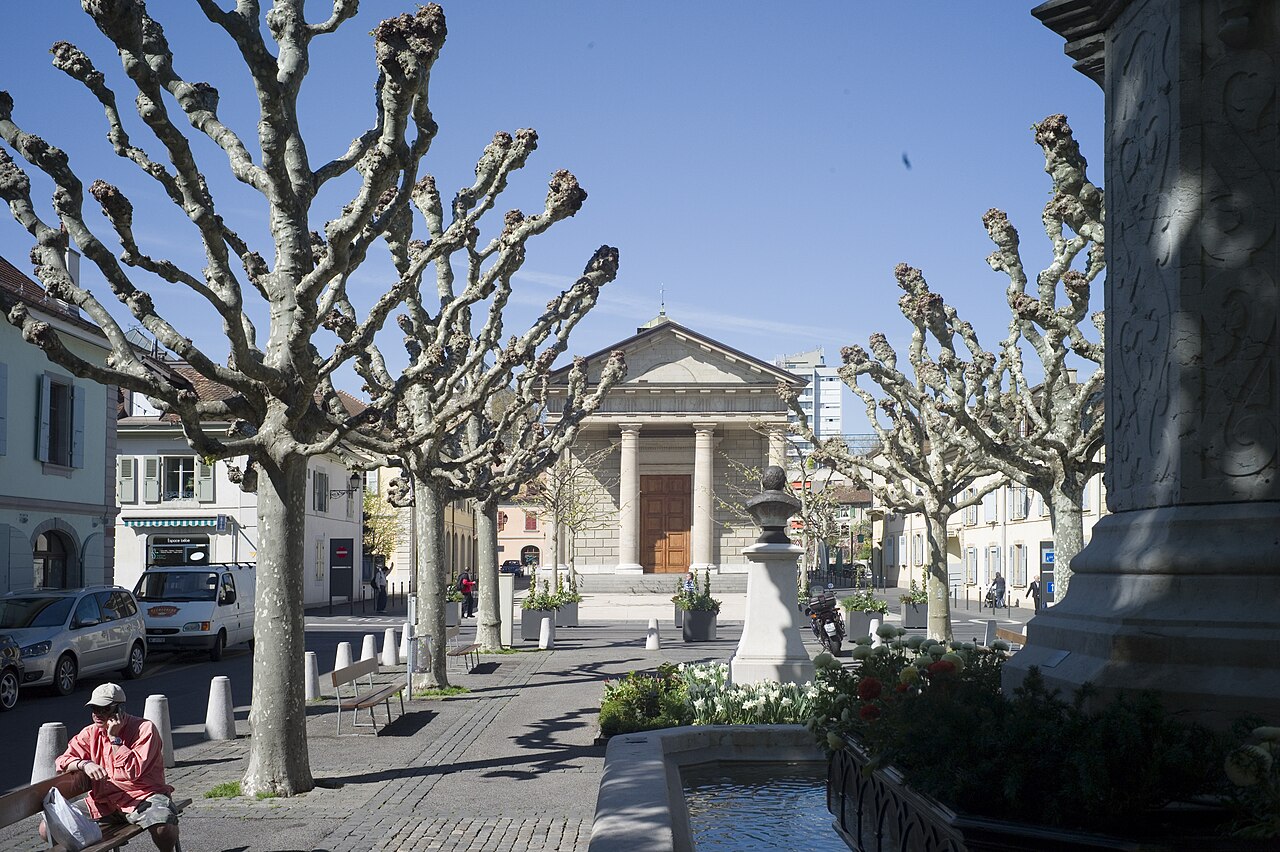


Location and geography
Carouge lies south of the confluence of the Rhône and Arve rivers, on generally flat ground that links it to Geneva’s urban fabric. Its position near major transit routes makes it accessible while preserving a sense of local scale. Green spaces and small parks punctuate the built area and provide recreational amenities for residents.
History
The modern town grew in the late 18th century as a planned settlement and developed a distinctive urban pattern. Originally established under foreign rule, it later became politically integrated with Geneva and the Swiss state in the period following the revolutionary era. This history is visible in the layout of streets and public squares retained today.
Architecture and urban character
Carouge is noted for its coherent urban design: regular blocks, arcaded façades and a human scale that lends a Mediterranean feel uncommon in the region. Buildings often feature warm stucco, shuttered windows and ground-floor shops. Public squares and covered walkways encourage markets and outdoor café life.
Culture, economy and transport
The local economy is driven by independent retailers, artisans, galleries and hospitality venues, and the neighbourhood hosts regular markets and cultural events. Good public transport links connect Carouge with central Geneva, making it a popular area for people who work in the city but seek a strong local community atmosphere.
Notable distinctions
- Well-preserved 18th-century plan and architectural cohesion.
- A vibrant mix of crafts, small businesses and cultural venues.
- Close ties to Geneva while maintaining clear local identity.
Related articles
Author
AlegsaOnline.com Carouge (Geneva) — overview, history and character Leandro Alegsa
URL: https://en.alegsaonline.com/art/17216
Sources
- bfs.admin.ch : "Arealstatistik Standard - Gemeinden nach 4 Hauptbereichen"
- bfs.admin.ch : "Ständige Wohnbevölkerung nach Staatsangehörigkeitskategorie Geschlecht und Gemeinde; Provisorische Jahresergebnisse; 2018"