
Carlo Maderno: Pioneer of Roman Baroque Architecture
Italian-Swiss architect Carlo Maderno (1556–1629) shaped early Baroque Rome with façades and public works, notably Santa Susanna and St. Peter’s Basilica, and influenced church architecture across Europe.
Overview
Carlo Maderno (c.1556–1629) was an architect active in Rome whose commissions helped define the early Roman Baroque. Born in the Ticino region, he worked on several high‑profile churches and civic projects that shifted Renaissance equilibrium toward a more dynamic and monumental Baroque language. His work is frequently cited as a turning point in church façade design and spatial planning for large basilicas.
Image gallery
4 Images


Life and training
Maderno came from a Swiss‑Italian background in northern Italy and moved to Rome as a young man, where he entered the milieu of papal building programs and workshops. He trained in masonry and design, absorbing late Renaissance traditions before developing a style that emphasized dramatic façades, pronounced cornices and the use of classical orders with greater theatricality. For a concise biographical overview see a short biographical note.
Major works and characteristics
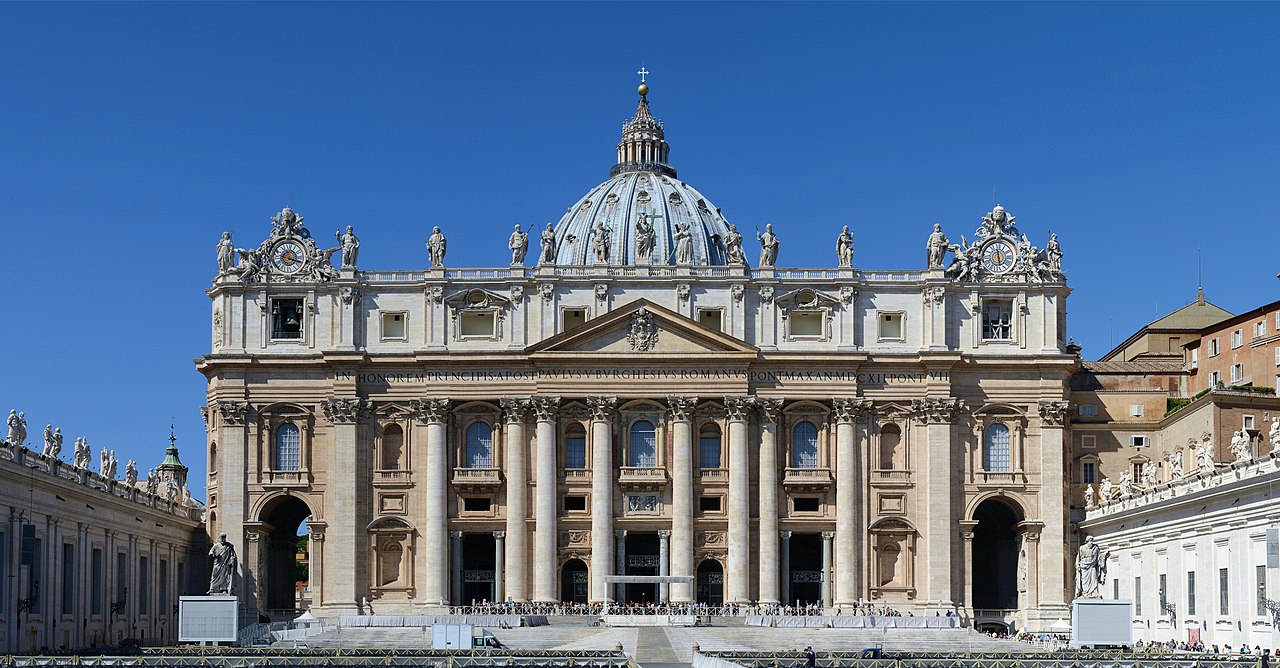
His best known projects exemplify several recurring features: layered façades that read as coherent theatrical screens, clear use of pilasters and columns to organize elevations, and ambitious interventions in preexisting structures. Notable examples include the façade of Santa Susanna and the travertine front of St. Peter's Basilica, both key to understanding how he balanced classical precedent and Baroque intent.
- Santa Susanna — a compact urban church façade that introduced rhythm and depth.
- Sant'Andrea della Valle — interior planning that accommodated large congregations and dramatic altarpieces.
- St. Peter's Basilica — extension of the nave and the monumental façade attribution that shaped the principal approach to the basilica.
Historical context and influence
Maderno worked during a period of intense papal patronage when architecture served liturgical, ceremonial and representational functions. His solutions to proportion, axial emphasis and façade articulation influenced contemporaries and later Baroque architects across Italy and beyond. Scholars place his contribution among the foundational moves in the development of the Italian Baroque.
Legacy and notable facts
He is sometimes described as related to the sculptor Stefano Maderno, though sources differ on the precise family relationship. His body of work remains studied for its role in transforming Renaissance restraint into Baroque monumentality. For further reference and catalogues of works consult archival resources and specialist sites such as regional archives or detailed architectural surveys at architectural databases and curated compendia at library entries.
Related articles
Author
AlegsaOnline.com Carlo Maderno: Pioneer of Roman Baroque Architecture Leandro Alegsa
URL: https://en.alegsaonline.com/art/17049