
Carl Correns — German botanist and rediscoverer of Mendelian genetics
Carl Erich Correns (1864–1933), German botanist and geneticist who independently confirmed Mendel’s laws, studied plant hybridization and non‑Mendelian inheritance, and directed the Kaiser Wilhelm Institute for Biology.
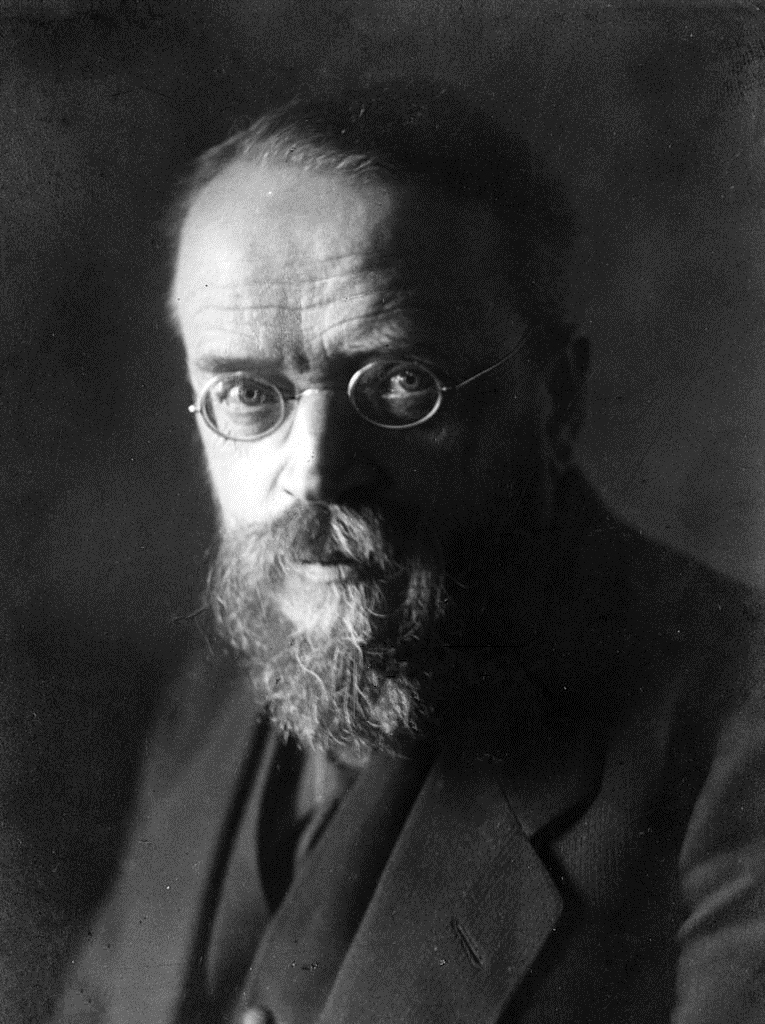
Carl Erich Correns (10 September 1864 – 14 February 1933) was a German botanist and a pioneering geneticist. Working at the turn of the 20th century, Correns carried out plant hybridization experiments that led him to the same fundamental conclusions about inheritance first presented by Gregor Mendel. His publications and public statements helped reintroduce Mendel’s ideas to the scientific community and established Correns as a central figure in the early history of heredity research.
Image gallery
2 Images
Early life and influences
Correns trained as a botanist and was influenced by the botanical tradition of nineteenth‑century Europe. He studied under and was familiar with the work of Karl Nägeli, a prominent plant biologist of the era with whom Mendel had corresponded. Nägeli did not recognise the full importance of Mendel’s experiments, but Correns, by contrast, was able to place hybridization results in a clearer theoretical framework and to test them experimentally. Correns’s interest in practical plant breeding and physiology guided his experimental choices.
Rediscovery of Mendelian laws
In 1900 Correns published experimental results from controlled crosses that reproduced Mendelian ratios and independently reached the interpretation later summarized as Mendel's laws. He explicitly acknowledged Mendel’s priority and called attention to Mendel’s original publications, thereby helping to restore Mendel’s place in scientific history. Correns’s announcement was part of a near‑simultaneous rediscovery by several researchers, most notably Hugo de Vries, and a later‑debated contribution by Erich von Tschermak. Correns argued that discrete hereditary factors could explain segregation patterns seen in hybrids and emphasized careful experimental documentation.
Experimental work and methodology
Correns performed systematic crosses in a range of plant species, including experiments with peas and maize. He used controlled pollination, counted large numbers of offspring, and compared ratios of phenotypes across generations to test hypotheses about inheritance. His experiments confirmed segregation and independent assortment in many cases and underscored the predictive power of Mendelian principles for certain traits. Correns also noted and reported cases that did not fit a simple dominant–recessive model.
Non‑Mendelian observations and incomplete dominance
Correns drew attention to exceptions and refinements of the simple dominant–recessive pattern. In a footnote to his 1900 paper he discussed cases in which the heterozygote shows an intermediate phenotype, describing what is now called incomplete dominance or the absence of dominance. He recognized that dominance is not an intrinsic property of all traits and that other mechanisms, including dosage effects and interactions among factors, could produce intermediate or unexpected results. Correns also investigated variegated plants and other phenomena that later contributed to the recognition of cytoplasmic or maternal effects in heredity.
Scientific context and relations
Correns worked at a time when genetics was forming as a distinct discipline, and his clear attribution of Mendel’s priority helped integrate rediscovered laws into a broader research programme. He maintained scholarly ties with contemporaries and was active in publishing reviews and experimental reports that clarified the implications of Mendelian theory for botany and breeding. Correns’s background in plant physiology and his careful experimental practices positioned him as a bridge between classical botanical study and the new science of genetics.
Leadership and later career
In 1913 Correns became the first director of the newly founded Kaiser Wilhelm Institute for Biology in Berlin‑Dahlem, where he helped shape research priorities in experimental biology and genetics. In that role he promoted rigorous experimental work, trained younger scientists, and supported studies that explored both Mendelian regularities and departures from simple inheritance. His leadership period contributed to institutionalising genetics as a field in Germany and to fostering collaborations across botany, physiology and breeding research.
Legacy and assessment
Correns is remembered chiefly for his independent experimental confirmation of Mendel’s laws, his insistence on crediting Mendel, and his early recognition of exceptions such as incomplete dominance and maternal effects. His publications and organisational work helped to establish genetics as a recognized scientific discipline. Historians of science note Correns as an important communicator and experimenter whose work clarified how discrete hereditary factors could be tested and applied in plant biology and agriculture.
Selected contributions
- Independent confirmation and promotion of Mendel's principles of inheritance.
- Systematic hybridisation studies in peas and maize, documenting segregation and assortment.
- Identification and discussion of incomplete dominance and exceptions to simple dominance (absence of dominance).
- Investigations that anticipated recognition of cytoplasmic and maternal inheritance effects.
- Founding directorship of the Kaiser Wilhelm Institute, promoting genetics research and training.
For introductory context consult general histories of heredity and biographies of Correns and his contemporaries such as Hugo de Vries and Erich von Tschermak. Original translations of Mendel’s papers and correspondence with Nägeli illuminate the intellectual background against which Correns worked. Correns’s career illustrates the interplay between careful experiment, historical scholarship and institutional leadership in the emergence of modern biology and genetics.
Questions and answers
Q: Who was Carl Erich Correns?
A: Carl Erich Correns was a German botanist and geneticist.
Q: What led to Carl Erich Correns rediscovering Gregor Mendel's work?
A: His research into heredity led to his rediscovery of Gregor Mendel's earlier work.
Q: Who else independently rediscovered Gregor Mendel's work on genetics?
A: Hugo de Vries also independently rediscovered Gregor Mendel's work on genetics.
Q: What did Carl Erich Correns do to reach the same interpretation as Mendel?
A: Carl Erich Correns grew hybrids of peas, and of maize, and reached the same interpretation as Mendel, in 1899.
Q: What did Carl Erich Correns add regarding dominance to his 1900 paper?
A: The occurrence of cases in which the heterozygote is intermediate (the absence of dominance) was added in a footnote to his 1900 paper.
Q: Who was Nägeli and how was he related to Carl Erich Correns and Mendel?
A: Nägeli was a renowned botanist with whom Mendel corresponded about his work with peas. Carl Erich Correns was a student of Nägeli.
Q: What significant role did Carl Erich Correns play in 1913?
A: In 1913, Carl Erich Correns became the first director of the newly founded Kaiser Wilhelm Institute for Biology in Berlin-Dahlem.
Related articles
Author
AlegsaOnline.com Carl Correns — German botanist and rediscoverer of Mendelian genetics Leandro Alegsa
URL: https://en.alegsaonline.com/art/16996
Sources
- doi.org : 10.1093/jhered/91.6.435
- pubmed.ncbi.nlm.nih.gov : 11218080
- pubmed.ncbi.nlm.nih.gov : 11615874