
Canton of Lucerne
Central Swiss canton centered on the city of Lucerne; German-speaking, with alpine foothills, Lake Lucerne, a tourism economy, and a history within the Old Swiss Confederacy.
Canton of Lucerne (German: Luzern, Swiss German: Lozärn, French: Lucerne, Italian: Lucerna, Romansh: Lucerna) is a canton (canton) in central Switzerland (Switzerland). Its administrative seat and largest city is Lucerne. As of 31 December 2018 the canton reported a population of 409,557. The region combines lowland areas around the city and lake with rising foothills that lead toward the pre-Alps.
Image gallery
7 Images



Geography and landscape
Lucerne occupies a largely inland, central position on the Swiss plateau and extends into pre-Alpine terrain. Key natural features include Lake Lucerne and a mix of rivers, rolling agricultural land and wooded slopes. The varied topography supports agriculture in the flatter areas and alpine tourism and recreation in the higher terrain.
History and development
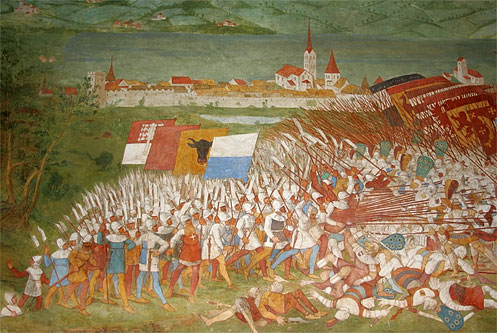
The area around the city of Lucerne grew in importance during the medieval period and became associated with the Old Swiss Confederacy in the 14th century (traditionally dated to 1332). Over ensuing centuries the canton developed its institutions within the Swiss federal system and modernized through the 19th and 20th centuries while retaining a strong regional identity tied to the city and surrounding countryside.
Government and subdivisions
Like other Swiss cantons, Lucerne has its own constitution and cantonal government with an executive council and a legislative assembly. The canton is subdivided into municipalities and administrative districts that manage local services such as schools, roads and planning under cantonal coordination.
Economy, culture and tourism
Lucerne's economy is diverse: the service sector and tourism are important in and around the city and lakeshore, while small and medium-sized industries, trade and agriculture play a role in rural areas. Cultural attractions and natural landmarks draw visitors—examples include:
- Historic city center and covered wooden bridge in Lucerne
- Lake Lucerne and its promenade
- Mount Pilatus and Mount Rigi (outdoor recreation)
- Local festivals, music and regional cuisine
Population and language
German is the dominant language and the main medium of government and education. The canton has a mix of urban and rural communities; demographic changes follow Swiss national trends of urbanization and commuting patterns while retaining a notable cultural heritage tied to central Switzerland.
Related articles
Author
AlegsaOnline.com Canton of Lucerne Leandro Alegsa
URL: https://en.alegsaonline.com/art/16641
Sources
- bfs.admin.ch : Arealstatistik Land Cover - Kantone und Grossregionen nach 6 Hauptbereichen
- pxweb.bfs.admin.ch : Swiss Federal Statistical Office - STAT-TAB