
Camp Curtin: Union Army Training and Logistics Center in Harrisburg
Camp Curtin was a major Union Army training, supply and medical center in Harrisburg, Pennsylvania during the American Civil War, later remembered through local preservation and place names.
Overview
Camp Curtin was a large military encampment established near Harrisburg in response to the outbreak of the American Civil War. Located on the outskirts of Harrisburg, it served as a principal gathering, training and deployment site for units of the Union Army. Organized quickly in 1861, the camp became one of the most important inland army installations for the North.
Image gallery
2 Images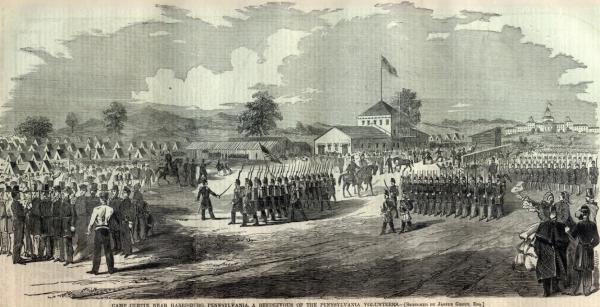

Functions and facilities
The site combined several complementary functions that supported wartime operations:
- Recruit training and mustering for new volunteer regiments.
- Logistics and material handling, acting as a regional supply depot for arms, clothing and provisions.
- Medical care and convalescence provided at a military hospital on site.
- Temporary detention and processing in a limited prisoner-of-war camp component at times.
History and development
Established soon after hostilities began, the camp was named for Pennsylvania's wartime governor and expanded rapidly as volunteers arrived. Its proximity to rail lines and the state capital made it an effective hub for moving men and materiel to front-line formations. Over the course of the war thousands of soldiers passed through Camp Curtin, departing for assignments across the Eastern Theater.
Beyond training, the installation functioned as a staging area and regional coordination center. It supported recruiting, enlistment administration and the organization of regimental records. Medical and supply services there reduced the burden on field hospitals and helped sustain long campaigns.
Legacy
After the war the camp was disbanded and its lands returned to civilian use. The name endured in local geography and memory; historians and community groups preserve its story and interpretive materials. Camp Curtin's importance lies in its example of how logistics, medical care and training were organized on the home front to support large-scale military operations.
For further reading and specific archival materials, consult regional repositories and local historical organizations that focus on the camp's records and preservation.
Related articles
Author
AlegsaOnline.com Camp Curtin: Union Army Training and Logistics Center in Harrisburg Leandro Alegsa
URL: https://en.alegsaonline.com/art/16347
Sources
- pacivilwartrails.com : "Camp Curtin, Harrisburg, PA"
- campcurtin.org : "History of Camp Curtin"
- history.com : "Battle of Gettysburg"
- pennlive.com : "Gen. Lee hoped for 'Battle of Harrisburg'"
- encyclopediavirginia.org : "Shoes at Gettysburg"
- visitpa.com : "Camp Curtin"
- ccmmumc.susumc.org : "What Makes Camp Curtin Memorial Methodist Episcopal Church a National Historic Site?"