
Cabo Delgado Province, Mozambique
Cabo Delgado is Mozambique's northernmost province, home to Pemba, significant natural resources, diverse cultures and coastal parks, and affected in recent years by an armed insurgency and humanitarian crisis.
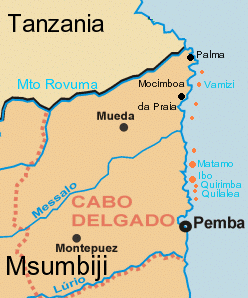
Cabo Delgado is the northernmost province of Mozambique, with its administrative capital at Pemba. It faces the Indian Ocean to the east and shares a land border with Tanzania to the north. The province is known for a long coastline, offshore islands, and a mix of coastal and inland landscapes that shape local livelihoods.
Image gallery
5 Images


Geography and environment
The province includes sandy beaches, mangroves and coral-fringed islands such as those of the Quirimbas archipelago, a region prized for marine biodiversity and diving. Inland areas vary from lowland plains to wooded highlands, with a tropical climate that brings a distinct wet season. Natural habitats support fisheries, subsistence agriculture and forestry, though some areas face environmental pressure from development and population growth.
People, language and culture
Cabo Delgado has a diverse population including Makonde, Macua, Mwani and other groups. Portuguese is the official language of government and education, while local languages and cultural practices remain important. The Makonde are particularly noted for their carving and mask-making traditions, which are well known across Mozambique and beyond.
Economy and resources
The economy combines fishing, agriculture (including cashew and smallholder crops), forestry and mining. In recent decades, major discoveries of natural gas in the offshore Rovuma Basin and high-value mineral deposits onshore have attracted international investment and attention. Tourism around Pemba and the Quirimbas islands has potential, though development has been uneven.
History and recent developments
As with the rest of Mozambique, Cabo Delgado was part of Portuguese East Africa until independence in 1975. Since about 2017 the province has experienced an armed insurgency concentrated in some northern districts, which has caused significant displacement of civilians and disrupted economic projects and services. The situation prompted humanitarian responses and security cooperation with regional partners.
Notable facts
- Pemba, the provincial capital, serves as an important port and gateway for tourism and trade.
- The Quirimbas archipelago and marine areas are noted for coral reefs and biodiversity.
- Large offshore gas discoveries have made the province strategically important for Mozambique's economy.
For official provincial information and resources see Cabo Delgado information.
Related articles
Author
AlegsaOnline.com Cabo Delgado Province, Mozambique Leandro Alegsa
URL: https://en.alegsaonline.com/art/15865