
Budva — historic coastal town and tourism center in Montenegro
Budva is a coastal town on the Adriatic in Montenegro, known for its medieval walled Old Town, sandy beaches, vibrant summer nightlife and more than two millennia of continuous settlement.
Overview

Image gallery
10 Images
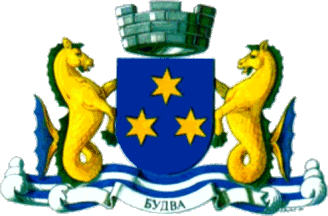


Beaches, landmarks and layout
Budva's compact urban area includes the fortified Stari Grad (Old Town), a citadel overlooking the sea, promenades and several beaches within easy walking distance. Landmarks include the sea walls, narrow stone streets, historic churches and small museums. The coastline around Budva is varied, with coves, headlands and longer beach stretches catering to different tastes.
- Mogren Beach — a sandy, scenic cove accessed on foot from the Old Town.
- Jaz Beach — a longer shoreline popular for festivals and camping nearby.
- Slovenska Beach — an urban beach with promenades, cafes and hotels.

History and development
Archaeological and historical evidence indicate continuous settlement for roughly two and a half millennia, making Budva one of the oldest towns on the eastern Adriatic coast. Its history includes Illyrian and later Roman presence, medieval development, and long periods of Venetian cultural influence that shaped much of the Old Town's architecture. Over time Budva has been part of various regional polities and was rebuilt and restored after damage from earthquakes and wartime events; much of its present appearance reflects 20th-century conservation and tourist-oriented development.
Culture, events and economy
Budva is a seasonal cultural hub. The town hosts summer festivals, open-air theatre and music events that attract regional and international performers. Nightlife, clubs and beach bars are a major draw for younger visitors, while museums, historic churches and galleries provide quieter attractions. The local economy is dominated by tourism and services (hotels, restaurants, boating), supplemented by retail and small-scale cultural industries. Administratively, Budva is also noted in ecclesiastical records as a former bishopric and a Latin Catholic titular see.
Notable facts and distinctions
Notable for its longevity, well-preserved medieval center and concentration of beaches within a compact area, Budva is often considered the heart of Montenegro's coastal tourism. Its mix of historical fabric and contemporary leisure industry illustrates the balance many Adriatic towns maintain between conservation and seasonal economic activity. For further reading about the town, local attractions and visitor information, consult regional guides and official tourism resources.
Related articles
Author
AlegsaOnline.com Budva — historic coastal town and tourism center in Montenegro Leandro Alegsa
URL: https://en.alegsaonline.com/art/15101