
Buchanan County, Iowa
A county in northeastern Iowa established in 1837. County seat Independence; rural economy centered on agriculture, small towns, and local services. Population about 20,958 at the 2010 census.
Overview
Buchanan County is a county in the United States state of Iowa. It was organized in the territorial era and officially established on December 21, 1837. At the time of the 2010 census the county's population was recorded as 20,958. The administrative center and largest city is identified by the county seat designation, which is Independence.
Image gallery
4 Images


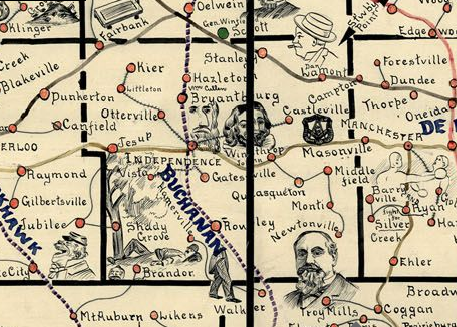
Geography and communities
Buchanan County lies in the agricultural heartland of the Midwest, with a landscape of rolling farmland, river valleys and small woodlands. Local waterways, including tributaries of the Wapsipinicon River, shaped early settlement and remain important for recreation and drainage. Transportation links are provided by state highways and regional rail lines that connect towns to larger urban centers.
- Principal towns: Independence, Winthrop, Jesup, Quasqueton and other incorporated and unincorporated communities.
- Rural character: Many residents live on family farms or in small towns that serve as local commercial and social hubs.
History
The county was named in honor of James Buchanan, who was a prominent U.S. senator when the name was chosen and later became the 15th President of the United States. Its founding predates Iowa's statehood (1846), reflecting the westward expansion and organization of territories during the 1830s and 1840s. Settlement accelerated in the mid-19th century as migrants established farms, towns grew around river crossings and rail lines, and local government institutions were formed.
Economy, institutions and culture
The local economy has long been anchored in agriculture—row crops, dairy and livestock—supported by farm services, food processing and machinery suppliers. Small-scale manufacturing, health care, public education and retail trade provide additional employment in towns throughout the county. Community life often centers on county fairs, school events, historical societies and outdoor recreation along rivers and parks.
Government and notable features
County government operates from facilities in Independence, where the courthouse and administrative offices manage services such as courts, public records, law enforcement and road maintenance. Local landmarks and attractions include historic downtown districts, riverfront parks and museums that document agricultural and civic history. The county balances preservation of rural character with efforts to support local businesses and public services.
Points of interest and resources
- Historic buildings and small museums in Independence and other towns.
- River parks and trails offering fishing, boating and picnic facilities.
- Annual county fair and community festivals that highlight agricultural traditions.
For statistical, historical and administrative information consult county offices and regional archives, or follow local resources and visitor guides for current events and services.
Related articles
Author
AlegsaOnline.com Buchanan County, Iowa Leandro Alegsa
URL: https://en.alegsaonline.com/art/14995
Sources
- quickfacts.census.gov : "State & County QuickFacts"
- naco.org : "Find a County" · web.archive.org