
Bruay-la-Buissière — town in Pas-de-Calais, northern France
Bruay-la-Buissière is a commune in the Pas-de-Calais department of northern France, known for its coal-mining heritage, industrial architecture and post-industrial redevelopment.
Bruay-la-Buissière is a small commune located in the north of France. It sits in the area formerly administered as the Nord-Pas-de-Calais region and today is part of the larger Hauts-de-France territorial unit. Administratively the town belongs to the Pas-de-Calais area and is one of many municipalities that grew with northern France’s industrial era; it can be described as a local hub within northern France.
Image gallery
4 Images


Overview and character
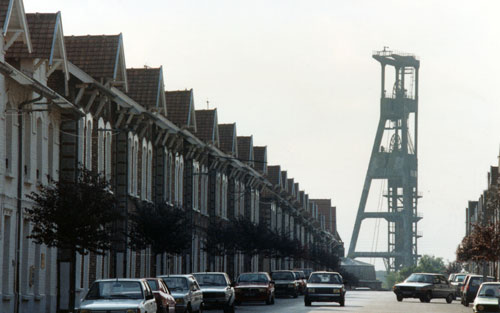
The town combines a dense urban center with the traces of heavy industry that shaped it: former pitheads, workers’ housing, slag heaps and civic buildings laid out during the nineteenth and twentieth centuries. Streets near the center house shops, municipal services and cultural venues; green belts and converted post-industrial spaces provide recreational areas. Local governance and services are organized within the department structure and by municipal authorities engaged in economic and social renewal.
History and heritage
Originally a rural area, Bruay-la-Buissière expanded rapidly when coal mining became dominant in the region. The urban fabric reflects that history: rows of miners’ houses (corons), industrial monuments and remnants of mining infrastructure. The town forms part of the broader coal-mining landscape associated with the Nord-Pas-de-Calais mining basin, an area recognized for its historical importance to France’s industrial development.
Economy, culture and redevelopment
Since the decline and closure of deep coal mining, the town has focused on economic diversification and cultural renewal. Efforts have included converting former industrial sites for leisure and cultural use, promoting small business, and hosting local festivals and markets. Bruay-la-Buissière serves as a service center for surrounding communities and as a point of connection for regional transport and commerce.
- Industrial heritage sites and architecture
- Post-mining redevelopment and public parks
- Local cultural institutions, markets and community events
Notable today is the town’s combination of visible industrial heritage and contemporary adaptation: historic mining structures coexist with new housing, community facilities and economic initiatives aimed at regenerating the local area. For visitors and researchers the town offers a compact case study of northern France’s transition from coal-based industry to a diversified post-industrial landscape.
Related articles
Author
AlegsaOnline.com Bruay-la-Buissière — town in Pas-de-Calais, northern France Leandro Alegsa
URL: https://en.alegsaonline.com/art/14820