
Van Buren County, Michigan
County in southwest Michigan with Lake Michigan shoreline, agricultural economy, small cities including Paw Paw (county seat) and South Haven; population ~76,000 at the 2010 census.
Overview
Van Buren County lies in the southwestern portion of the Lower Peninsula of the United States state of Michigan. It combines shoreline, inland lakes and rural countryside. According to the 2010 census the population was recorded at 76,258. The administrative center and county seat is identified as the village of Paw Paw, which also functions as a local service hub and historical center.
Image gallery
4 Images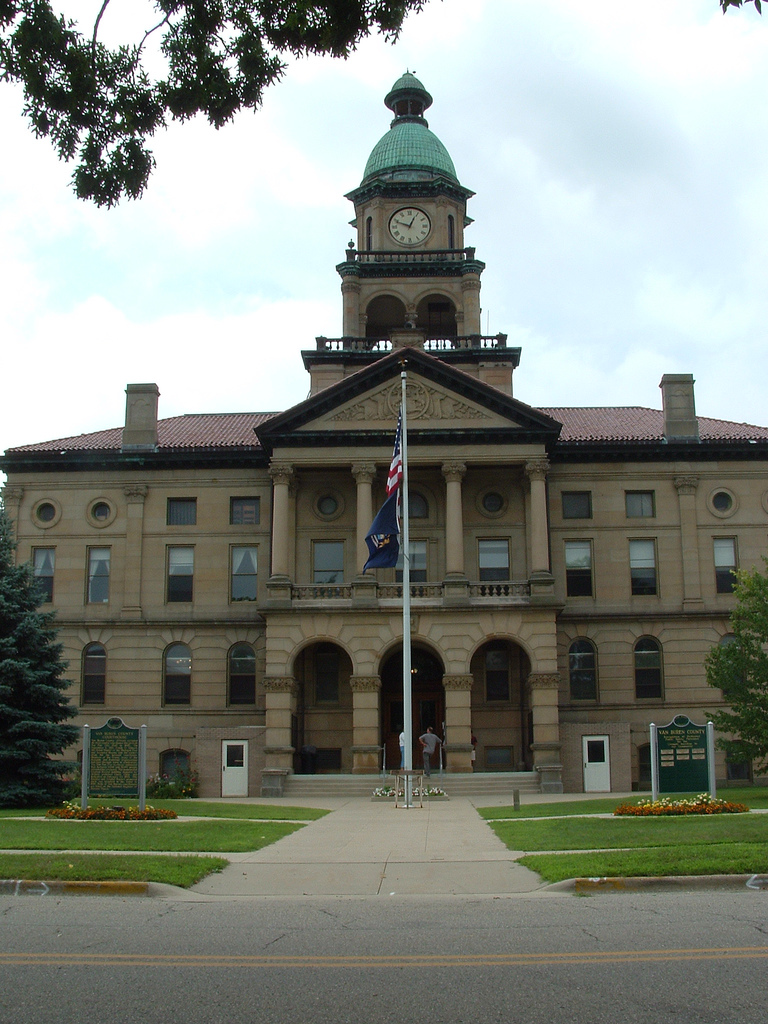


Geography and communities
The county stretches from agricultural lowlands into portions of Lake Michigan shoreline and includes a mix of small cities, villages and unincorporated townships. Communities range from lakeside resort towns to inland farming villages, providing a combination of recreational and working landscapes. Recreational attractions include beaches, marinas and inland parks.
History and development
The area developed as settlers moved west across Michigan in the 19th century, establishing towns around commerce, agriculture and transport. Over time the county grew a diverse local economy based on fruit and field crops, fisheries near the lakeshore and light manufacturing. Local historic districts and community events preserve elements of 19th‑ and early 20th‑century heritage.
Economy and recreation
Farming—especially fruit orchards and vineyards—along with tourism tied to shoreline beaches and boating are important to the county's economy. Small manufacturing, retail services and hospitality also contribute. Outdoor recreation such as fishing, hiking and winter sports draws visitors seasonally and supports local businesses.
Government and notable facts
Local government is organized around township boards and county departments that provide courts, public safety and infrastructure. The county seat, linked administratively as the county seat, hosts the primary county offices and courts. The combination of natural resources, agricultural land and small urban centers gives Van Buren County a mixed rural‑urban character within Michigan's broader regional economy.
Further information
Author
AlegsaOnline.com Van Buren County, Michigan Leandro Alegsa
URL: https://en.alegsaonline.com/art/147207