
Paw Paw, Michigan
Paw Paw is a village in southwestern Michigan and the county seat of Van Buren County, noted for its river setting, historic downtown, agricultural heritage and nearby vineyards and wineries.
Overview
Paw Paw is a village in the U.S. state of Michigan, located in the southwestern part of the Lower Peninsula. It serves as the county seat of Van Buren County and recorded a population of 3,534 at the 2010 census. The community is compact, with a blend of residential neighborhoods, a traditional downtown, and public buildings associated with county government.
Image gallery
1 Image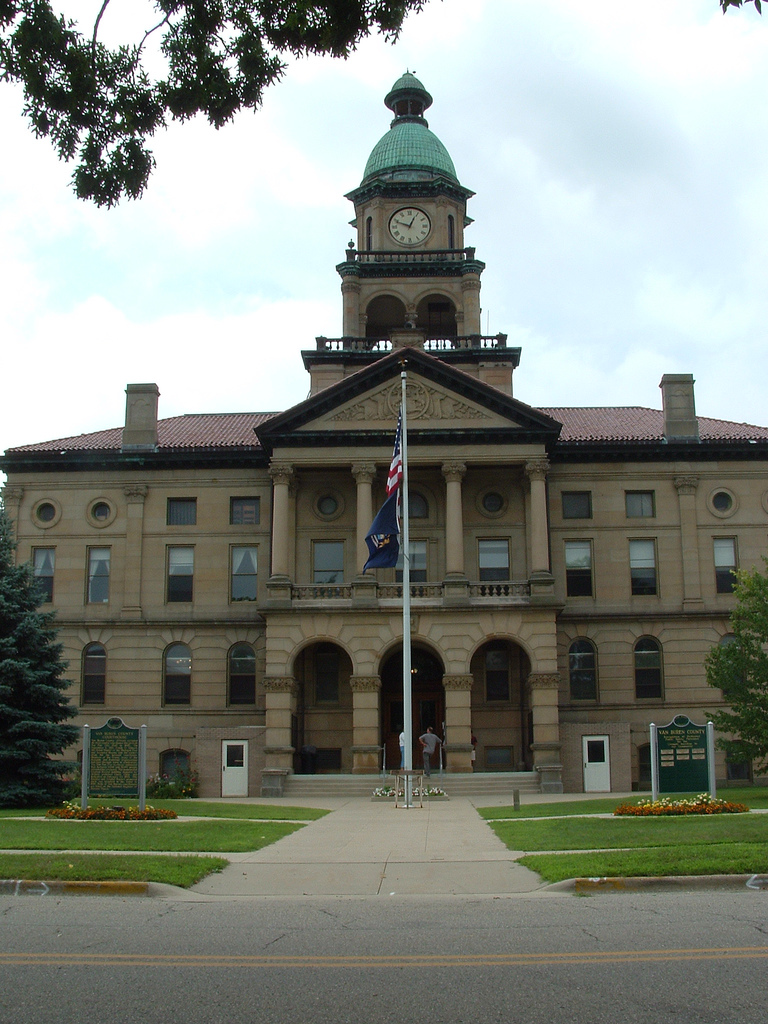
Geography and character
The village lies in a river valley shaped by the Paw Paw River, which influences local scenery and recreation. Its small‑town character is expressed through a courthouse square, tree-lined streets and parks along the water. Surrounding lands are predominantly rural, with farms, vineyards and patches of woodland contributing to the landscape and local economy.
Economy and land use
Agriculture remains important, with fruit cultivation and grape growing supporting wineries, tasting rooms and seasonal tourism. Local commerce includes small businesses, service firms, county administration and light industry. Visitors often come for markets, winery visits and events promoted by regional tourism organizations (region info).
History and name
The name derives from the pawpaw, a native fruit-bearing tree that once grew along riverbanks in the area. The village developed around river access and agricultural trade and later became the county administrative center. Local historical societies preserve artifacts and stories of early settlement, farming and civic life.
Community life and services
Paw Paw hosts community gatherings and harvest- or wine-themed events that draw residents and visitors. Outdoor recreation on the Paw Paw River includes walking, birdwatching and informal boating. Public services include village government, schools serving the local district, and county offices located in the courthouse complex; consult local administrative and county resources for details (Van Buren County, county seat resources).
- Courthouse square and municipal services
- Agricultural and viticultural enterprises
- Historic downtown, community festivals and river recreation
Author
AlegsaOnline.com Paw Paw, Michigan Leandro Alegsa
URL: https://en.alegsaonline.com/art/144017