
The Two Noble Kinsmen: Shakespeare and Fletcher's Jacobean Tragicomedy
Examination of The Two Noble Kinsmen, a Jacobean tragicomedy credited to Shakespeare and John Fletcher (c.1612–14), adapting Chaucer’s Knight’s Tale and exploring rivalry, love, fate and friendship
The Two Noble Kinsmen is a Jacobean tragic comedy usually dated to the early 1610s. Modern scholarship regards it as a joint work, with large portions written by William Shakespeare in collaboration with John Fletcher. The drama draws its central story from "The Knight's Tale" by Geoffrey Chaucer, originally part of The Canterbury Tales.
Image gallery
4 Images

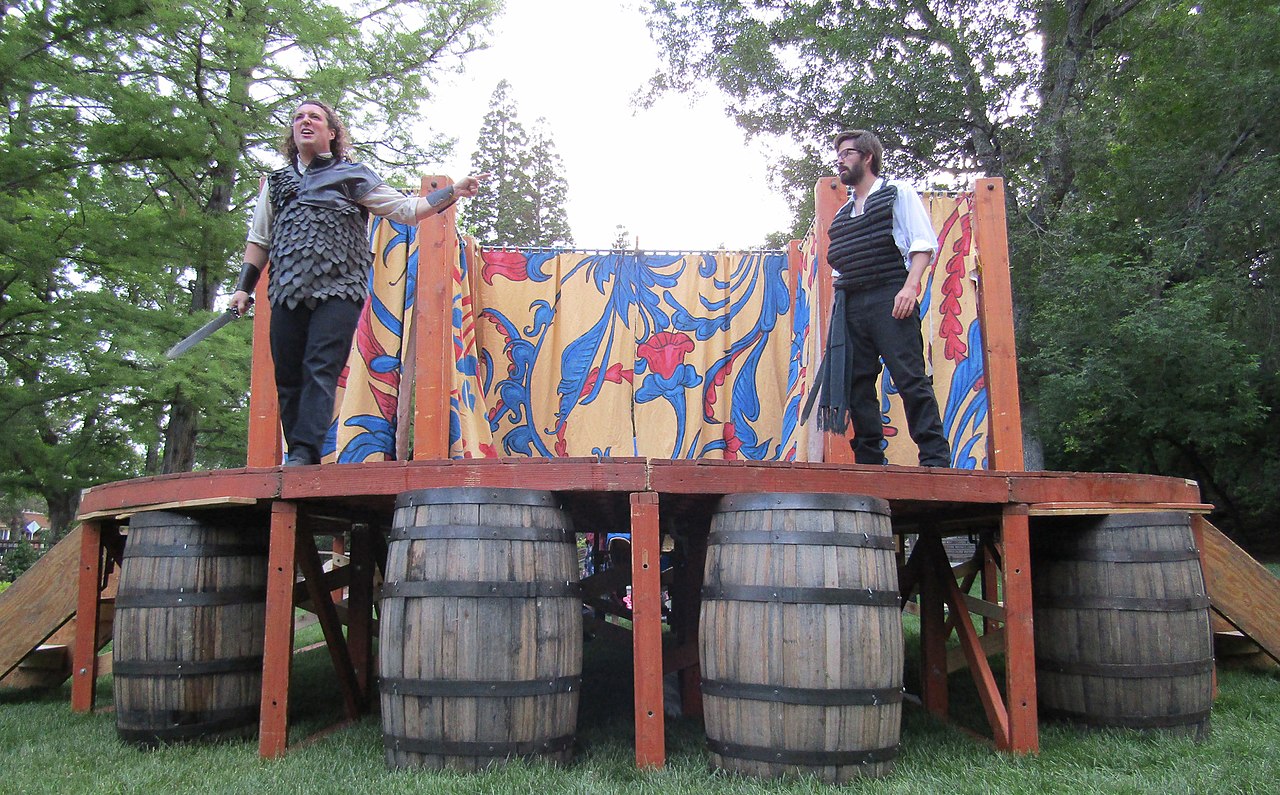

Authorship and date
Stylistic and linguistic studies have long supported the view that the play is a collaboration: certain scenes show features typical of Shakespeare's late plays, while others match Fletcher's characteristic verse and dramaturgy. Most scholars place composition around 1612–1614, which makes it one of the plays written near the end of Shakespeare's active career; Shakespeare retired to Stratford and died in 1616.
Source and plot
The plot adapts the rivalry between two cousins for a lady's love as told in Chaucer's medieval narrative. The two protagonists — commonly named Palamon and Arcite — are prisoners who both fall for the same woman. The play explores themes of friendship and rivalry, courtly love, fate and madness, and combines tragic elements with comic episodes and pastoral interludes.
Publication and performance
The play was first printed in 1634. Its precise original production history is not fully documented, though it is often associated with the companies and theatrical practices of the Jacobean period. Because it was likely written close to the end of Shakespeare's stage career and shows clear signs of collaboration, the work occupies a transitional place between Shakespeare's mature tragedies and the softer, more lyrical plays of his collaborators.
Legacy
Collectors, editors and theater practitioners have long been interested in the play because it illuminates both Shakespeare's last phase and Fletcher's style. Productions today tend to emphasise its mixture of lofty rhetoric and comic vitality, and its connection to Chaucer remains central to scholarly discussion and theatrical adaptation.
Author
AlegsaOnline.com The Two Noble Kinsmen: Shakespeare and Fletcher's Jacobean Tragicomedy Leandro Alegsa
URL: https://en.alegsaonline.com/art/146698