
The Good, the Bad and the Ugly
Sergio Leone's 1966 Spaghetti Western, the final film of the Dollars trilogy, noted for its trio of antiheroes, Ennio Morricone's score, operatic visuals and lasting influence on modern cinema.
The Good, the Bad and the Ugly is a 1966 Spaghetti Western directed by Sergio Leone. It is widely regarded as the culmination of Leone's early Western work and the third film in the informal Dollars trilogy. The story follows three morally ambiguous figures — Blondie (often called "the Good"), Angel Eyes ("the Bad") and Tuco ("the Ugly") — as they form shifting alliances while searching for a buried cache of Civil War gold. The film premiered in Italy in 1966 and reached the United States and other markets in 1967.
Image gallery
10 Images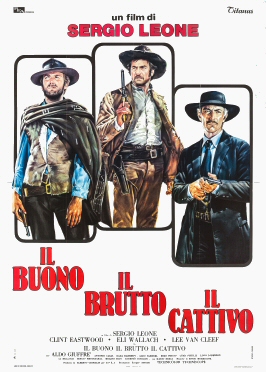



Plot and characters
The narrative is built around character interaction rather than a conventional hero's arc. Clint Eastwood's laconic bounty hunter, Lee Van Cleef's cold enforcer and Eli Wallach's resourceful fugitive create a trio whose loyalties change according to circumstance and profit. Episodes of comic relief, sudden violence and prolonged tension combine to produce an episodic structure that moves between skirmishes, pursuits and the long, suspenseful build-up to the film's famous three-way standoff.
Style and production
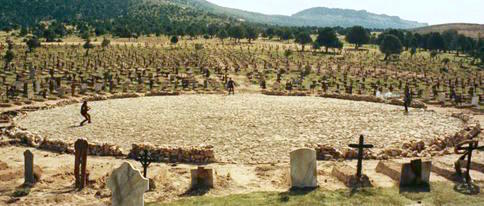
Leone's style in this film is notable for extreme close-ups, wide panoramic compositions of arid landscapes, and deliberate editing rhythms that extend suspense. The production was an international collaboration, shot mainly on locatons in Spain with sets and interiors filmed in Italian studios. The visual language — tight facial detail contrasted with vast desert vistas — helped redefine how close-up acting and environmental scale could be balanced in genre cinema.
Music
Ennio Morricone's score is integral to the film's identity. Its themes, vocal motifs and distinctive instrumentation contribute to atmosphere and character identification, often serving as a counterpoint to onscreen action. The main theme and several recurring cues have become part of popular culture and are frequently cited in discussions of film music's power to shape narrative tone.
Reception and legacy
Initial responses were mixed, but critical and popular appreciation grew over time. The film is often discussed for its treatment of antiheroism, its stylized depiction of violence and its formal innovations in framing and montage. Directors and critics have pointed to its influence on later Westerns and on filmmakers across genres. Restorations and multiple home-video releases have sustained interest and allowed reassessment of editorial and presentation choices.
Further reading and resources
- Production background and making-of
- Director profiles and interviews
- Analyses of Leone's direction
- Sergio Leone: career overview and filmography
- Clint Eastwood: role, performance and legacy
- Dollars trilogy: context and comparisons
- Release history by country and date
- Contemporary release dates and distribution notes
- A Fistful of Dollars (first film in the trilogy)
- For a Few Dollars More (second film in the trilogy)
- Comparisons with other classic Westerns
The film's blend of stark landscapes, moral ambiguity and an audacious musical palette continues to attract viewers and scholars. It can be approached as popular entertainment, an exemplar of auteur filmmaking in genre cinema, and a work that influenced how later filmmakers approached tension, composition and the portrayal of complex protagonists.
Author
AlegsaOnline.com The Good, the Bad and the Ugly Leandro Alegsa
URL: https://en.alegsaonline.com/art/146610