
Bromine pentafluoride (BrF5): properties, uses and safety
Bromine pentafluoride (BrF5) is a powerful interhalogen fluorinating agent and oxidizer. It is highly reactive and corrosive, hydrolyzes in moist air, and requires extreme precautions in handling and storage.
Overview
Bromine pentafluoride is an interhalogen compound with the molecular formula BrF5. In this species a central bromine atom is bonded to five fluorine atoms, and the bromine exhibits a formal +5 oxidation state; for context on oxidation states see oxidation state references. BrF5 is a powerful fluorinating agent and a strong oxidizer, notable for vigorous reactivity with many materials, especially water.
Image gallery
3 Images

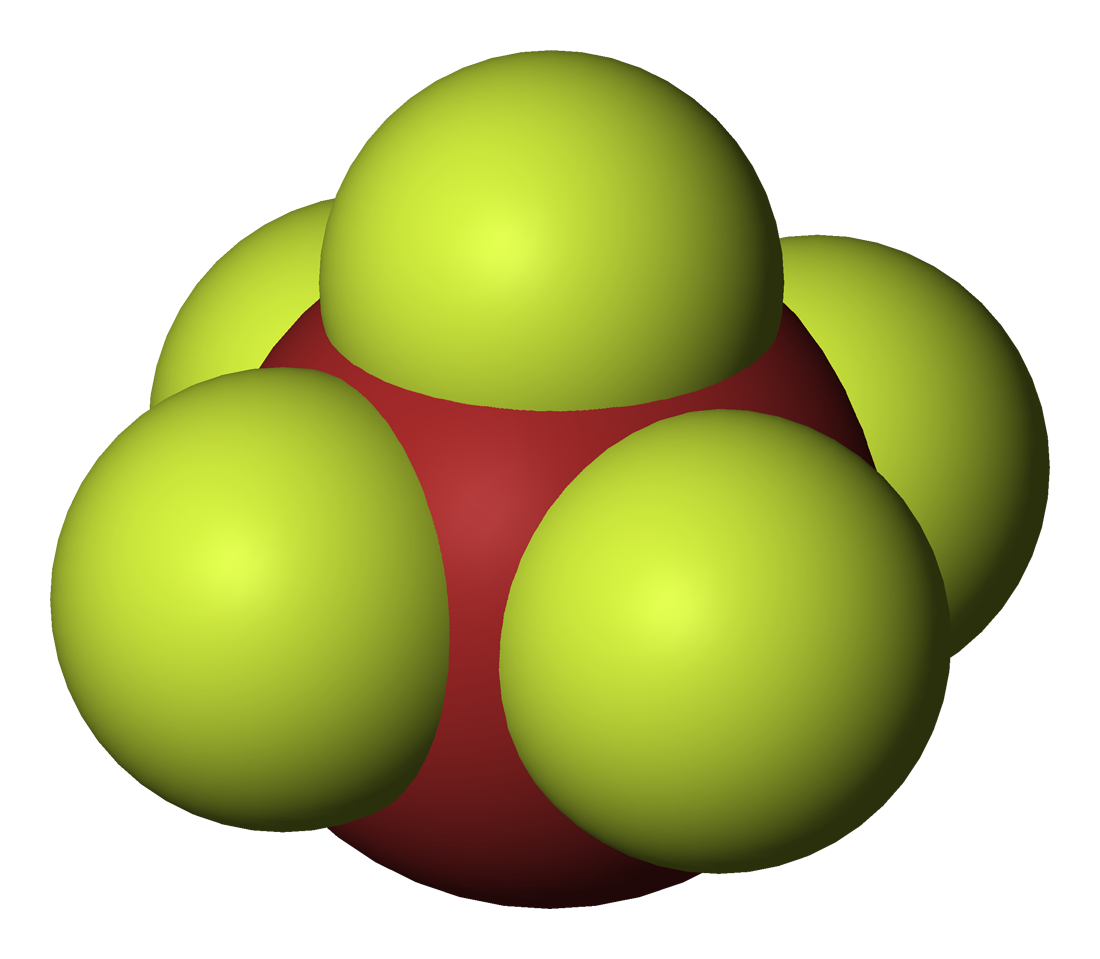
Structure and physical properties
Electron-pair geometry and bonding place bromine at the center of a square pyramidal molecular shape according to VSEPR principles. The compound is typically encountered as a colorless to pale yellow volatile liquid that produces corrosive fumes in moist air. It is significantly more reactive than bromine itself and distinct from related interhalogens such as bromine trifluoride (BrF3) and chlorine pentafluoride (ClF5).
Preparation and chemical behavior
BrF5 is prepared industrially by direct fluorination of bromine or by further fluorination of lower bromine fluorides. It hydrolyzes vigorously on contact with water, forming hydrogen fluoride (HF) and oxybromine species; because HF is highly corrosive and toxic, this hydrolysis drives many of the material’s hazards. BrF5 also reacts with metals, organic compounds, and many inorganic salts, typically acting as a source of elemental fluorine in synthetic reactions.
Uses and applications
Because of its strong fluorinating ability, BrF5 has been used in specialized chemical syntheses where direct fluorination is needed. It has also been investigated and employed in certain niche industrial processes, including conversion of less-fluorinated metal compounds to higher fluorides. Historical research considered it as a high-energy oxidizer for propulsion systems, though its handling difficulties limit broad practical use.
Safety, handling and distinctions
- Extremely corrosive and reactive: reacts with water to release HF and other toxic species.
- Requires dry, inert conditions and specialized materials for storage and transfer.
- Exposure risks include severe chemical burns, pulmonary injury, and systemic fluoride toxicity.
Authoritative datasheets and safety guidance should be consulted before working with BrF5; see safety overviews at material safety resources. For background on the bromine element and fluorine chemistry see bromine and fluoride.
Related articles
Author
AlegsaOnline.com Bromine pentafluoride (BrF5): properties, uses and safety Leandro Alegsa
URL: https://en.alegsaonline.com/art/14655