
British Rail Class 483 (1938 Tube Stock EMUs)
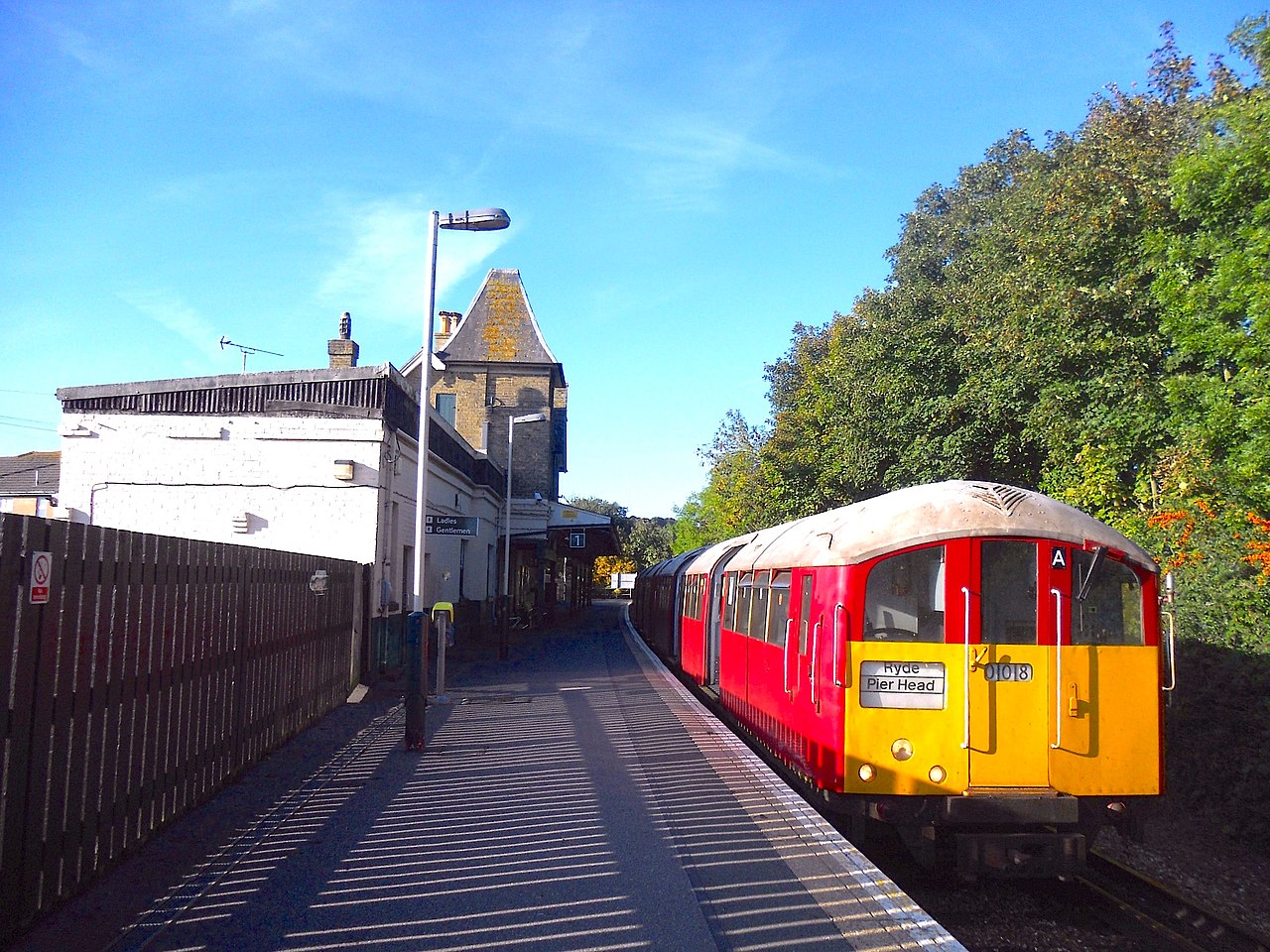
Two-car electric multiple units rebuilt from 1938 London Underground tube stock for the Isle of Wight's Island Line, refurbished 1989–1992 and notable for their exceptional longevity in passenger service.
Overview
The British Rail Class 483 consists of a small fleet of two-car electric multiple units that began life as 1938 tube stock built by Metro-Cammell for the London Underground. Rebuilt and modernised between 1989 and 1992 at Eastleigh Works, they were introduced onto the Isle of Wight's Island Line where they served as the core passenger trains for decades. These units were widely remarked upon for being among the oldest passenger rolling stock in regular service in the United Kingdom.
Image gallery
10 Images


Design and characteristics
Originally designed for deep-tube operation in London, the vehicles were lightweight, narrow-profile cars suited to the smaller clearances of tube tunnels. When converted into Class 483 sets they were formed as two-car units, refurbished internally and fitted with updated electrical equipment and safety fittings to meet mainline operation standards. Typical modifications included renewed seating and lighting, improved driver controls, and overhauled traction systems while retaining the original 1938 bodyshells.
History and development
The units trace their ancestry to the 1938 tube stock, and their conversion to Class 483 represented an economical approach to replacing earlier Isle of Wight trains. The Island Line had previously operated even older stock — the Class 485 and Class 486 sets — which themselves had been reallocated from London stock dating back to the 1920s. The refurbishment programme at Eastleigh enabled nearly fifty years of additional service life for the 1938 vehicles.
Operation on the Island Line
Deployed on the short, self-contained Island Line route, the Class 483s were well suited to the line's physical constraints and modest speed requirements. They carried local commuters and tourists, operating frequent shuttle services between Ryde and Shanklin and negotiating several low clearances and tight curves that would have been unsuitable for larger mainline trains. Their compact size and reliable basic design made maintenance straightforward for the small fleet based on the island.
Replacement and legacy
After many years of loyal service the Class 483 units were gradually superseded by newer refurbished units introduced specifically for the Island Line. Their final withdrawal from regular passenger service occurred in 2021, when a programme to introduce more modern, accessible trains was completed. The Class 483s remain notable in British railway history for their long operational life and as an example of successful reuse of London Underground rolling stock in a regional context.
Notable facts and distinctions
- The Class 483s began as 1938 tube stock, a point often highlighted when discussing longevity and the reuse of vintage rolling stock.
- They replaced the older Class 485/486 units, themselves converted from even earlier central London stock.
- The conversion and continuing operation illustrate a pragmatic approach to fleet renewal on constrained suburban and branch routes.
For further technical and historical details see the dedicated pages on the Class 483 and the original 1938 tube stock.
Related articles
Author
AlegsaOnline.com British Rail Class 483 (1938 Tube Stock EMUs) Leandro Alegsa
URL: https://en.alegsaonline.com/art/14470