
British Rail Class 33 (Crompton) diesel locomotive
A Type 3 Bo‑Bo diesel‑electric built 1959–1963 for BR Southern Region. Known as 'Cromptons', 98 were made by BRCW and used for mixed traffic, relief on electrified lines and later preserved on heritage railways.
The British Rail Class 33 is a class of Bo‑Bo diesel‑electric locomotives built for the Southern Region of British Railways between 1959 and 1963. Often called "Cromptons" after the Crompton Parkinson electrical equipment installed in them, they formed part of the second wave of mid‑20th century BR Type 3 designs intended for mixed traffic work. The original numbering for the class ran from D6500 to D6597.
Image gallery
10 Images



Design and characteristics
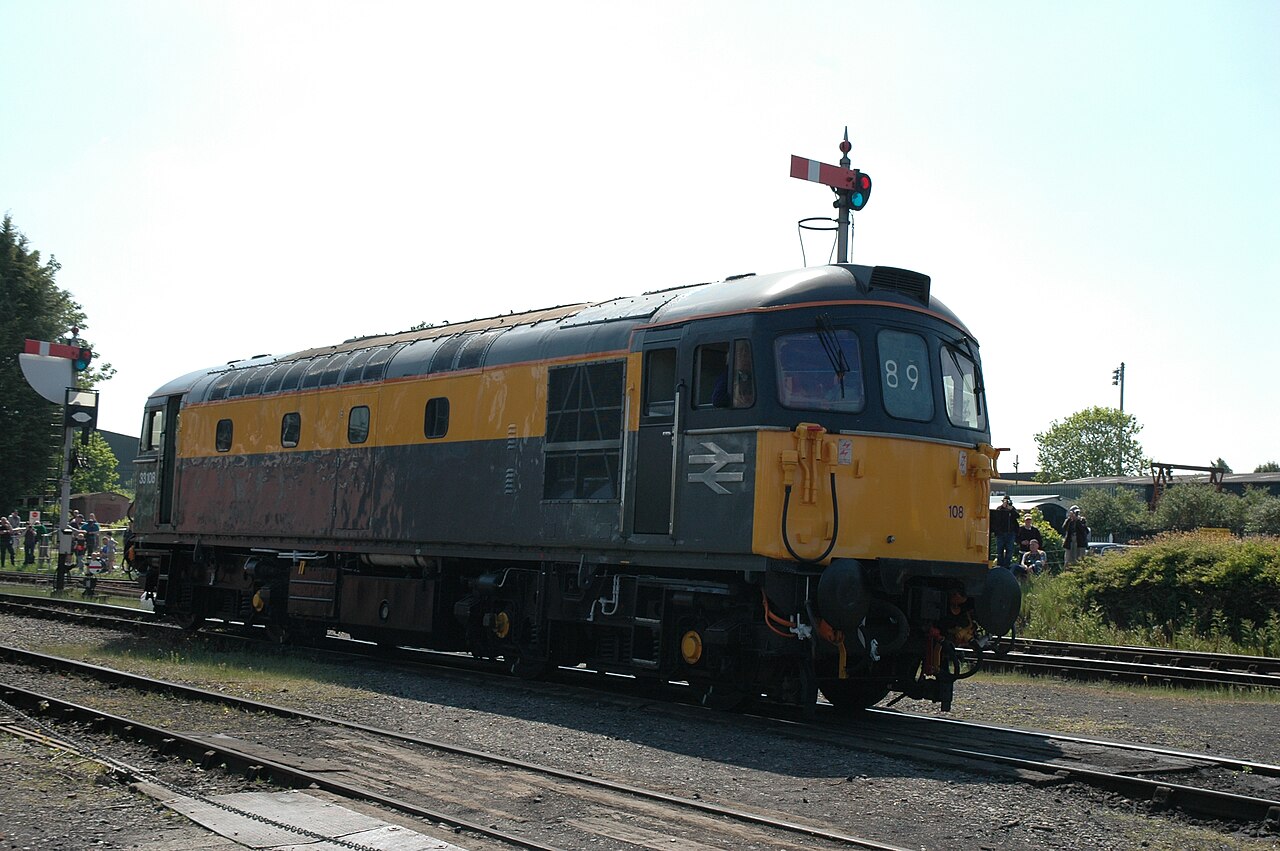
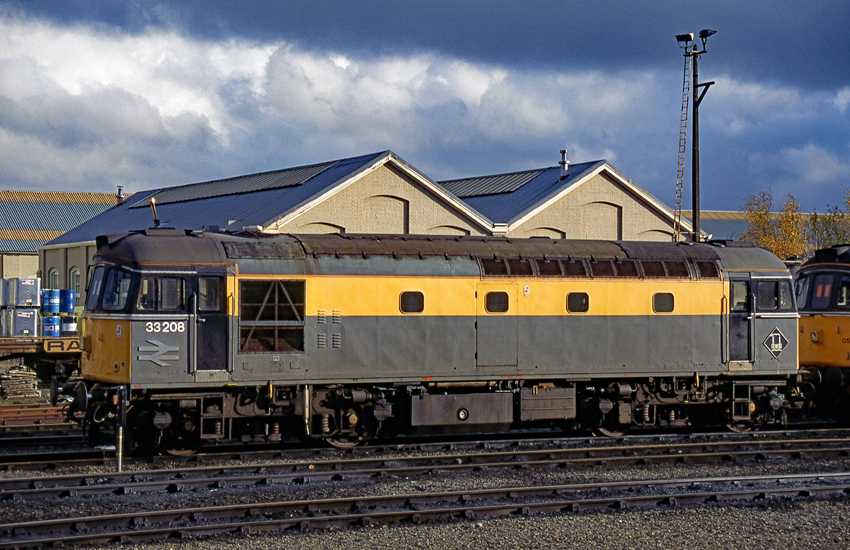
Class 33 locomotives share the all‑steel bodywork and cab style typical of several BRCW Type 3 designs. They have a Bo‑Bo wheel arrangement (four axles in two bogies) suited to routes with frequent curves and restrictive axle loadings. Key practical features included robust electrical equipment, multiple‑unit working capability and arrangements for both freight and passenger duties, making them versatile performers on Southern Region duties.
Manufacture and technical background
A total of 98 units were built by the Birmingham Railway Carriage and Wagon Company (BRCW) following a 1957 order. The locomotives were fitted with Crompton Parkinson electrical components, which gave rise to their popular nickname. As diesel‑electric locomotives they combined a diesel prime mover with generators and traction motors to drive the wheels, a standard arrangement for British mainline diesels of the era.
Service history and roles
Introduced to strengthen and modernise services on the Southern Region, Class 33s handled a wide range of duties: passenger workings, parcels and freight trains, and diagrammed relief or secondary passenger services on lines where full electrification or heavier locomotives were unsuitable. Their relatively compact size and flexibility made them useful on routes with restrictive clearances and in areas where third‑rail electric units required diesel assistance.
Later years, preservation and legacy
Many Class 33s remained in traffic into the late 20th century; some were later used for departmental tasks, and a number have been preserved on heritage railways. Enthusiasts and preservation groups value the class for its dependable design and its association with the post‑steam modernisation era of British rail. For further technical and allocation details see specialised sources and enthusiasts' studies (detailed reference).
Notable distinctions
- Nickname: "Crompton" — from Crompton Parkinson electrical equipment.
- Built by BRCW as part of BR's Type 3 programme; related in appearance and construction to other BRCW designs.
- Versatile mixed‑traffic capability made them valuable on Southern Region lines with varied operating demands.
Related articles
Author
AlegsaOnline.com British Rail Class 33 (Crompton) diesel locomotive Leandro Alegsa
URL: https://en.alegsaonline.com/art/14411
Sources
- semgonline.com : "Class 33 - Overview"
- semgonline.com : "Class 33 - Technical Details"