
Native Hawaiians: People, Culture, and History
An overview of Native Hawaiians (Kanaka Maoli): origins, language, culture, historical changes, contemporary issues, and distinct social and political developments in Hawai'i.
Native Hawaiians, often called Kanaka Maoli, are the Indigenous Polynesian people of the Hawaiian Islands. Their ancestors arrived by oceangoing voyaging from the broader Polynesian world, including areas now known as French Polynesia and other central Pacific archipelagos. Today many residents of Hawaii claim Native Hawaiian ancestry; mixed heritage is common and Native Hawaiians comprise roughly one‑fifth of the state population.
Image gallery
6 Images


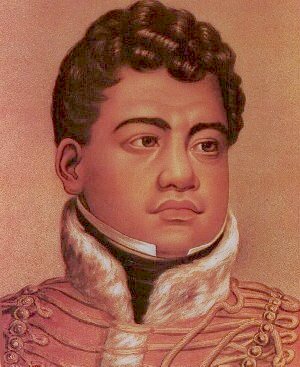
Origins and early society
Polynesian navigators settled the Hawaiian Islands centuries before European contact, bringing plants, animals, and social systems adapted to island life. Traditional Hawaiian society organized land and resources through systems such as the ahupuaʻa (land divisions running from mountain to sea), and emphasized extended family (ʻohana), chiefly lines (aliʻi), and religious practices tied to nature. Staples like taro (kalo) supported dense communities where craft, chant, and dance were central cultural expressions.
Language and culture
The classical Hawaiian language is an Austronesian language closely related to other Polynesian tongues. It experienced a severe decline after contact with Europeans and American settlers, but a cultural and linguistic revival since the late 20th century has increased instruction through immersion schools and media. Hawaiian is an official state language alongside English, though many residents also speak Hawai‘i Creole English (often called Hawaiian Pidgin). For information on Polynesian connections see Polynesia.
Contact, kingdom, and change
European and American contact from the late 18th century onward brought new trade, diseases, and political pressure. The independent Kingdom of Hawaiʻi developed centralized institutions in the 19th century before its monarchy was overthrown in 1893 and the islands were later annexed by the United States. These events produced large social, economic, and demographic shifts affecting land tenure, governance, and cultural practices.
Modern institutions and contemporary issues
Since the mid‑20th century there has been growing Native Hawaiian political and cultural activism. The state established the Office of Hawaiian Affairs to manage certain resources and represent Native Hawaiian interests. Debates about federal recognition, self‑determination, land stewardship, health and education disparities, and the protection of cultural sites continue to be important public issues.
Distinctive features and resilience
- Enduring cultural traditions: hula, chant (oli), navigation knowledge, and communal practices.
- Language revitalization: Hawaiian immersion schools and university programs.
- Complex legal and political landscape: ongoing initiatives around sovereignty and resource management.
- Everyday life shaped by multicultural influences, including widespread use of Hawaiian Pidgin and Hawaiian language resurgence efforts.
Native Hawaiians remain a vibrant and diverse people whose histories and perspectives shape the social and political life of the Hawaiian Islands. For further background and overviews see local archival sources and community organizations that preserve cultural knowledge and language.
Author
AlegsaOnline.com Native Hawaiians: People, Culture, and History Leandro Alegsa
URL: https://en.alegsaonline.com/art/143187